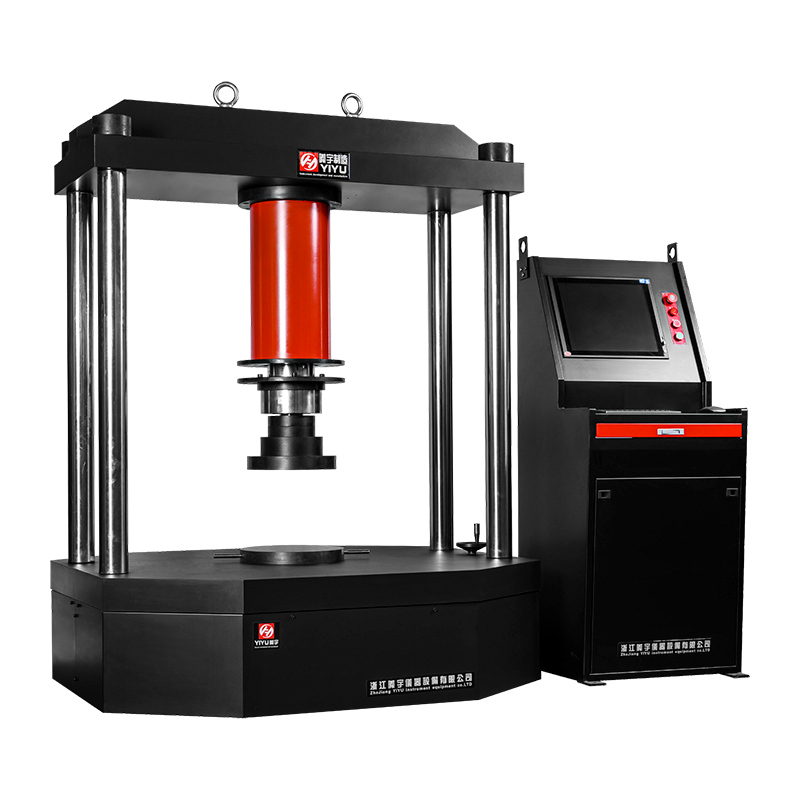
In the construction and manufacturing industries, structural integrity is not a matter of guesswork—it is a matter of measurement. Whether you are a commercial testing laboratory, a concrete producer, or a research institution, the Compression Testing Machine is the cornerstone of your quality control process. Its primary job is simple yet vital: to determine how much load a material can withstand before it deforms or shatters.
However, the market offers a staggering variety of models, ranging from compact units for mortar testing to massive industrial frames capable of crushing high-strength concrete pillars. Selecting the wrong capacity can lead to inaccurate data, premature equipment wear, or unnecessary expenditure. This guide will walk you through the essential steps to choosing the right capacity for your specific business needs, ensuring a balance between performance, compliance, and cost-efficiency.
Understanding Compression Testing Machines and "Capacity"
Before diving into the selection process, it is important to clarify what we mean by "capacity." In the context of Compression Testing Machines, capacity refers to the maximum force the machine can exert, usually measured in Kilonewtons (kN), Pounds-force (lbf), or Tons.
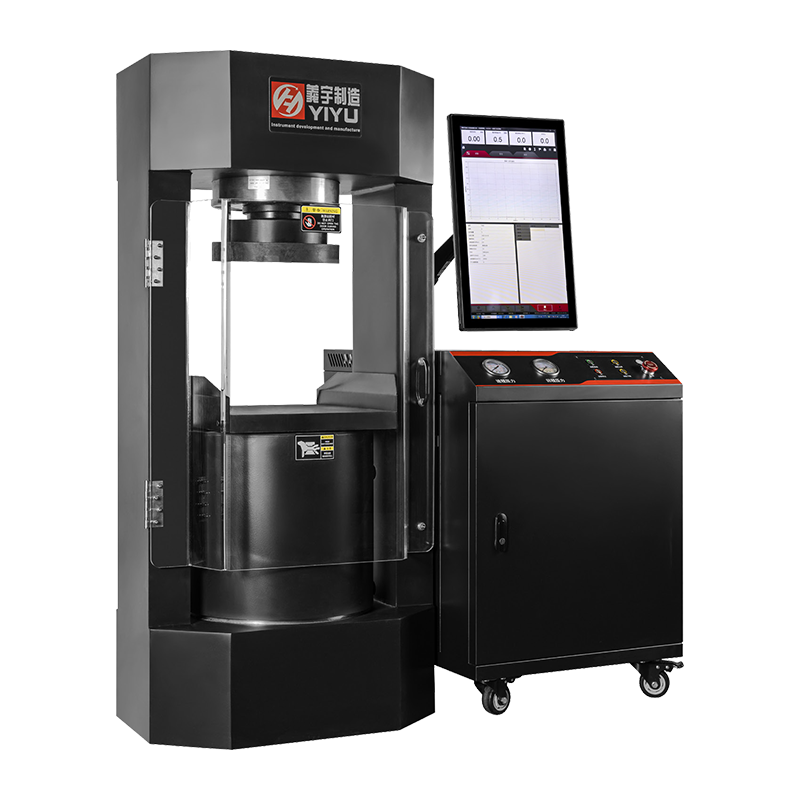
The physics of compression testing is straightforward: a hydraulic ram applies a steady, increasing force to a specimen—such as a concrete cube, cylinder, or brick—until it fails. The machine must not only be strong enough to break the sample but also stiff enough to maintain its own structural alignment under that immense pressure.
Evaluate Your Primary Testing Materials
The first step in choosing a capacity is to look at what you are testing today and what you might test in the next five years. Different materials require vastly different force levels.
- Cement and Mortar: These samples are typically small cubes (e.g., 50mm or 2 inches). Because the surface area is small, they require relatively low force. A machine with a capacity of 250kN to 300kN is usually more than sufficient for these applications.
- Standard Concrete: This is the most common application. Standard concrete cylinders (150mm x 300mm) or cubes (150mm) used in general construction often have strengths ranging from 20MPa to 50MPa. For these, a 2000kN (approx. 450,000 lbf) machine is the industry standard.
- High-Strength Concrete: In modern infrastructure projects like skyscrapers or bridges, high-strength concrete can exceed 100MPa. Testing these specimens requires significantly more power, often necessitating machines in the 3000kN to 5000kN range.
The "80% Rule" for Equipment Longevity
One of the most common mistakes businesses make is buying a machine with a maximum capacity that exactly matches their highest expected test load. While a 2000kN machine can reach 2000kN, running it at its absolute limit every day is not advisable.
In the industry, we often recommend the 80% Rule. For optimal accuracy and to minimize wear on hydraulic seals and the frame, you should aim to perform most of your tests within 20% to 80% of the machine’s rated capacity.
Example: If your highest strength samples require 1600kN of force to break, do not buy a 1600kN machine. Instead, opt for a 2000kN model. This provides a safety buffer, ensures the machine isn't struggling, and extends the service life of the hydraulic power unit.
Consider Specimen Size and Geometry
Capacity isn't just about force; it’s also about the physical space within the testing frame. The "vertical clearance" and "horizontal clearance" must be compatible with your samples.
If you are testing standard cylinders, a standard frame is fine. However, if your business involves testing large masonry blocks or manhole covers, you may need a Wide-Frame Compression Testing Machine. Even if a large block doesn't require a massive amount of force to break, it simply won't fit into a narrow, high-capacity frame. Always check that the platens (the plates that touch the specimen) are large enough to cover the entire surface area of your sample to ensure uniform load distribution.
Accuracy and Control Systems
The capacity of Compression Testing Machines is only useful if it is controlled precisely. There are generally three levels of control systems available:
- Manual Control: The operator turns a needle valve to control the flow of oil. These are cost-effective but depend on the operator's skill to maintain the correct "rate of loading" required by international standards.
- Digital Readout / Semi-Automatic: These machines show the load on a digital screen and often have a pacing bar to help the operator maintain the right speed.
- Fully Automatic Systems: These are the gold standard for modern businesses. You simply select the test type, and the machine handles the approach, loading at a constant rate, and the return of the ram after failure. Automatic systems eliminate human error and ensure that your capacity is applied exactly according to the relevant ASTM or EN standards.
Compliance with International Standards
Your business likely operates under specific regulatory frameworks. The most common standards for compression testing are ASTM C39 (for concrete cylinders) and EN 12390-4 (the European standard).
These standards often dictate the "class" of the machine. For instance, a "Class 1" machine must have an accuracy of ±1% of the indicated load within its calibrated range. When choosing a capacity, ensure the manufacturer provides a calibration certificate that covers the specific range you will be working in. If you buy a 3000kN machine but only ever test at 100kN, you might find that the machine's accuracy at that very low end does not meet the strict requirements of your project.
Future-Proofing Your Business
A high-quality compression testing machine can last 20 years or more with proper maintenance. Therefore, it is wise to consider the future trajectory of your industry.
Across the globe, the construction industry is moving toward higher-performance materials to reduce the amount of concrete needed in buildings. This means that average concrete strengths are increasing. If you are currently testing 40MPa concrete, it is highly likely that in five years, you will be asked to test 70MPa or 80MPa samples. Choosing a slightly higher capacity today—such as moving from a 2000kN to a 3000kN model—might save you the cost of replacing the entire machine in a few years.
Comparison of Popular Machine Capacities
| Business Type |
Recommended Capacity |
Common Specimens |
| Small Masonry Shop |
1000kN - 1500kN |
Bricks, hollow blocks, low-strength mortar |
| Standard Ready-Mix Plant |
2000kN |
150mm concrete cubes and cylinders |
| Commercial Testing Lab |
2000kN - 3000kN |
High-volume concrete testing, varying strengths |
| Research/Government Lab |
3000kN - 5000kN |
High-performance concrete, structural columns |
Maintenance for High-Capacity Machines
Regardless of the capacity you choose, regular maintenance is the key to protecting your investment. For Compression Testing Machines, this includes:
- Oil Changes: Hydraulic oil degrades over time and can become contaminated with dust from the lab. Change it annually to protect the valves.
- Platen Cleaning: After a sample explodes, debris can get stuck in the platens. Keep them clean and lightly oiled to prevent rust.
- Annual Calibration: Most standards require the machine to be calibrated every 12 months by a certified agency to ensure the force displayed on the screen is the force being applied.

 简体中文
简体中文
 English
 русский