A 2,000 kN pressure frame will crush cement mortar cubes all day, yet it is nearly useless the moment a ductile iron manhole cover rolls into the laboratory. The cover is too wide for the platen, the load must pass through a standardized bearing pad, and the acceptance report the client expects does not exist anywhere in the software.
Specialized testing machines exist to close exactly this gap, and the conclusion comes first: when repeat tests tied to one product family, such as anchor assemblies, cement specimens, thermoplastic pipes, manhole covers, or scaffold couplers, make up a real share of your workload, a dedicated machine beats a general-purpose frame on accuracy, throughput, and cost per test. The sections below explain what actually makes a machine specialized, where dedicated equipment earns its price, and which pre-purchase checks prevent the expensive kind of surprise after delivery.
What Makes a Testing Machine Specialized?
A specialized testing machine is engineered around one dominant test, one specimen family, or one governing standard, rather than around a universal frame that swaps fixtures for many jobs. In practice, the difference shows up in four places:
- Capacity band. The frame, hydraulic supply, and load cell are sized for a single duty range, so the machine spends its working life in the accurate middle of its scale instead of stretching across several orders of magnitude.
- Load path and fixtures. Platens, bearing pads, wedge grips, and reaction frames are designed for the real specimen, whether that is a curved cover, a multi-strand anchor assembly, or a full pipe ring, not adapted to it at test time.
- Control profile. Dedicated controllers hold a constant stress rate for cement strength, sustain a load for an hour or more during anchorage tests, or drive parallel plates at a fixed deflection speed for pipe ring stiffness.
- Reporting. Results and certificates come out already formatted to the governing standard, which removes manual re-entry and the transcription errors that follow it.
None of this makes universal testing machines obsolete. A well-equipped universal frame remains the right tool for ad hoc tensile, bending, and shear work across many materials. Most busy laboratories run both: one universal machine for flexible research and routine metal tests, plus dedicated machines for the repetitive tests that define their production acceptance or quality control workload.
Where Dedicated Machines Earn Their Place
Prestress anchorage and steel strand systems
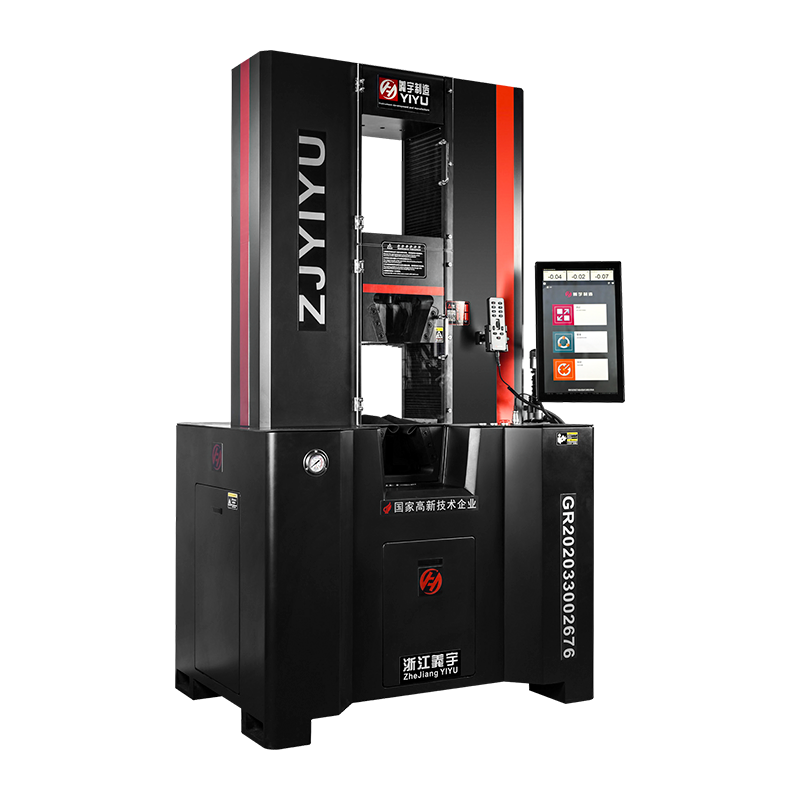
Anchorage testing is the clearest case for specialization. A static load anchorage test grips a strand-and-anchor assembly, cycles it to a specified load, and then holds that load while the machine records strand slip and elongation over time. A universal frame rarely offers the stiff reaction structure, long-stroke hydraulic gripping, and hour-long load stability this duty cycle demands, which is why purpose-built systems such as the MGW6500-10000 carry the full sequence automatically. Sister machines extend the same logic: dedicated strand frames pull seven-wire strand to failure, while stress relaxation rigs hold a strand at constant strain for hundreds of hours to report the relaxation percentage a design office needs.
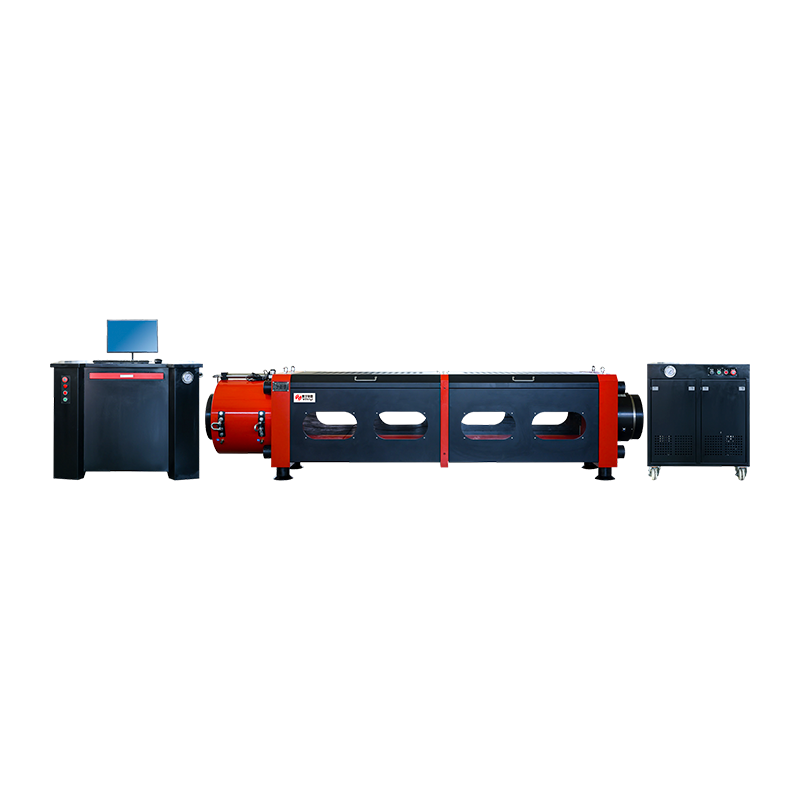 MGW-6500/10000 Computer Controlled Static Load Anchorage Testing MachinePurpose-built for prestressed anchorage type testing, the MGW-6500/10000 runs the full static load sequence automatically, combining stiff reaction structure, closed-loop control, and hour-long load stability general frames lack.View Product →
Covers, curbstones, and municipal products
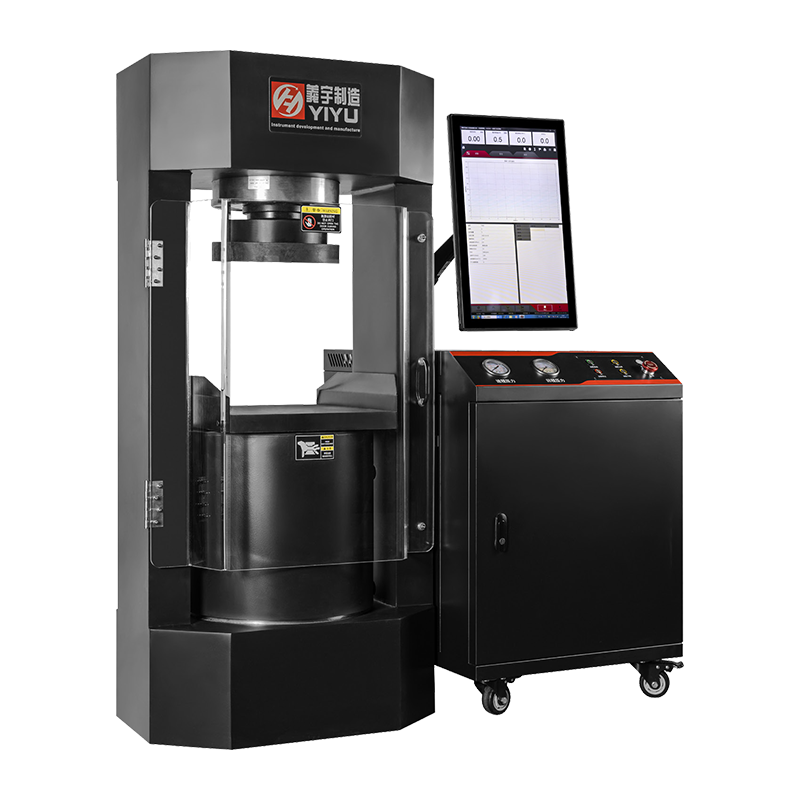
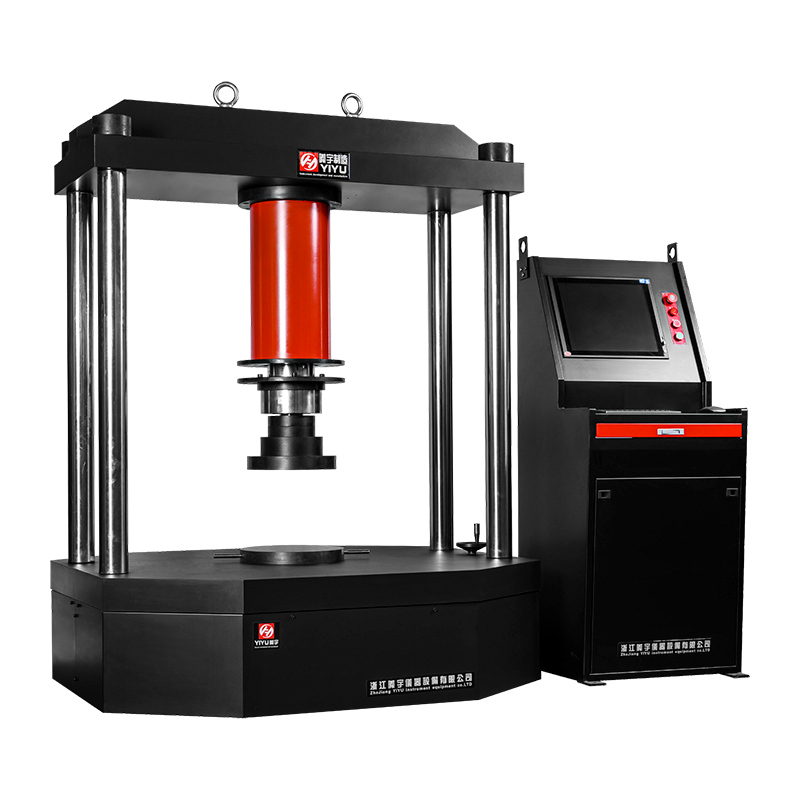
Municipal products push three limits at once: specimen size, capacity, and load path. A manhole cover press loads the cover through a standardized bearing pad at forces in the hundreds of kilonewtons, then reports deflection and cracking behavior against the acceptance criteria for ductile iron or composite covers. The same reasoning applies to curbstone compressive and flexural testing at the roadside-products scale, where dedicated frames handle both loading modes without fixture swaps.
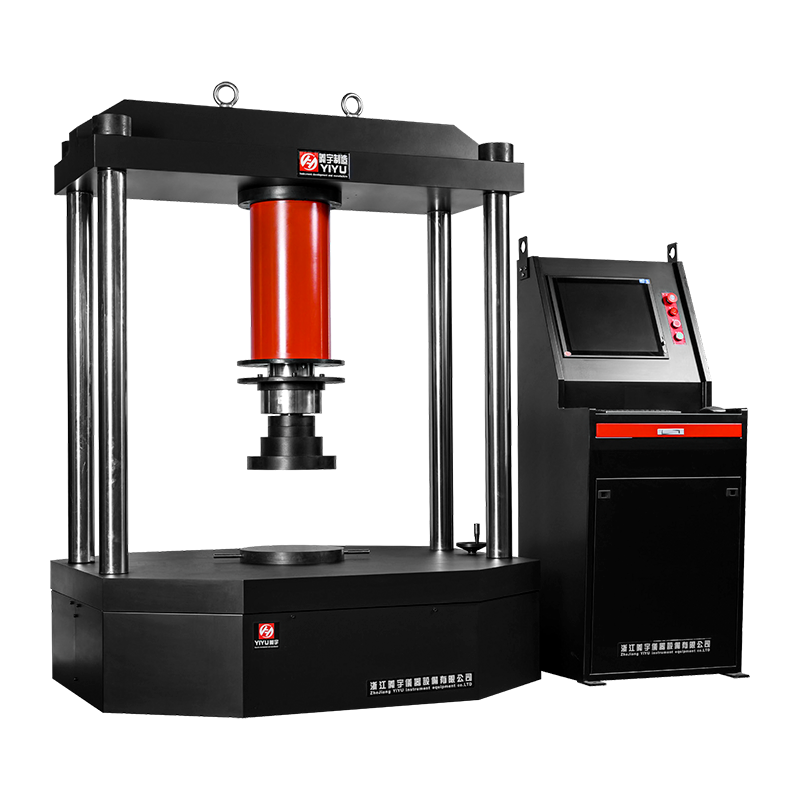 YYJG-1000 Microcomputer Controlled Manhole Cover Pressure Testing MachineMunicipal manhole covers demand hundreds of kilonitons of force through a standardized bearing pad. This electro-hydraulic servo machine tests residual deformation and load capacity for cast iron and composite covers.View Product →
Buried pipes and ring stiffness
Buried thermoplastic pipes sit at the opposite end of the force range. Ring stiffness testing applies low loads through parallel plates but demands precise control of deflection speed, plate parallelism, and alignment, which is why a dedicated ring stiffness frame returns far more repeatable numbers than an improvised setup on a general-purpose press.
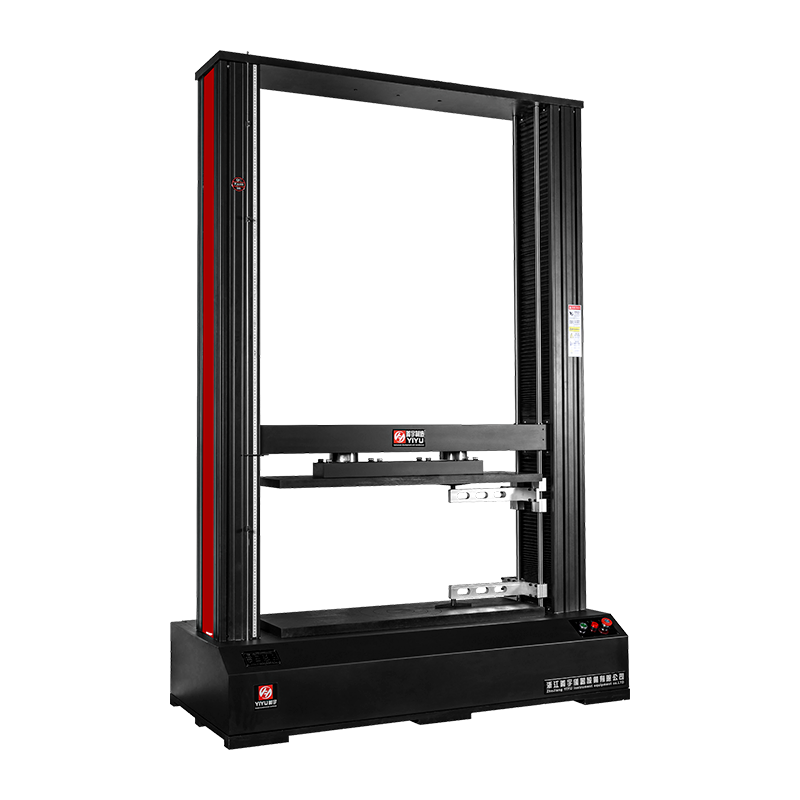 WDW Series Microcomputer Controlled Ring Stiffness Testing MachineRing stiffness testing needs precise control of deflection speed and plate alignment. The WDW series delivers repeatable results for large-diameter plastic pipes with closed-loop control and servo-driven deformation measurement.View Product →
Typical duties where a dedicated machine replaces a compromised universal setup.
| Test object |
Dedicated machine type |
Load mode |
Why a universal frame struggles |
| Prestress anchor assemblies |
Static load anchorage testing machine |
Cycled, then sustained tensile load |
Needs a stiff frame, long-stroke grips, and hours of load stability |
| Cement mortar cubes and prisms |
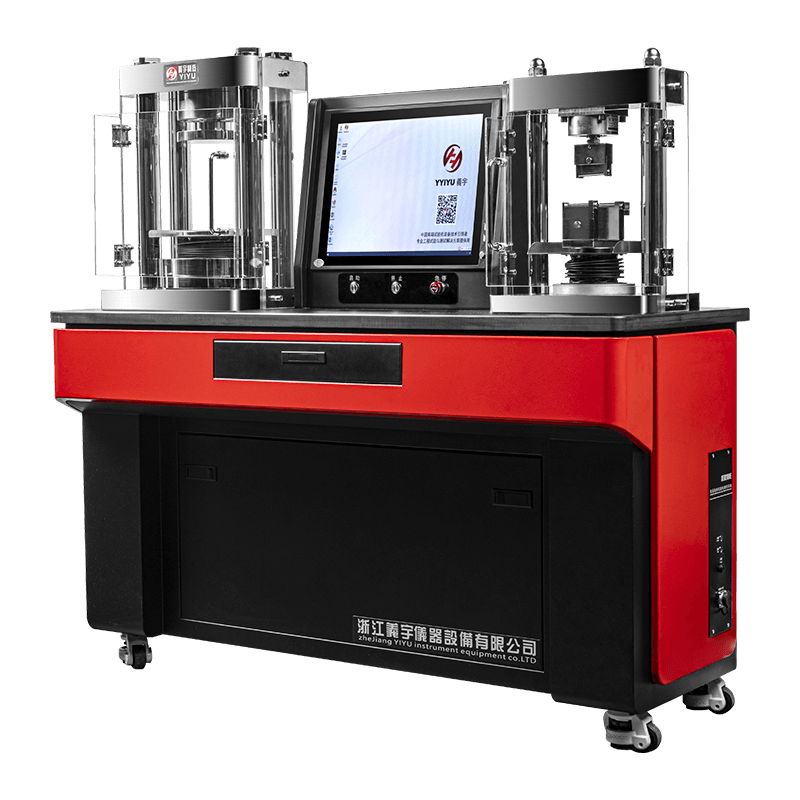
Compression-flexure integrated machine |
Compression plus three-point flexure |
Constant stress rate control and dual fixtures within one workflow |
| Manhole covers |
Manhole cover pressure testing machine |
Compression through a bearing pad |
Large specimen, pad-centered load path, and very high capacity |
| Thermoplastic pipes |
Ring stiffness testing machine |
Parallel-plate compression at a fixed deflection rate |
Low force but strict deflection and alignment control |
| Scaffold couplers |
Fastener mechanical performance testing machine |
Slip, tension, and combined loading |
Multi-mode fixtures that no generic grip set provides |
How to Choose Without Overbuying
Most selection problems are created on the specification sheet, long before delivery. Laboratory managers who work through the following sequence in order rarely regret the result:
- List every standard the machine must satisfy, including the report format each one requires, and confirm the supplier builds to those documents rather than "close equivalents."
- Size capacity with a margin of roughly 20 to 30 percent above your heaviest expected specimen, so the machine operates in its accurate mid-range instead of at its limit.
- Require a written fixture list covering platens, pads, seats, grips, and centering rings for the full specimen range you actually test, not just the flagship size.
- Match the control system to the standard: closed-loop servo control with constant-stress or constant-displacement modes wherever the test method specifies a loading rate.
- Review the software as carefully as the frame, checking automatic result calculation, curve storage, user permissions, and export formats your clients and auditors accept.
- Ask for calibration support, spare parts lead times, and response commitments in writing before the purchase order is signed, not after the first fault.
For a deeper walkthrough of capacity, fixtures, and control options, this guide to choosing the right specialized testing machines covers each factor in more detail.
Purchasing Risks That Surface After Delivery
Site conversations with laboratories that regret a purchase almost always trace back to the same handful of decisions:
- Buying by tonnage alone. A bigger frame does not fix a wrong load path, and oversized capacity usually means coarser resolution at the loads you actually use.
- Treating fixtures as optional extras. The machine arrives functional, while the required pads and seats arrive months later, or never.
- Ignoring specimen preparation. Rebar acceptance work needs gauge-length marking and weight-deviation measurement; without those instruments, the testing machine sits idle waiting for prepared samples.
- Skipping the service question. Servo valves, load cells, and calibration all need periodic attention, and a supplier without a responsive service chain turns every fault into schedule risk.
- Assuming one machine can do everything. Stretching a general-purpose frame toward specialized duty usually costs more in retrofits and disputes than ordering the dedicated machine first.
The Bottom Line Before You Buy
Specialized testing machines pay for themselves wherever the same test runs every day: fewer operator judgments, results formatted straight to the standard, and throughput that a multipurpose frame cannot match. When comparing suppliers, prioritize manufacturers that design to the governing national and transportation standards, maintain their own machining and calibration capability, and accept custom development from drawings or samples, because those are the partners who can match a machine to your real specimen list instead of forcing your laboratory to adapt to theirs.
If you are weighing a purchase, send your test schedule, specimen sizes, and applicable standards to the engineering team through the contact page, and request a configuration proposal with the fixture list and control modes priced separately. The difference between a sound procurement and an expensive lesson usually lives in those two attachments.

 简体中文
简体中文
 English
 русский