A concrete laboratory that certifies cementitious materials cannot afford to separate flexural and compressive testing for long. A batch of 40 mm by 40 mm by 160 mm prism specimens must be broken in flexure first, and the two remaining halves are then tested in compression. Moving those halves between two standalone machines adds cycle time, introduces handling risk, and ties up two floor spaces. A compression and flexure integrated machine solves the problem by combining both loading stations in one rigid frame. In most cases, the integrated approach cuts total test time and reduces the chance of specimen misalignment.
What Is a Compression and Flexure Integrated Machine?
An integrated compression and flexure machine is a single loading system with two separate test spaces: a three-point flexural station and a compression station. The frame may be two-column or four-column, and the two stations often share one hydraulic power unit, one control cabinet, and one set of measurement electronics. Most cement-specific models are built around the geometry of standard prism specimens, with a flexural jig that has two support rollers and one loading roller, plus a compression platen with spherical seating to ensure uniform load distribution. This configuration is used in laboratories that perform routine quality control on Portland cement, masonry cement, and other hydraulic binders.
Why Combined Machines Make Economic Sense
Realistic comparisons begin with the flow of a standard test. On a single integrated machine, the operator places the prism in the flexural jig, the machine applies load at the specified rate, and the two broken halves are then transferred sideways to the compression platen. No second machine has to be approached, no separate controller has to be set, and no second set of safety checks has to be repeated. The result is shorter cycle time, less fatigue, and lower installed cost.
Practical differences between separate compression/flexure machines and an integrated system
| Consideration |
Separate Machines |
Integrated Machine |
| Floor area |
Two frames, two pumps, and duplicate cable routes |
One frame with shared hydraulics and electronics |
| Setup per batch |
Align flexure, move, then align compression again |
Align once; break in flexure and move halves to adjacent platen |
| Calibration traceability |
Two load cells with independent certificates |
One controller record for both stations |
| Training effort |
Two control panels and two software interfaces |
One workflow and one operator screen |
For labs with high sample throughput, the time saving matters more than floor space. The integrated machine also reduces the number of separate components that must be maintained, which simplifies both budgeting and accreditation audits.
Core Design Features That Influence Accuracy
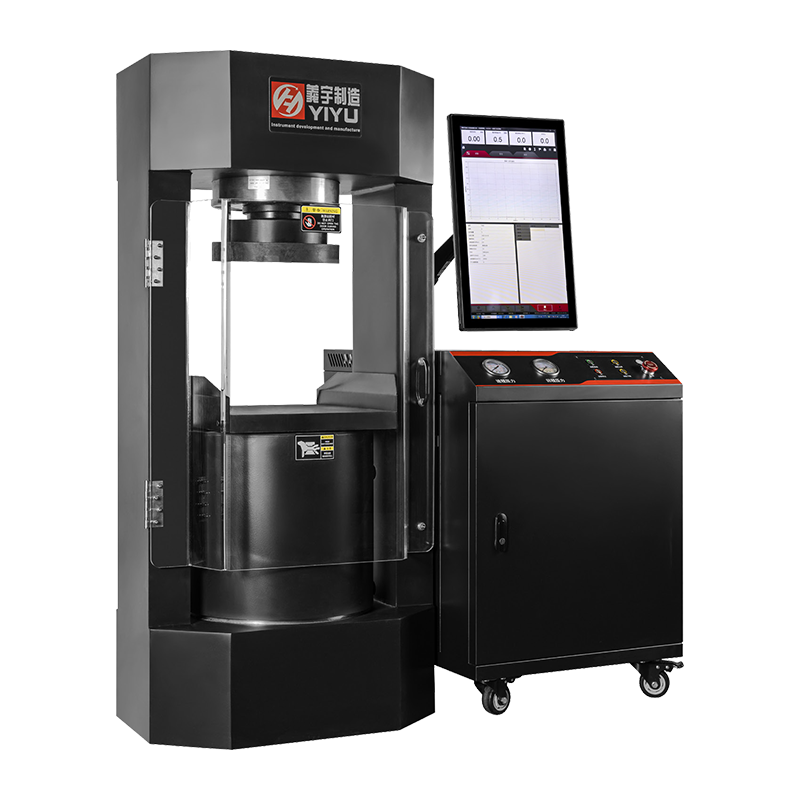
Accuracy depends more on frame stiffness and loading mechanism than on display resolution. A rigid frame keeps deflection low at maximum force, and a precise spherical seat prevents eccentric loading on the compression surface. For routine cement quality control, a compact two-column machine can deliver the required precision without the greater footprint of a four-column frame. A unit such as the YAW300C two-column cement flexural and compressive all-in-one machine is designed around this workflow: the flexural jig sits at a convenient height, and the compression space is positioned for the prism halves after flexure. Small details, such as roller hardness and spacing, affect the calculated flexural strength. The lower support rollers should rotate freely, and their separation must match the standard, commonly 100 mm for a 40 mm prism. Any nicks or rust on the rollers change the contact geometry and should be corrected before testing.
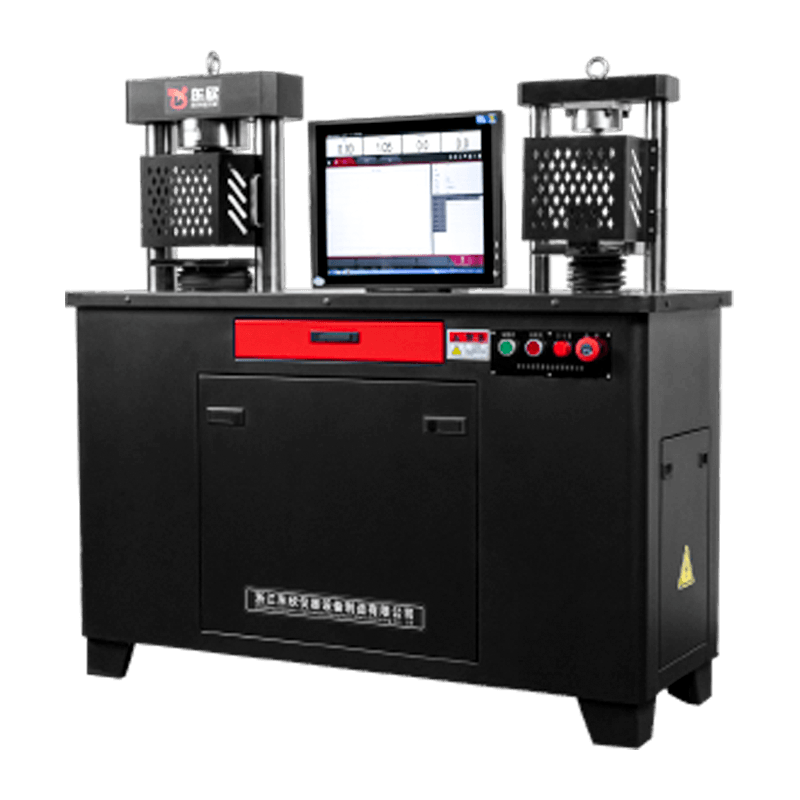 OEM/ODM Two-Column Microcomputer Controlled Cement Flexural and Compressive All-Zhejiang Yiyu Instrument Equipment Co., Ltd. is China Two-Column Microcomputer Controlled Cement Flexural and Compressive All-In-One Mach...View Product →
Standards, Loading Rates, and Calibration
Both ISO 679 and EN 196-1 specify a flexural loading rate of 50 N/s +/- 10% and a compressive loading rate of 2400 N/s +/- 200 N for cement mortar prisms. ASTM C348/C349 and GB/T 17671 follow similar principles, though specimen dimensions and platen details differ. The machine's controller should be able to hold these rates constant while the specimen is loading. A key capability is a smooth approach to force without overshoot, especially in flexure where fracture occurs suddenly. Calibration is the other half of trustworthy results. The force indication on each station should be verified with a reference load cell traceable to national standards, and the accuracy class should meet the requirements of ISO 7500-1, typically class 1 for general acceptance testing. The loading piston, valves, and oil filters need scheduled checks because an unsteady flow of hydraulic oil appears as drift in the applied load.
Choosing the Right Capacity and Configuration
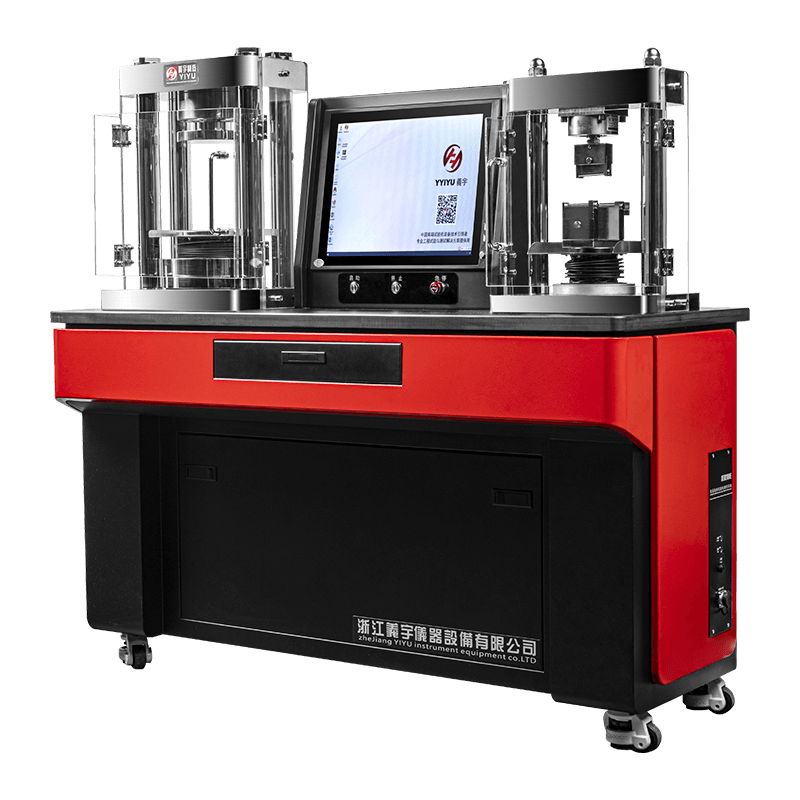
Selecting an integrated machine starts with the maximum compressive force you expect to apply. A 300 kN capacity is common for cement testing because it covers standard 40 mm mortar prisms and leaves margin for high-strength mixes. Flexural capacity is usually lower, often 10 kN to 15 kN, but it must still accommodate the breaking load of the prism. Next, confirm the space between compression platens; this should be large enough for the specimen halves and any packing plates used. Also check the machine's operating mode. For repetitive batches, a microprocessor-controlled model can store test methods, set the loading rate, and record results. Laboratories that run many routine batches should compare models such as the YAWD series microcomputer-controlled cement compressive and flexural all-in-one machine, which is configured to reduce manual data entry and guide the operator through the flexure-to-compression sequence.
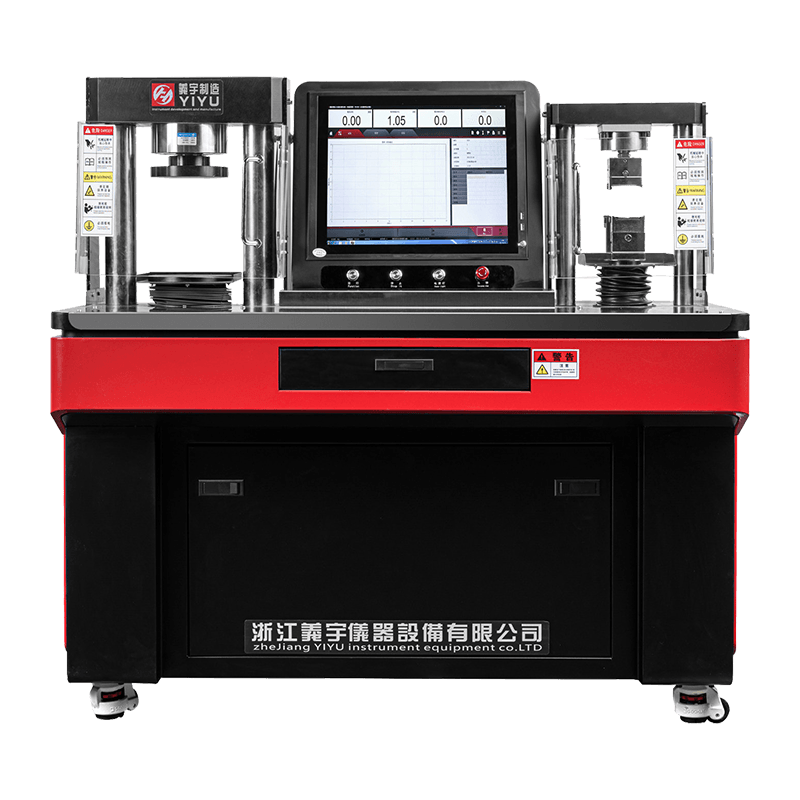 OEM/ODM Microcontroller Controlled Cement Compressive And Flexural All-In-One MaZhejiang Yiyu Instrument Equipment Co., Ltd. is China Microcontroller Controlled Cement Compressive And Flexural All-In-One Machine Suppl...View Product →
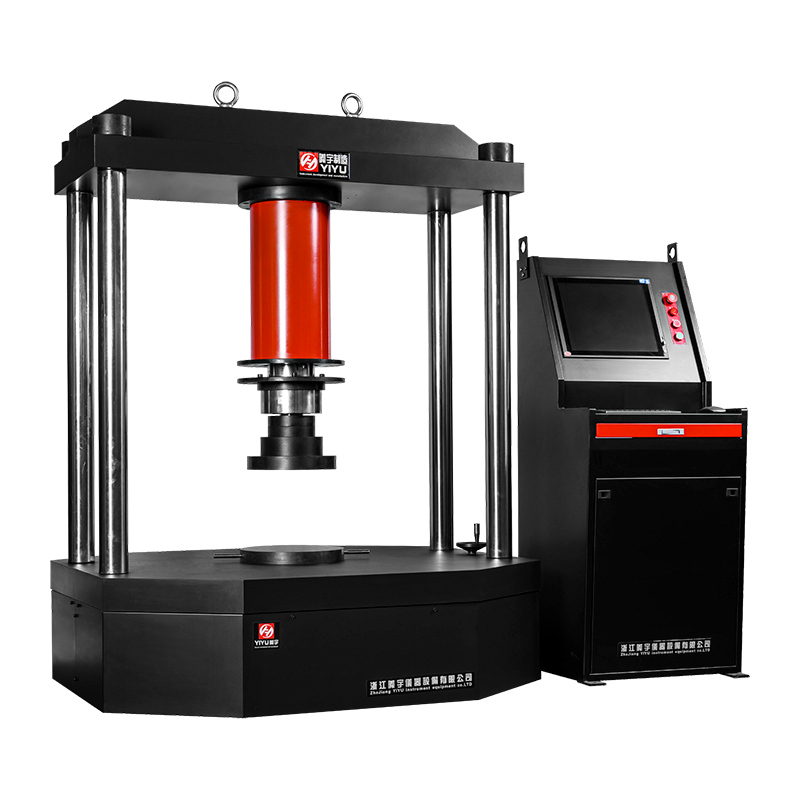
Frame geometry matters too. A two-column frame is usually enough for standard cement prisms, while a four-column frame suits laboratories that also test larger specimens or need extra stability under long loading cycles. If the lab will eventually connect to a LIMS, confirm that the controller can export test reports in a usable format.
A common purchasing mistake is to size the machine only for the cement types tested today. If the laboratory later works with high-early-strength or blended cements whose compressive force approaches the original limit, the extra capacity becomes the difference between a smooth test and an overloaded frame. Reserve capacity also extends the interval between major piston or seal repair.
Maintenance and Routine Checks
These machines are no more difficult to maintain than separate compression machines, but the integrated design means one malfunction can stop both tests. Check hydraulic oil level and cleanliness monthly, inspect piston seals for weeping, and keep platens and rollers free of cement residue. For the flexural jig, verify that the support and loading rollers are parallel and have no flat spots. Recalibration should follow the manufacturer's schedule and local accreditation requirements, but at least once per year. Keep a simple log of the machine's daily load cell readings so any drift is visible in time to correct it.
- Wipe compression platens and flexural rollers after each batch.
- Verify roller spacing before a long series of tests.
- Check the hydraulic unit for leaks or unusual noise.
- Review control software for saved calibration coefficients.
An integrated compression and flexure machine should be judged not only by frame capacity but by how well it fits the daily flow of a testing laboratory. The best configuration keeps the operator close to the specimen, reduces handling, and keeps loading rates within standard tolerances. For a structured comparison of the design variables, our guide to compression flexure integrated machine standards and selection criteria covers the trade-offs in more detail. For a new lab layout or an equipment replacement project, the decision is largely practical: fewer frames, fewer controllers, and a faster path from a fresh prism to a certified test report.

 简体中文
简体中文
 English
 русский