What Is a Hydraulic Universal Testing Machine?
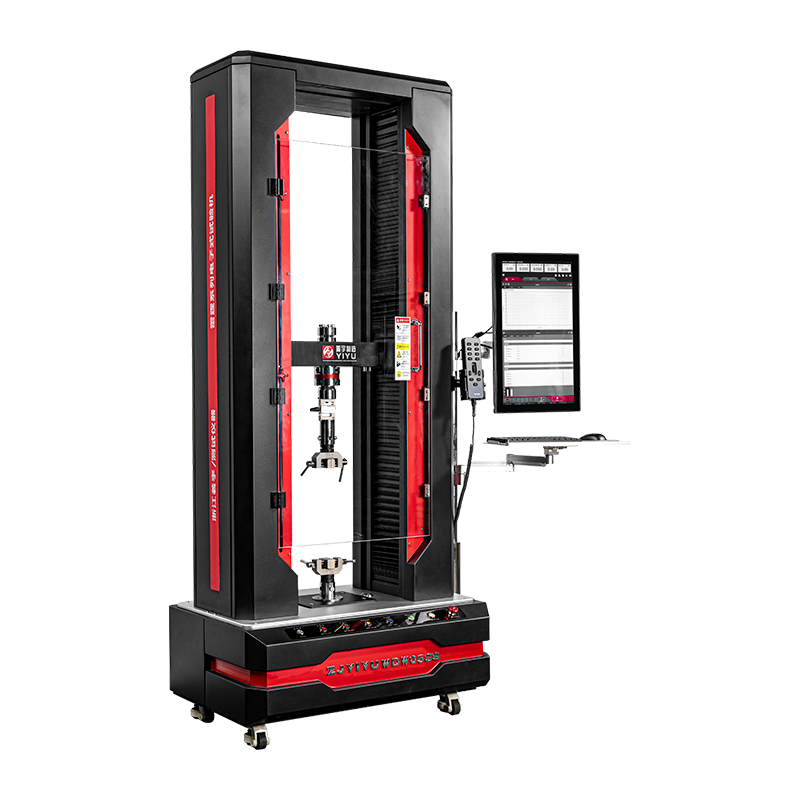
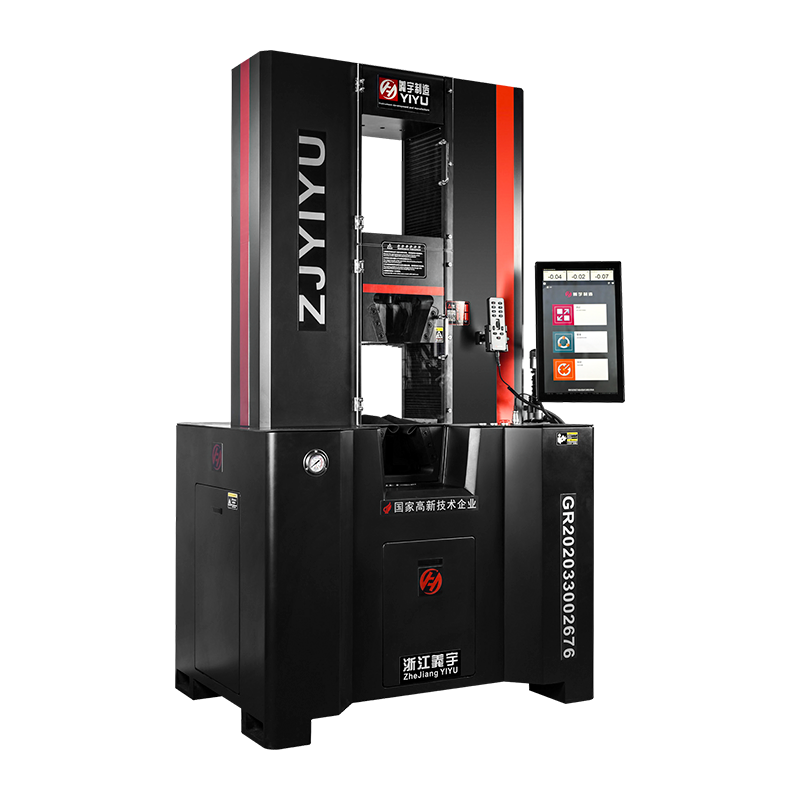
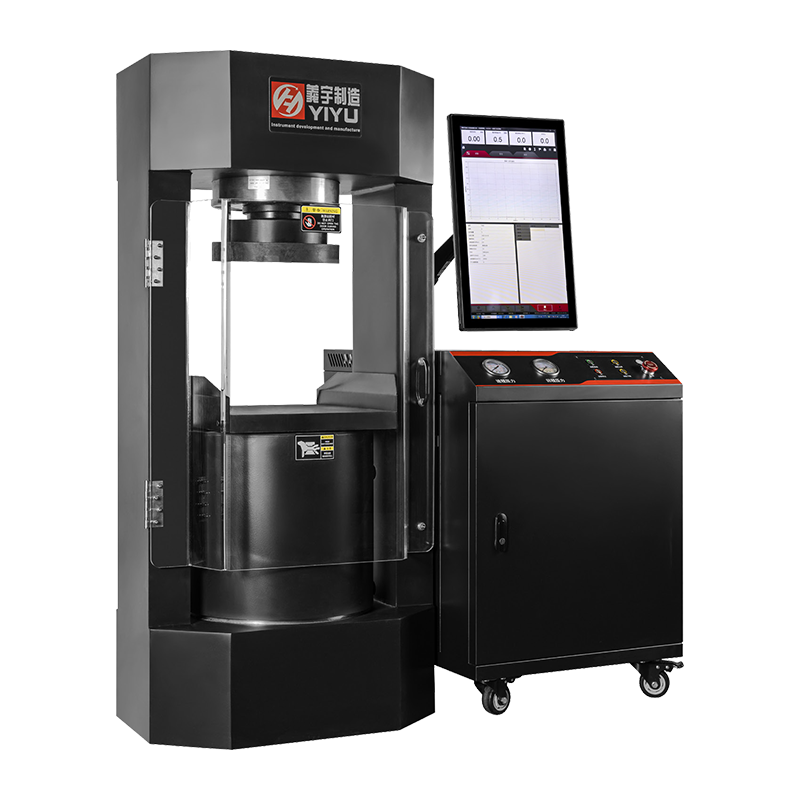
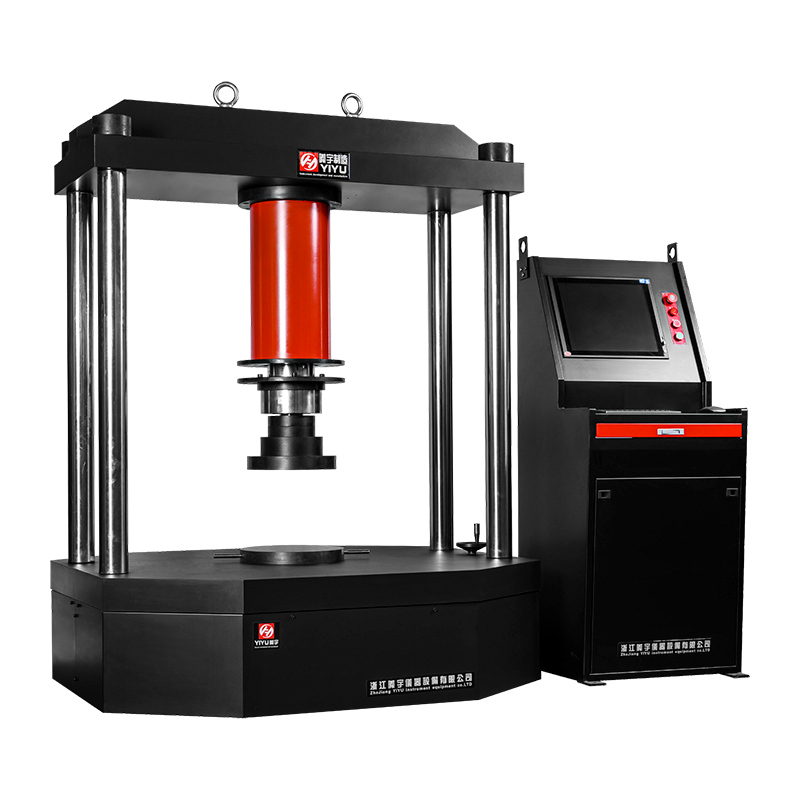
A hydraulic universal testing machine (HUTM) is a materials testing system that uses a hydraulic power unit — a pump, oil reservoir, and piston-driven cylinder — to apply tensile, compression, bending, and shear loads to a specimen. Its defining advantage is raw force capacity: hydraulic UTMs commonly test from 300 kN up to 3,000 kN, well beyond what electric screw-driven machines can practically reach, which is why they are the standard choice for testing metals, rebar, concrete, and other high-strength materials.
In short: if a test requires more than roughly 300 kN of force, or involves structural metals, reinforcing bar, or concrete, a hydraulic universal testing machine is very likely the correct equipment category to specify.
How the Hydraulic System Actually Applies Load
A hydraulic UTM operates on a straightforward logic: hydraulic transmission combined with closed-loop electronic control. Four subsystems work together every time a test runs:
- Power generation: an electric motor drives a hydraulic pump, converting electrical energy into hydraulic pressure, with oil filtered and delivered to the main cylinder
- Load application: the hydraulic cylinder pushes or pulls the piston, driving the crosshead, while the grips clamp the specimen to transmit tensile or compressive force
- Closed-loop control: a load cell continuously measures the applied force and feeds that signal back to the controller in real time
- Servo regulation: the controller adjusts the servo valve opening to regulate oil flow, holding the load, displacement, or strain rate steady against the test's target profile
This feedback loop is what separates a modern servo-hydraulic UTM from a purely manual hydraulic press. The load cell and servo valve work together dozens of times per second, correcting for oil compressibility and specimen behavior so the machine can hold a genuinely constant loading rate right up to the point of specimen failure.
Typical Capacity Ranges and What They're Used For
Hydraulic UTMs are built and specified around their frame capacity, since this determines which specimens the machine can physically break or deform to the required point. The industry generally groups capacity into a few practical bands.
Common hydraulic universal testing machine capacity bands and typical applications
| Capacity Range |
Typical Specimens |
Typical Setting |
| 300–600 kN |
Small rebar, wire, fasteners, thin plate |
University labs, QC departments |
| 600–1,000 kN |
Structural steel bar, tube, pipe, strand |
Steel mills, construction material testing |
| 1,000–2,000 kN |
Large-diameter rebar, heavy plate, concrete components |
Third-party inspection, civil engineering labs |
| 2,000–3,000 kN |
Oversized metallic specimens, heavy structural components |
Research institutes, specialized industrial labs |
Most general-purpose industrial and QC applications fall in the 600 kN to 2,000 kN window, which is why this range is the most commonly stocked configuration across major equipment manufacturers.
What Types of Tests a Hydraulic UTM Performs
The "universal" in universal testing machine refers to its ability to run multiple test types on one frame, provided it has the right grips and fixtures fitted. A hydraulic UTM typically supports:
- Tensile testing — measuring tensile strength, yield strength, elongation, and modulus of elasticity as a specimen is pulled apart
- Compression testing — evaluating compressive strength and yield, commonly used for concrete cylinders and structural components
- Bend and flexure testing — assessing a material's resistance to breaking or cracking when deformed, often applied to reinforcing bar and welded plate
- Shear testing — determining a material or joint's resistance to forces that slide one layer against another, relevant to fasteners and welded or adhesive joints
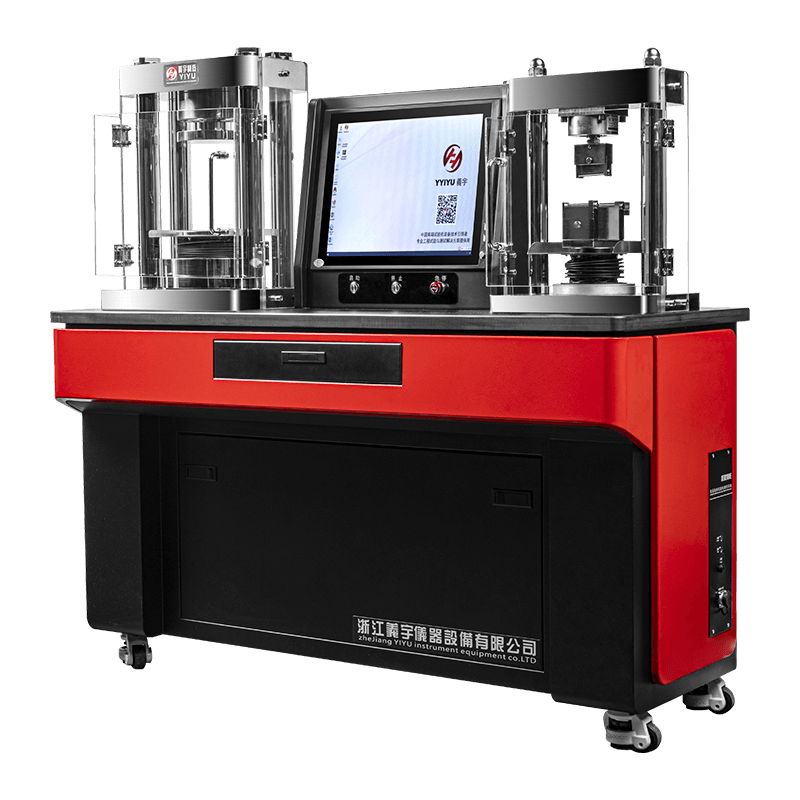
Many hydraulic UTMs use a dual-space design, with one test zone for tension and a separate zone for compression, allowing operators to switch between test types without removing heavy fixtures — a meaningful time saving in labs running high sample volumes.
Accuracy and Standards Compliance
A hydraulic UTM's usefulness ultimately comes down to whether its results are trustworthy and legally defensible, which is why accuracy specifications and standards compliance matter as much as raw capacity. Industrial-grade hydraulic UTMs are generally built to meet:
Typical accuracy specifications and the standards they satisfy
| Measurement |
Typical Accuracy |
Standards Referenced |
| Load measurement |
±0.5% of reading to 1/50 of capacity |
ISO 7500-1, ASTM E4, JIS B7721 |
| Strain measurement |
±0.5% of reading to 1/50 of full scale |
ASTM E83, ISO 9513, EN 10002-4 |
| Position / displacement |
±0.5% of reading or 0.001 mm, whichever is greater |
Manufacturer-specified, verified per ISO 7500-1 |
For general mechanical testing of metals, the most commonly referenced standard is ASTM E8 (or its international equivalent, ISO 6892), alongside application-specific standards such as EN ISO 15630-1 for reinforcing bar and ASTM A370 for steel products. A lab's choice of hydraulic UTM should be checked against whichever specific standards its test reports need to satisfy, since not every machine is pre-configured for every standard out of the box.
Hydraulic vs. Electromechanical: Choosing the Right Drive System
Hydraulic is not automatically the "better" UTM category — it is the better category for a specific range of force and material requirements. Electromechanical (screw-driven) UTMs use an electric motor and precision screw system instead of hydraulic pressure, and they compete directly with hydraulic machines in the mid-force range.
Hydraulic versus electromechanical universal testing machines compared
| Factor |
Hydraulic UTM |
Electromechanical UTM |
| Typical force range |
Above 300 kN, up to 3,000 kN+ |
5 kN to roughly 300 kN |
| Best-suited materials |
Metals, rebar, concrete, structural alloys |
Plastics, textiles, elastomers, thin films, composites |
| Cost at high capacity |
More cost-effective above ~300 kN |
Cost climbs steeply at high force ratings |
| Operating noise |
Audible hydraulic pump operation |
Generally quieter |
| Maintenance profile |
Requires hydraulic fluid and seal maintenance |
Lower maintenance overhead |
The practical rule of thumb used across the industry: above roughly 300 kN, a hydraulic UTM is almost always the more durable and cost-effective choice, while machines rated below that threshold generally favor electromechanical designs for their finer control and lower operating cost.
Industries and Applications That Rely on Hydraulic UTMs
Because hydraulic UTMs handle the force levels required for structural and construction materials, they show up consistently across a specific set of industries and use cases:
- Steel production and processing — verifying tensile and yield strength of bar, plate, tube, and wire against mill certification requirements
- Construction and civil engineering — testing rebar, structural connectors, and concrete components before they're approved for use in a project
- Import/export material inspection — confirming imported steel meets ASTM/ISO specifications and exported material meets destination-market standards
- Third-party quality arbitration — independent re-testing when a material quality dispute (for example, substandard rebar strength) requires a legally valid report
- University and research testing — mechanical engineering coursework and exploratory testing of new materials, including composites and materials tested under extreme conditions
Water conservancy, hydropower, and bridge engineering projects are also frequent users of high-capacity hydraulic UTMs, since the structural components involved routinely exceed what smaller testing frames can evaluate.
Key Components to Evaluate Before Purchasing
Specifying a hydraulic UTM involves more than picking a capacity number. A handful of design details determine how well the machine will actually perform in day-to-day use.
Grip and Fixture Range
Hydraulic wedge grips typically accommodate round specimens across a defined diameter range — commonly 8 to 32 mm — with separate jaw faces required for flat samples. Confirming the grip range matches your specimen geometry avoids costly change-out delays.
Frame Stiffness and Alignment
At high loads, frame rigidity matters as much as raw capacity. A high-stiffness, multi-column construction minimizes frame deflection under load, which directly improves the accuracy of yield and elongation measurements — particularly important for materials with subtle yield behavior like structural steel.
Control Software and Reporting
Modern hydraulic UTMs pair the mechanical frame with software that manages test parameters, closed-loop control mode (constant load, constant displacement, or constant strain rate), and automated report generation. Confirm the software supports the specific test standards your lab reports against, and that data can export into the formats your quality system requires.
Extensometer Compatibility
Strain measurement accuracy depends heavily on the extensometer used. Machines compatible with ASTM E83 Class B or ISO 9513 Class 0.5 extensometers meet the accuracy threshold expected for most certified mechanical testing programs.
Maintenance and Calibration Requirements
Because a hydraulic UTM's force output depends on fluid pressure rather than a mechanically fixed screw pitch, it requires a maintenance discipline that electromechanical machines don't share to the same degree.
- Hydraulic fluid should be checked and filtered regularly to prevent contamination from affecting servo valve response and load accuracy
- Seals and hydraulic lines need periodic inspection for wear, since leaks directly reduce achievable force and control precision
- Safety check valves and limit switches on the piston and grips should be verified as part of routine safety checks, not left until a fault occurs
- Load cell calibration should be performed on a defined schedule — typically annually — to maintain compliance with ISO 7500-1 or ASTM E4 verification requirements
Labs operating under an accreditation program (such as ISO/IEC 17025) generally need to document this calibration history as part of their quality system, so machine selection should factor in how easily a given manufacturer supports traceable calibration certificates.
Key Takeaways
A hydraulic universal testing machine earns its place in a lab by solving a specific problem that electromechanical machines can't handle as economically: generating and precisely controlling very large forces, typically above 300 kN, for tensile, compression, bend, and shear testing of metals, rebar, and concrete. The combination of a hydraulic power unit and closed-loop servo control is what allows these machines to combine that raw force with the accuracy — commonly ±0.5% of reading — needed for certified, standards-compliant test reports.
For labs specifying a new machine, the decision usually comes down to matching frame capacity and grip range to actual specimen requirements, then confirming the control software and calibration support align with whichever ASTM, ISO, or EN standards the lab's test reports need to satisfy.

 简体中文
简体中文
 English
 русский