A Universal Testing Machine (UTM) is used to measure the mechanical properties of materials by applying controlled tensile, compressive, flexural, shear, and other forces until the material deforms or fractures. The core purpose of a UTM is to generate precise, quantifiable data — such as tensile strength, yield strength, elongation, Young's modulus, and compressive strength — that engineers, manufacturers, and quality control laboratories use to verify material performance, validate product designs, and ensure compliance with industry standards. From steel rebar and rubber gaskets to medical sutures and aerospace composites, virtually every solid material or component can be tested on a UTM. This article explains exactly what UTMs are used for, how electronic universal testing machines work, and why they are indispensable across modern industry.
The Primary Tests Performed on a Universal Testing Machine
The word "universal" reflects the machine's ability to perform a wide range of mechanical tests by changing fixtures and test configurations. The following are the most common test types and the specific material properties they measure.
Tensile Testing
Tensile testing (pull testing) is the single most common application of a UTM. A specimen is gripped at both ends and pulled apart at a controlled rate until it breaks. The machine records force vs. displacement continuously, generating a stress-strain curve from which the following values are derived:
- Ultimate tensile strength (UTS): The maximum stress the material withstands before fracture
- Yield strength: The stress at which permanent (plastic) deformation begins
- Elongation at break (%): A measure of material ductility
- Young's modulus (elastic modulus): The stiffness of the material in the elastic region
- Proof strength / offset yield: Commonly 0.2% offset, used for materials without a clear yield point
Standards governing tensile testing include ASTM E8/E8M (metals), ISO 6892-1 (metals), ASTM D638 (plastics), ISO 527 (plastics), and ASTM D412 (rubber and elastomers).
Compression Testing
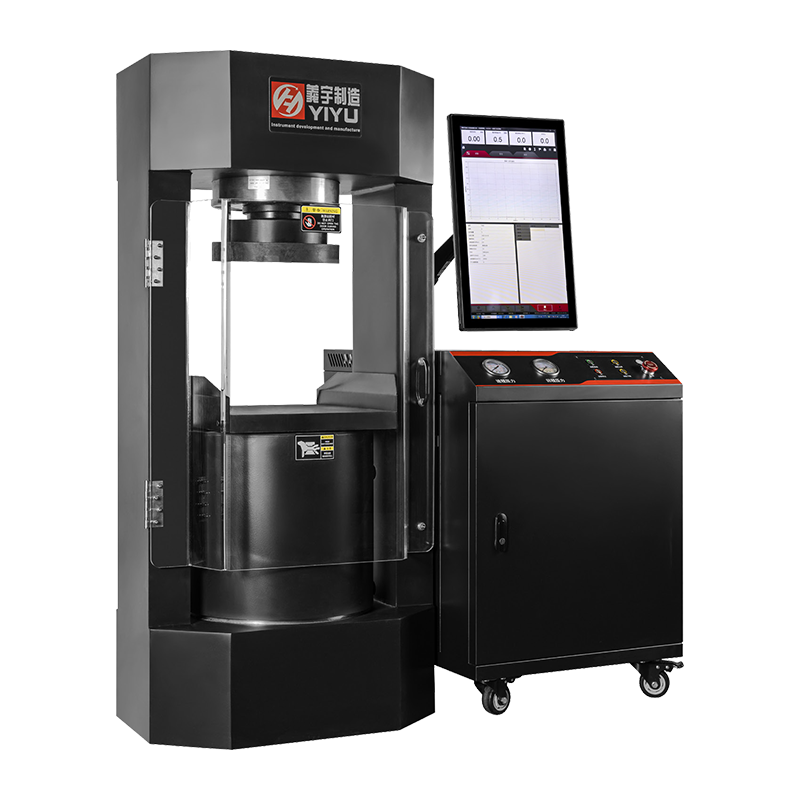
In compression testing, the specimen is placed between two platens and loaded in a pressing motion. This test is critical for materials and components that primarily bear compressive loads in service — concrete columns, foam padding, packaging materials, and bone implants. Key outputs include compressive strength, compressive yield strength, and compressive modulus. Concrete, for example, is routinely tested at 28-day cure using ASTM C39, with most structural mixes targeting a minimum compressive strength of 3,000–5,000 psi (20–35 MPa).
Flexural (Bend) Testing
Flexural testing measures a material's resistance to bending. A beam-shaped specimen is supported at two points and loaded at one (three-point bend) or two central points (four-point bend). Flexural strength, flexural modulus, and flexural strain at break are the primary outputs. This test is widely used for plastics (ASTM D790, ISO 178), composites, ceramics, and wood products. Four-point bend testing is preferred when evaluating surface flaws or coating adhesion, as it applies a uniform bending moment across a longer span.
Shear and Peel Testing
UTMs equipped with appropriate fixtures measure shear strength of adhesives, welds, fastener joints, and laminates. Peel testing (90° or 180° peel angle) quantifies the adhesion strength of tapes, films, labels, and bonded assemblies. These tests are critical in packaging, electronics, and automotive industries where adhesive performance directly affects product reliability. Peel force values are typically reported in N/25mm or lbf/in.
Tear, Puncture, and Burst Testing
Thin films, textiles, geomembranes, and flexible packaging are tested for tear resistance (ASTM D1004, ISO 34) and puncture resistance using probe fixtures. Burst testing applies biaxial stress to thin membranes. These tests are essential for medical device packaging validation, food packaging qualification, and safety-critical membrane applications such as chemical containment liners.
Industries and Applications: Where Universal Testing Machines Are Used
UTMs are not confined to a single sector — they are standard equipment in quality laboratories, R&D centers, and production floors across virtually every manufacturing industry. The table below maps the major industries to their specific UTM applications and relevant standards.
Table 1: Key industries using universal testing machines and their primary test applications
| Industry |
Materials / Products Tested |
Test Type |
Key Standards |
| Metals & Steel |
Rebar, sheet metal, wire, castings |
Tensile, compression, bend |
ASTM E8, ISO 6892-1 |
| Plastics & Polymers |
Injection-molded parts, films, pipes |
Tensile, flexural, impact |
ASTM D638, ISO 527, ASTM D790 |
| Rubber & Elastomers |
Seals, gaskets, hoses, tires |
Tensile, tear, compression set |
ASTM D412, ISO 37, ASTM D1004 |
| Medical Devices |
Sutures, stents, implants, packaging |
Tensile, peel, puncture, fatigue |
ISO 10555, ISO 11135, ASTM F88 |
| Aerospace & Composites |
CFRP, laminates, adhesive bonds |
Tensile, shear, inter-laminar strength |
ASTM D3039, ASTM D2344, EN 2597 |
| Construction |
Concrete, rebar, mortar, timber |
Compression, tensile, flexural |
ASTM C39, ASTM A370, EN 12390 |
| Packaging |
Films, cartons, bottles, seals |
Tensile, peel, burst, seal strength |
ASTM F88, ASTM D882, ISO 11607 |
| Textiles & Geotextiles |
Fabrics, nonwovens, geomembranes |
Tensile, tear, bursting strength |
ASTM D5034, ISO 13934, ASTM D4632 |
| Automotive |
Seat belts, welds, bushings, foams |
Tensile, compression, peel, fatigue |
ISO 6892, FMVSS standards, VDA specs |
How Electronic Universal Testing Machines Work
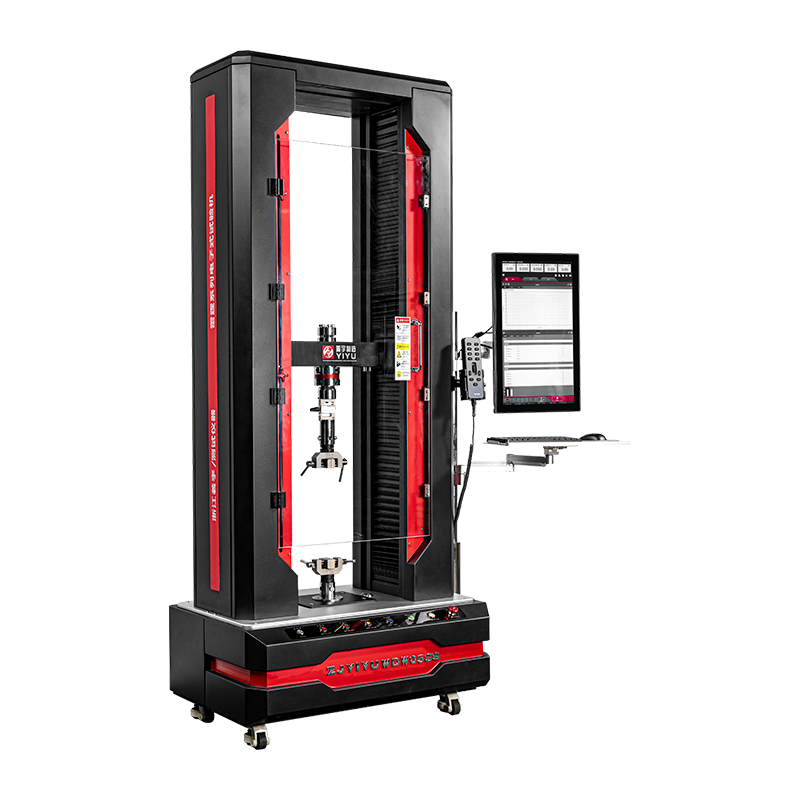
Electronic universal testing machines (also called electromechanical UTMs) use a servo motor and precision lead screw or ball screw drive system to move the crosshead at a controlled speed, applying force to the specimen with exceptional accuracy. This is the dominant technology for force ranges from 0.5 N to 600 kN (approximately 0.1 lbf to 135,000 lbf) — covering the vast majority of material testing applications outside of large-scale structural and geotechnical work.
Core Components of an Electronic UTM
- Load cell: A precision force transducer mounted between the crosshead and grip. Strain gauge-based load cells are standard, with accuracy typically ±0.5% of indicated load or better (Class 0.5 per ISO 7500-1). Multi-range load cells allow a single machine to test from 1 N to 50 kN without hardware changes.
- Servo drive system: An AC servo motor with encoder feedback drives the crosshead via a precision ball screw. Crosshead speed is programmable from as slow as 0.001 mm/min (for creep tests) to 1,000 mm/min or faster (for high-rate impact simulations).
- Extensometer: An optional clip-on or non-contact (video or laser) device that measures specimen elongation or strain with greater precision than crosshead displacement alone. Required for accurate Young's modulus and proof strength measurements per ISO 9513 and ASTM E83.
- Control software: A PC-based interface that programs test methods, controls the drive in real time using closed-loop feedback (force control, displacement control, or strain control), records data at sampling rates up to 2,000 Hz, and generates reports in compliance with ASTM, ISO, or custom formats.
- Grips and fixtures: Interchangeable attachments — wedge grips, pneumatic grips, compression platens, bend fixtures, peel fixtures — that adapt the machine to different specimen geometries and test types.
Electronic UTM vs. Hydraulic UTM: Key Differences
Both technologies are classified as universal testing machines, but they serve different capacity ranges and precision requirements.
Table 2: Electronic vs. hydraulic universal testing machine comparison
| Feature |
Electronic UTM |
Hydraulic UTM |
| Typical force range |
0.5 N – 600 kN |
10 kN – 10,000 kN+ |
| Speed control accuracy |
Excellent (±0.1%) |
Good (±0.5–1%) |
| Low-force accuracy |
Superior |
Limited (oil viscosity effects) |
| Maintenance requirements |
Low (no hydraulic fluid) |
Higher (seals, fluid changes) |
| Best for |
Polymers, composites, medical, QC |
Heavy structural steel, concrete |
| Laboratory footprint |
Compact, benchtop options available |
Large floor-standing units |
| Energy efficiency |
High (motor only runs under load) |
Lower (pump runs continuously) |
What Specific Material Properties Does a UTM Measure?
Understanding the output of a UTM test — not just the test type — is essential for anyone specifying or interpreting results. The following are the key mechanical properties a UTM quantifies, with typical value ranges for reference.
Table 3: Mechanical properties measured by UTMs with definitions and example values
| Property |
Definition |
Unit |
Example Values |
| Ultimate Tensile Strength (UTS) |
Maximum stress before fracture |
MPa / psi |
Steel: 400–2,000 MPa; HDPE: 20–37 MPa |
| Yield Strength |
Stress at onset of plastic deformation |
MPa / psi |
A36 steel: 250 MPa; 6061-T6 Al: 276 MPa |
| Young's Modulus (E) |
Stiffness in elastic region (stress/strain) |
GPa |
Steel: 200 GPa; CFRP: 70–200 GPa; Rubber: 0.01–0.1 GPa |
| Elongation at Break |
Plastic strain at fracture |
% |
Mild steel: 20–35%; Silicone rubber: 200–600% |
| Flexural Strength |
Max stress in outer fiber under bending |
MPa |
ABS: 55–90 MPa; Concrete: 3–5 MPa |
| Compressive Strength |
Max stress under compressive load |
MPa / psi |
Concrete: 20–60 MPa; Aluminum foam: 5–30 MPa |
| Peel Strength |
Force to peel adhesive bond per unit width |
N/25mm |
Medical tape: 2–8 N/25mm; Structural adhesive: 50–200 N/25mm |
| Tear Strength |
Force to propagate a tear in a film or elastomer |
N/mm or kN/m |
Natural rubber: 20–60 kN/m; LDPE film: 5–20 N/mm |
UTM Use in Quality Control vs. Research and Development
Universal testing machines serve two fundamentally different but equally critical functions in industry: quality control (QC) and research & development (R&D). The testing strategy, machine configuration, and data requirements differ significantly between these contexts.
Quality Control Applications
In production QC environments, UTMs are used to verify that incoming raw materials and outgoing finished products meet specified minimum mechanical requirements. Tests are typically standardized, repetitive, and fast — a single tensile test on a metal specimen may take only 2–5 minutes, and QC labs routinely process 50–200 specimens per shift. Key features for QC use include:
- Pre-programmed test methods to ensure operator consistency and compliance with ASTM or ISO standards
- Pass/fail reporting against defined specification limits
- LIMS (Laboratory Information Management System) integration for traceability and statistical process control (SPC)
- Automated grip systems (pneumatic grips) to minimize operator variation in specimen clamping
Research and Development Applications
In R&D settings, UTMs are used to characterize new materials, optimize formulations, and establish the mechanical property envelope of novel compounds. R&D testing demands greater flexibility:
- Wide speed range to capture rate-dependent behavior (viscoelastic materials, polymers at different strain rates)
- Environmental chambers (−70°C to +250°C) to test temperature-dependent mechanical behavior
- High-resolution extensometry (video extensometers with <0.1 µm displacement resolution) for elastic modulus characterization
- Multi-axis force measurement and digital image correlation (DIC) integration for full-field strain mapping
- Cyclic fatigue testing with programmable load profiles to establish S-N (stress-life) curves
Electronic Universal Testing Machine Configurations: Single-Column vs. Dual-Column
Electronic UTMs are available in two principal frame designs — single-column (also called single-column or tabletop) and dual-column (floor-standing) — each suited to different force ranges and specimen types.
Single-Column UTMs
Single-column machines are compact, benchtop instruments designed for low-force applications typically between 0.5 N and 5 kN (up to ~1,100 lbf). They are widely used for testing films, fibers, adhesives, medical devices, small plastic components, and food texture. Their compact footprint (typically 40 × 60 cm base) makes them ideal for laboratory benches and cleanroom environments. Leading examples include the Instron 3340 series, Zwick/Roell Z005, and MTS Criterion C42.
Dual-Column UTMs
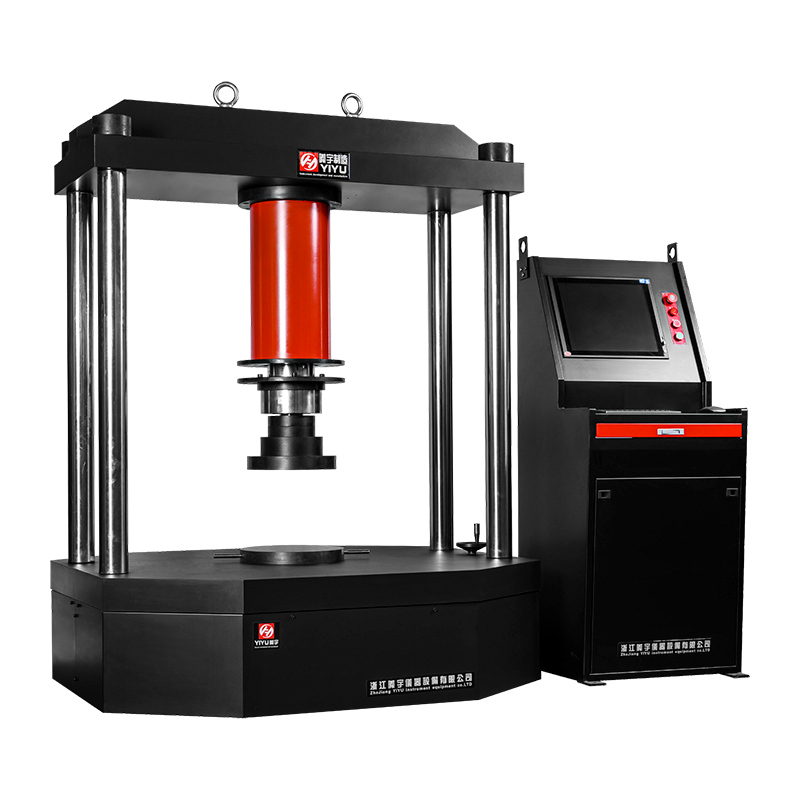
Dual-column floor-standing machines provide greater rigidity and force capacity — typically from 10 kN to 600 kN (2,250–135,000 lbf) — for testing metals, structural plastics, composites, wire rope, fasteners, and construction materials. The twin-column design minimizes frame deflection under high loads, which is critical for accurate Young's modulus measurement. Examples include the Instron 5980 series (up to 600 kN), Zwick/Roell Z600, and Shimadzu AG-X Plus.
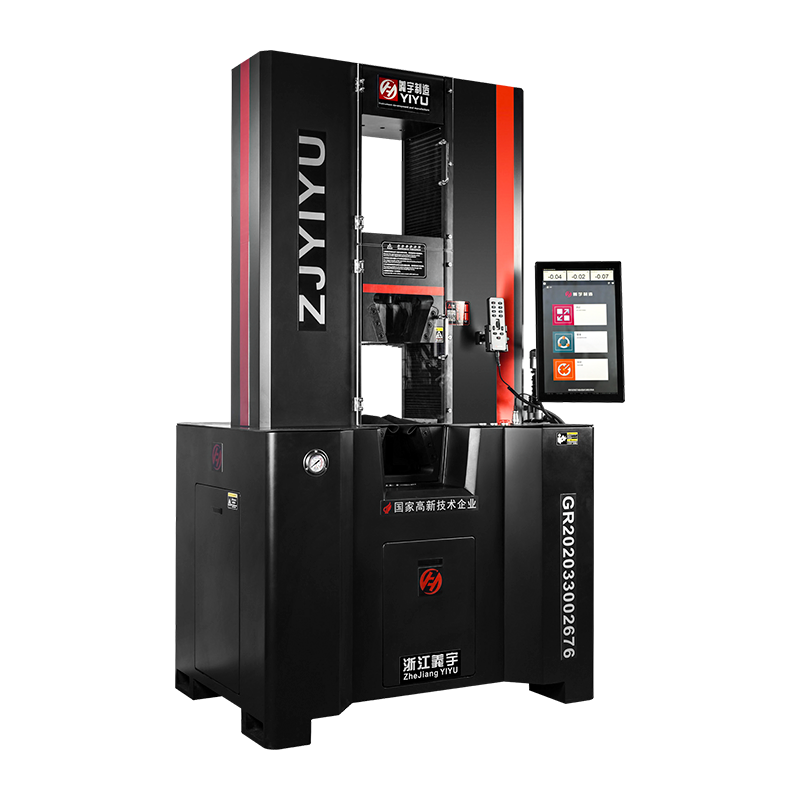
For industrial-scale structural testing beyond 600 kN — bridge components, full-scale concrete beams, large anchor systems — servo-hydraulic UTMs in the 1,000–10,000 kN range are used, often installed in dedicated structural testing facilities with reinforced floors.
Standards and Compliance: Why UTM Testing is Legally and Contractually Required
In many sectors, UTM-based mechanical testing is not optional — it is mandated by law, contract, or certification requirements. Understanding the regulatory landscape clarifies why UTMs are standard capital equipment in industrial laboratories worldwide.
- Construction and civil engineering: Most building codes (IBC, Eurocode, GB50010) require certified tensile and compressive testing of structural steel and concrete per ASTM A370 and ASTM C39. Steel mill test reports (MTRs) documenting UTM results are contractually required for structural steel procurement globally.
- Medical devices: FDA 21 CFR Part 820 (QSR) and ISO 13485 require documented mechanical testing of device components and packaging. Suture tensile testing per USP <881> and seal integrity testing per ASTM F88 are standard regulatory submission requirements.
- Aerospace: AS9100 quality management and FAA/EASA material qualification require coupon-level tensile and shear testing of every material batch used in primary structure, with test reports traceable to the specific aircraft build records.
- Automotive: OEM supplier quality agreements (GM, Ford, Toyota) typically require PPAP (Production Part Approval Process) documentation that includes mechanical test data for all structural and safety-related components.
- Packaging for regulated goods: ISO 11607 requires validated seal strength data (ASTM F88) for sterile medical device packaging; similar requirements apply to food-contact and pharmaceutical packaging under FDA 21 CFR and EU Regulation 10/2011.
UTM calibration traceability is a universal regulatory requirement — machines must be calibrated annually (or per use frequency) against certified reference standards traceable to NIST (USA), PTB (Germany), or equivalent national metrology institutes, with calibration records retained for audit purposes.
Selecting the Right Universal Testing Machine: Key Specification Criteria
Choosing the correct UTM for a specific application requires evaluating several interdependent specifications. Purchasing a machine undersized for the application risks system overloads and inaccurate data; oversizing wastes capital and reduces low-force measurement accuracy.
- Force capacity: Select a machine whose rated capacity is 1.5–3× the maximum expected test force. A 10 kN machine testing specimens that break at 9.5 kN provides poor resolution in the elastic region. For a 2 kN maximum test force, a 5 kN machine is typically optimal.
- Load cell accuracy class: For modulus measurements, specify ISO 7500-1 Class 0.5 (±0.5% accuracy) or Class 1 minimum. Class 2 load cells (±2%) are acceptable only for pass/fail strength testing.
- Crosshead speed range: Verify the machine covers the test standard's required speed. ASTM D638 Type I specimens require 50 mm/min; ASTM E8 slow strain rate testing may require 0.05 mm/min; high-rate tests may need 500–1,000 mm/min.
- Test space (daylight): The vertical clearance between upper and lower grips must accommodate the specimen plus grip length. Long specimens (e.g., 250 mm gauge length ASTM E8 specimens with 50 mm grips at each end) require at least 500 mm of daylight.
- Environmental testing capability: If testing is needed at elevated or sub-zero temperatures, verify the machine frame and load cell are compatible with environmental chamber mounting, and that the load cell is temperature-compensated.
- Software compliance: Confirm the control software supports the specific ASTM or ISO methods required, including automatic calculation of all reported parameters, and can export data in formats compatible with your LIMS or statistical software.
Emerging Applications: What Modern Electronic UTMs Are Now Used For
Electronic universal testing machines have expanded well beyond classical material coupons into new application domains driven by advanced manufacturing, biomechanics, and digital integration.
Additive Manufacturing (3D-Printed Materials)
The rapid expansion of metal AM (SLM, DMLS) and polymer AM (FDM, SLA, SLS) has created demand for systematic mechanical characterization of printed parts. UTMs are used to quantify the anisotropic strength behavior of printed parts — which can vary by 20–40% between XY and Z-axis orientations — and to validate process parameters for aerospace and medical qualification.
Battery and Energy Storage Materials
Lithium-ion battery separator membranes, electrode coatings, and solid-state electrolyte films are tested on low-force UTMs to characterize puncture resistance, tensile elongation, and delamination strength — properties directly linked to battery safety performance under mechanical abuse conditions per UN 38.3 and IEC 62133 standards.
Biomechanics and Soft Tissue Testing
Medical research UTMs with sub-Newton load cells and environmental baths (37°C saline) test the mechanical properties of tendons, ligaments, cartilage, and surgical mesh under physiologically relevant conditions. These tests inform implant design and surgical technique. Human anterior cruciate ligament (ACL) tensile strength averages approximately 2,160 N — data derived from UTM testing of cadaveric specimens that directly informs the design of ACL reconstruction grafts.
Food Texture Analysis
Food texture analyzers are specialized UTMs equipped with probes designed to simulate chewing, cutting, spreading, and snapping. They are used by food manufacturers to quantify hardness, cohesiveness, springiness, and adhesiveness of products from chocolate and bread crumb to gel capsules and protein bars — ensuring consistent product quality and consumer eating experience at scale.

 简体中文
简体中文
 English
 русский