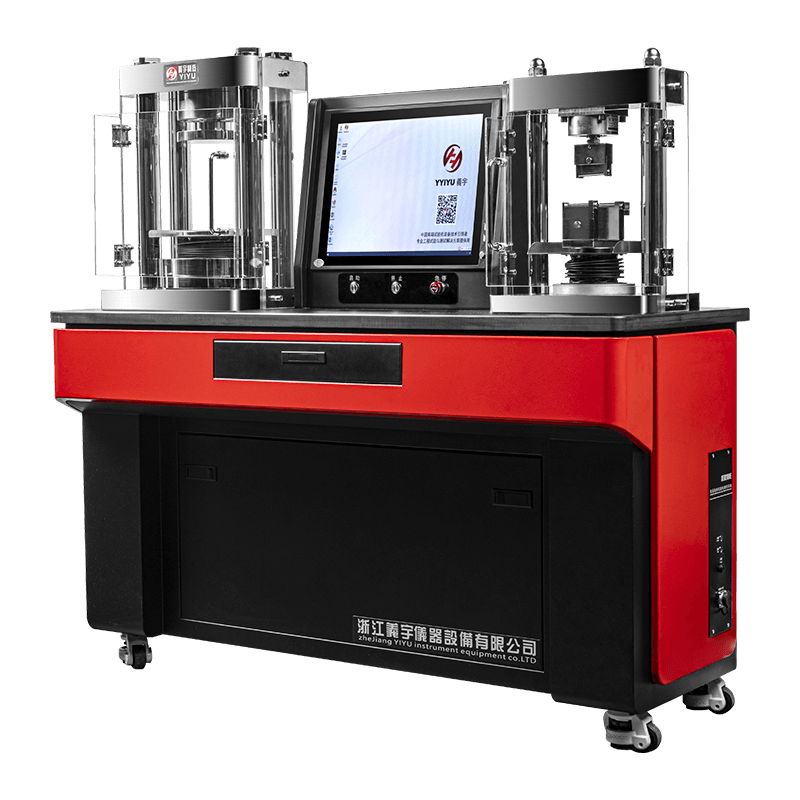
A compression and flexure integrated machine is a single testing frame that performs both compressive strength and flexural (bending) strength tests on the same unit, instead of requiring two separate machines. Most models use two independent loading chambers with separate measuring ranges — commonly a higher-capacity chamber (around 300 kN) for compression and a lower-capacity chamber (around 15 kN) for flexure — so each test type gets appropriately sensitive, accurate force measurement rather than one oversized load cell trying to cover both.
These machines are built primarily for cement, mortar, and concrete testing under standards like EN 196-1, ASTM C109, and ASTM C348, and they're a practical choice for any lab that regularly runs both test types on the same specimens. Below, we cover how the dual-chamber design works, which standards these machines are built to satisfy, and what to look for when specifying one.
Why Compression and Flexure Are Tested Together
Cement and mortar quality control routinely requires both numbers from the same batch of material, and the standard test sequence is actually designed around that overlap rather than treating the two tests as unrelated.
One Specimen, Two Tests
Under ASTM C348 and the related ASTM C349 standard, a mortar prism is first tested in flexure until it breaks into two halves — and those broken halves are then reused as the specimens for the compression test, following ASTM C349. This means a single 40 x 40 x 160 mm mortar prism can generate both a flexural strength result and a compressive strength result, provided the lab has equipment set up to run both tests without moving the specimen to an entirely different machine.
Space and Workflow Efficiency
Because the two tests are so often performed back-to-back on the same material, combining them into one frame is described by manufacturers as a space-saving unit compared to housing two separate machines. For labs running high volumes of routine cement and mortar QC testing, this also cuts down on specimen handling and transfer time between test stations.
How the Dual-Chamber Design Works
The defining feature of a compression and flexure integrated machine is its two-chamber structure, each engineered for a different force range and loading geometry.
The Compression Side
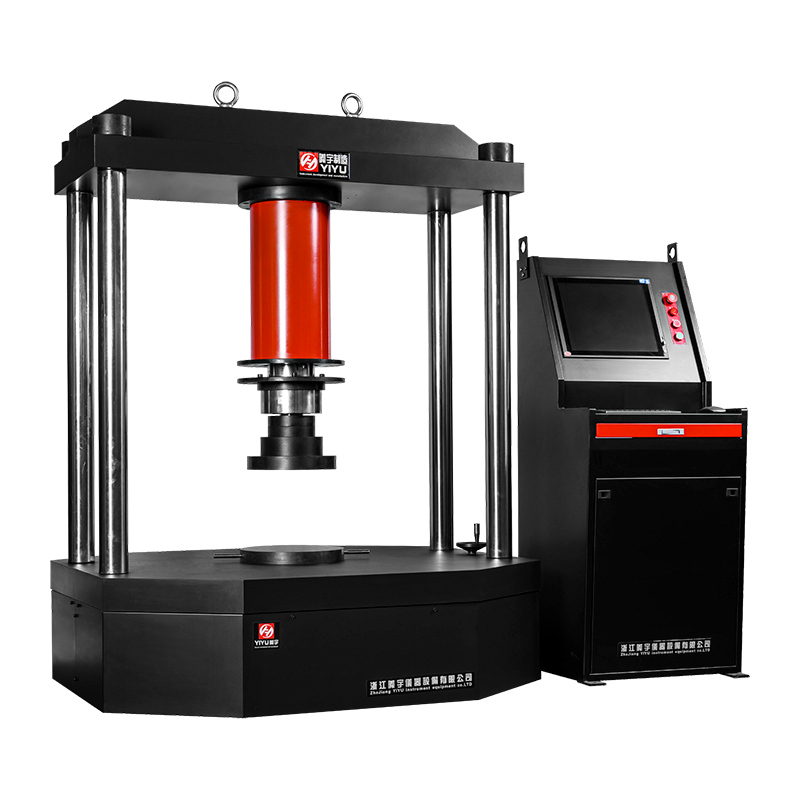
The compression chamber is typically enclosed by a robust four-column frame, fitted with round compression plates (commonly around 165 mm diameter) that apply direct axial load to cube or prism-half specimens. Common capacities in this chamber run to 300 kN, which is calibrated to handle standard cement and mortar cube tests under ASTM C109 and EN 196-1.
The Flexure Side
The flexure chamber uses a lower-capacity load path — often around 15 kN — since bending a slender mortar prism requires far less force than crushing a solid cube. Some designs use an open C-frame on the bending side specifically so specimens can be loaded and removed easily, distinguishing it from the fully enclosed compression side.
Why Two Separate Ranges Matter
Using one shared load cell across both a 300 kN compression test and a 15 kN flexure test would sacrifice accuracy on the lighter flexure readings, since a load cell calibrated for high-capacity compression work is far less precise at the bottom of its range. Two independent measuring systems let each test type register consistent, class-1-accurate results across its own appropriate range.
Standards These Machines Are Built to Satisfy
Because these machines serve regulated construction-material testing, they're designed and calibrated against a specific set of international standards rather than general-purpose specifications. The table below summarizes the most common ones referenced by manufacturers.
Common standards referenced by compression and flexure integrated testing machines
| Standard |
Region |
Test Covered |
| EN 196-1 |
Europe |
Cement strength (compression and flexure) |
| ASTM C109 |
United States |
Compressive strength of hydraulic-cement mortar cubes |
| ASTM C348 |
United States |
Flexural strength of hydraulic-cement mortars |
| ASTM C349 |
United States |
Compressive strength using broken flexure prism portions |
| EN 1015-11 |
Europe |
Flexural and compressive strength of mortar |
| BS 4550 / DIN 1164 |
UK / Germany |
Cement strength testing |
A machine that supports this full standard set is generally more useful to labs serving multiple regional markets or export clients, since specifying a single machine capable of ASTM, EN, and BS testing avoids the cost of maintaining separate region-specific equipment.
How the Flexural Strength Calculation Works
Under ASTM C348, flexural strength is calculated directly from the maximum load recorded during the bending test, using a straightforward formula built around the standard mortar prism's dimensions:
- Sf = 0.0028 × P, where Sf is flexural strength and P is the maximum applied load
- Standard mortar prisms measure 40 x 40 x 160 mm for both EN and ASTM-based flexure tests
- The standard mortar mix under ASTM C348 uses 1 part cement to 2.75 parts sand by mass
- Specimens are typically molded within 2 minutes 30 seconds of mixing, then tested at defined intervals from 24 hours out to 28 days
Because this formula requires an accurate load reading right at the point of failure, the precision of the flexure chamber's load cell has a direct effect on the reliability of every strength number the lab reports — which is another reason the dedicated, lower-capacity flexure chamber matters rather than relying on the compression chamber's load cell for both jobs.
What to Look for When Specifying a Machine
Not every compression and flexure integrated machine is built the same way, so it's worth checking these specifics before purchasing.
- Confirm the force ranges match your material. A 300 kN / 15 kN split suits standard cement and mortar work; heavier concrete or refractory testing may need a higher-capacity compression chamber.
- Check which standards the machine is certified against. If work spans multiple markets, confirm the machine's compression and flexure devices are validated for both EN and ASTM specimen geometries, not just one.
- Verify the accuracy class. Look for compliance with a recognized calibration standard such as EN ISO 7500-1 or ASTM E74, which governs how precisely the load cells must perform across their rated range.
- Ask whether loading is force-controlled or displacement-controlled. Force-controlled setups apply load at a constant rate, while displacement-controlled setups move the piston at a constant rate — the right choice depends on which parameter your governing standard specifies.
- Check for automatic break detection. This feature stops the test and logs the peak load automatically at specimen failure, reducing operator-dependent variability in the recorded results.
Key Takeaways
A compression and flexure integrated machine combines two purpose-built loading chambers — typically rated around 300 kN for compression and 15 kN for flexure — into a single frame, letting labs run both required strength tests on the same cement or mortar specimen without switching equipment. This matters most for labs performing routine QC under standards like EN 196-1 and ASTM C348/C349, where the flexure and compression tests are already linked by the standard test sequence itself. When specifying one, matching force range, standards coverage, and calibration accuracy to your actual test volume is the most reliable way to get consistent, standard-compliant results over the life of the machine.

 简体中文
简体中文
 English
 русский