Tensile testing is one of the most reliable ways to understand how a material behaves under pulling forces. For engineers, quality managers, and production teams, the tensile test machine is not just a piece of laboratory equipment; it is a decision-making tool. In this guide, we explain how a tensile test machine works, what happens during the test, and what to look for when choosing a machine.
What Is a Tensile Test Machine?
At its core, a tensile test machine is a motorized or hydraulic frame that grips a specimen at both ends and pulls it apart at a controlled rate. The machine measures two things at once: the force applied to the specimen and the elongation that occurs. Together, these measurements produce a stress-strain curve, which reveals how strong and how ductile the material is.
Most tensile testers are universal testing machines because they can also perform compression, bending, and shear tests by swapping the test fixtures. That flexibility is why they are found in quality-control labs, research institutes, and production floors across the metal, plastic, composite, and construction industries.
Key Components of a Tensile Test Machine
To understand how a tensile test machine works, it helps to look at its core systems. The table below summarizes the main components and their functions.
Main components of a tensile test machine and their roles.
| Component |
Function |
| Load frame |
Provides a rigid structure that carries the reaction force and keeps the specimen aligned during loading. |
| Drive system |
Moves the crosshead to apply tension; can be screw-driven or hydraulic. |
| Load cell |
Measures the instantaneous force acting on the specimen and sends the signal to the controller. |
| Grips |
Hold the specimen firmly at both ends to prevent slipping during the test. |
| Extensometer |
Measures the change in gauge length as the specimen stretches. |
| Control and data system |
Sets the test speed, controls the closed-loop process, and records force and displacement data. |
How a Tensile Test Machine Works, Step by Step
Although machines vary, the operating sequence of a typical tensile test is straightforward. Following these steps helps produce repeatable, reliable data.
- Prepare the specimen. Use a standardized shape with a known gauge length, and mark the gauge section if required.
- Mount the specimen. Align it vertically between the grips and tighten the grips enough to avoid slipping without damaging the specimen.
- Set the test parameters. Input the desired crosshead speed, preload value, and data sampling rate into the software.
- Start the test. The crosshead moves upward, steadily increasing the tensile load on the specimen.
- Monitor force and strain. The load cell tracks resistance, while the extensometer or crosshead displacement tracks elongation.
- Observe material behavior. Ductile materials may show yielding and necking before fracture, while brittle materials break abruptly at maximum load.
- Finish and analyze. Once fracture occurs, the machine stops or returns to the starting position, and the software generates a stress-strain curve and result summary.
For a more detailed practical walkthrough, including setup tips and common mistakes to avoid, see our complete guide to using a universal testing machine.
Main Types of Tensile Test Machines
Because “tensile test machine” covers many configurations, it helps to match the machine type to the material and force range.
Electronic Universal Testing Machines
Electronic universal testing machines, often called screw-driven machines, use an AC servo motor and precision ball screws to move the crosshead. They provide fine speed control and are ideal for plastics, rubber, textiles, films, wires, fasteners, and light metals. Their closed-loop control ensures that the specified test speed is maintained even as the specimen stiffens.
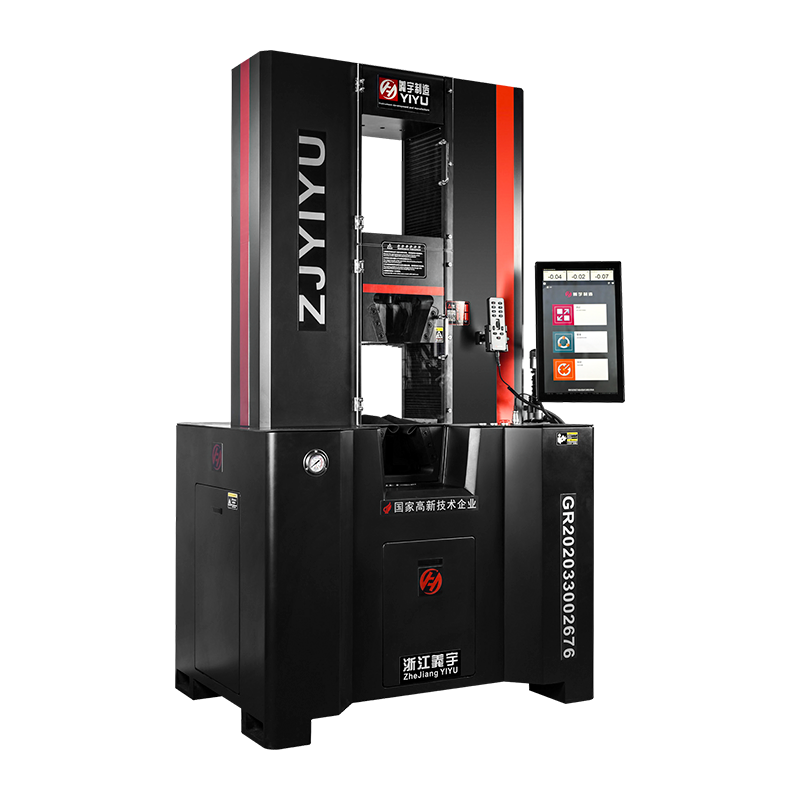
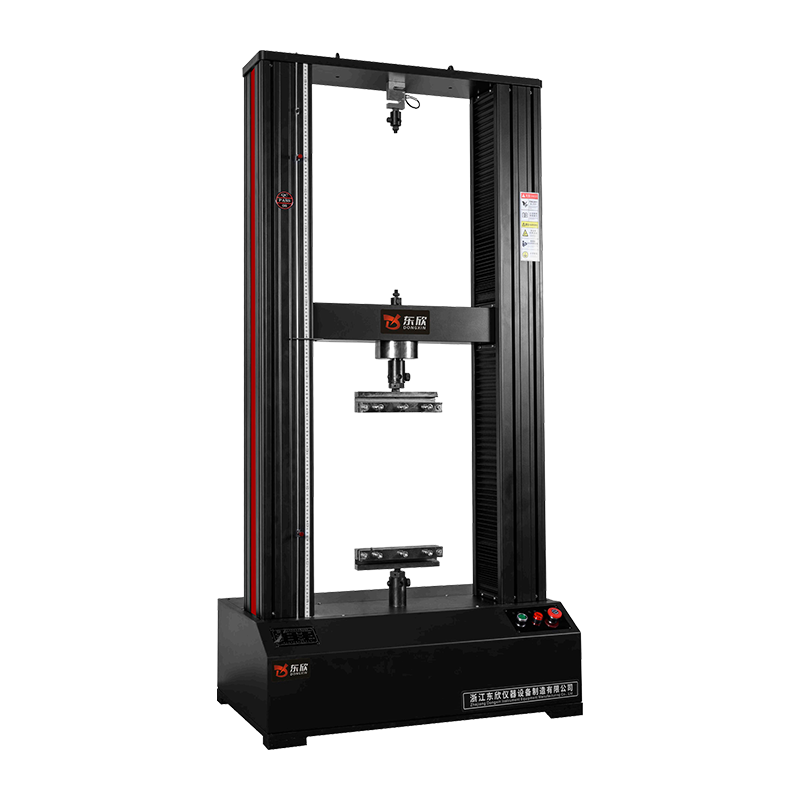 WDW Series Computerized Electronic Universal Testing Machine for Precision Materials TestingThis microcomputer-controlled electronic universal testing machine suits metals, non-metals, and composites for tension, compression, bending, and more. It features high-rigidity design and precise ball screw drive, ideal for labs needing versatile mechanical testing.View Product →
Hydraulic and Electrohydraulic Servo Machines
For heavy-duty applications, hydraulic machines generate high forces through one or more hydraulic cylinders. Electrohydraulic servo machines combine hydraulic power with servo-valve feedback, giving precise force and displacement control. These are preferred for steel bars, rebar, steel strands, and large structural components where test forces can exceed 600 kN or even 1000 kN.
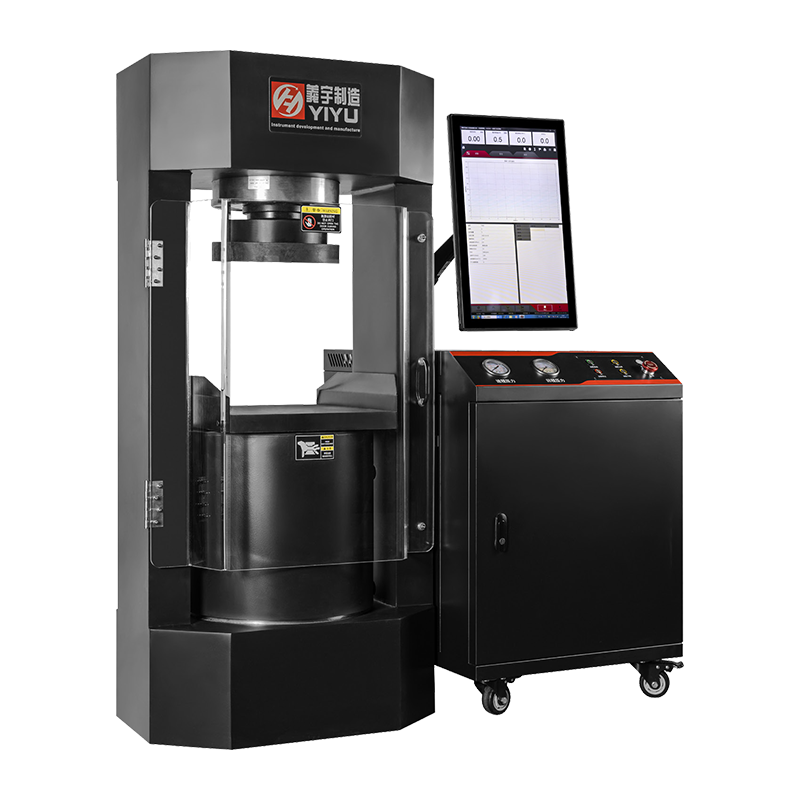
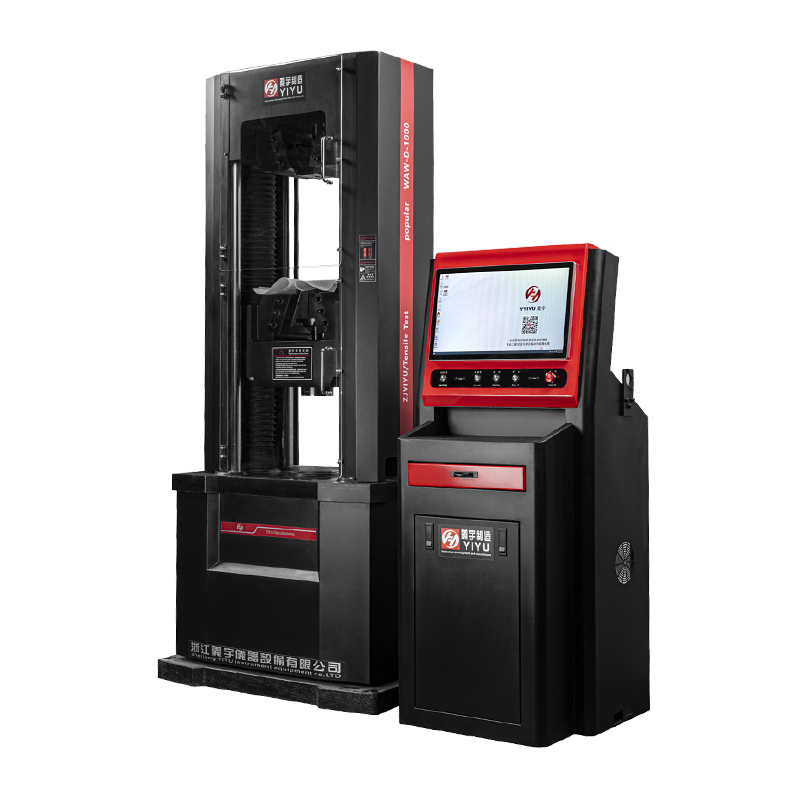 WAW-D Electro-Hydraulic Servo Universal Testing Machine (100-2000 kN)This high-capacity electro-hydraulic servo machine handles steel bars, plates, rebar, and concrete tests. With a 21-inch touchscreen and SmartTest interface, it offers precise control and safety for heavy-duty applications up to 2000 kN.View Product →
Specialized Testing Systems
Some materials need dedicated setups. For steel bars and strands, for example, a dual-purpose electrohydraulic machine can run tensile tests on both products without changing the entire frame. This reduces floor space, setup time, and capital cost while keeping test accuracy high.
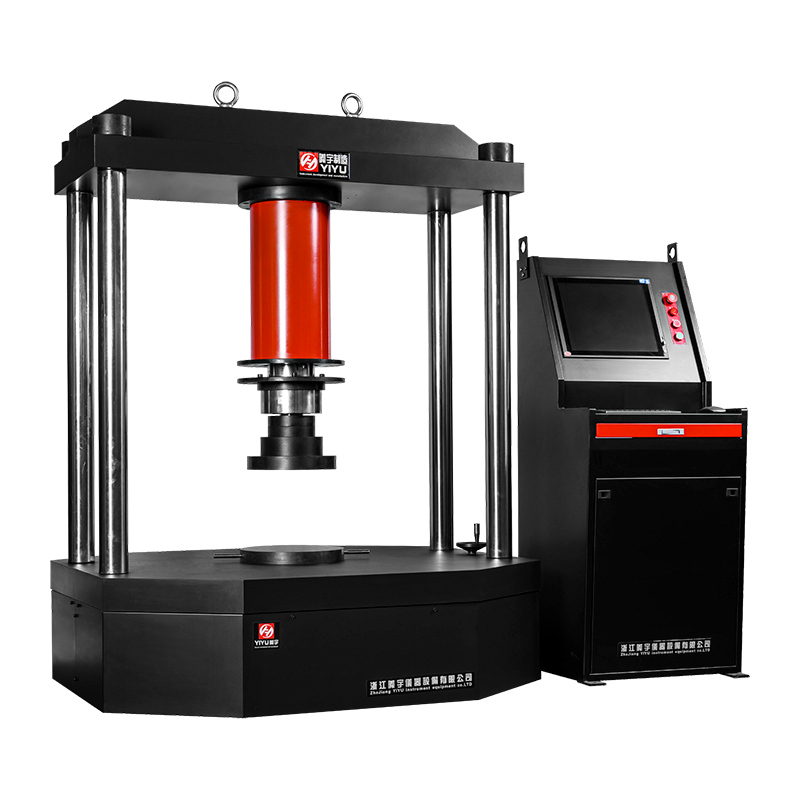
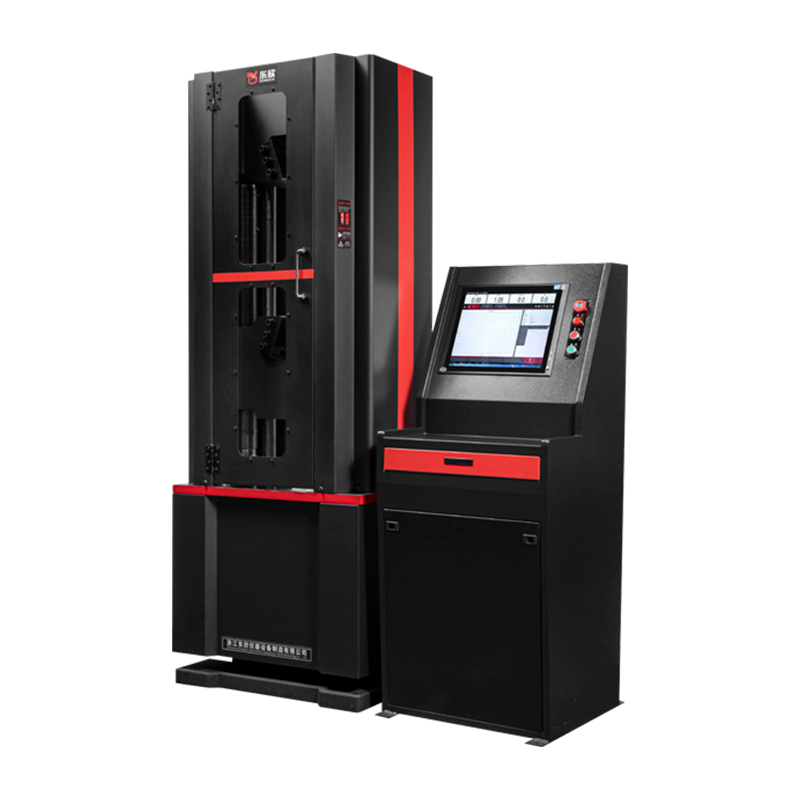 GWA-ES Dual-Purpose Testing Machine for Steel Bars and Strands (600-1000 kN)Optimized for steel bars and strands, this electro-hydraulic servo machine features a rigid six-column frame and integrated hydraulic gripping. It efficiently performs tensile tests on both materials, reducing setup time and floor space for structural testing.View Product →
How to Read the Test Results
Once the test is complete, the software plots stress against strain. The initial linear portion is the elastic region, where the material returns to its original shape. The slope of that region is the modulus of elasticity. After the yield point, permanent deformation begins. The highest stress on the curve is the ultimate tensile strength. The elongation at break indicates ductility.
- Tensile strength: the maximum stress a material can withstand while being stretched.
- Yield strength: the stress at which permanent deformation starts.
- Elongation: the amount the specimen stretches before breaking, expressed as a percentage.
- Modulus of elasticity: the material’s stiffness in the elastic region.
Selecting and Maintaining Your Tensile Test Machine
Choosing the right tensile test machine comes down to four main factors: maximum force capacity, test speed range, applicable standards, and the type of data you need. For example, a lab testing thin films only needs a few kilonewtons, while a construction-material laboratory testing 32 mm rebar may need a 600 kN or 1000 kN system. Accuracy class and calibration certificates also matter when results must be traceable.
Every machine needs routine calibration and maintenance. Load cells should be verified with certified weights or reference transducers, and extensometers should be calibrated with a micrometer-calibrated device. Keep screw drives clean and lubricated, check hydraulic oil levels, and inspect grips for wear. Good maintenance protects both your results and your investment.
If you would like help matching a tensile tester to your materials and budget, contact our team for a practical recommendation.
Understanding how a tensile test machine works makes it easier to choose, operate, and trust the equipment. Whether your application is metals, plastics, composites, or construction materials, the same principle applies: apply a controlled pull, measure the response, and use those numbers to make better material decisions.

 简体中文
简体中文
 English
 русский