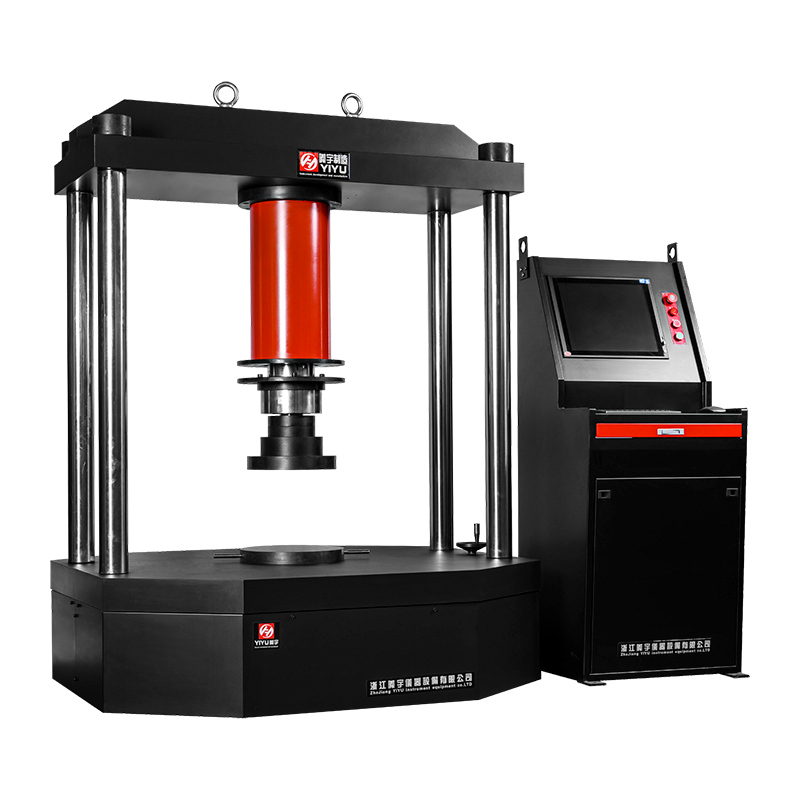
A compression testing machine applies a controlled, increasing compressive load to a specimen—concrete cylinders, metal blocks, packaging, or composite samples—until it fails or reaches a defined deformation limit. The result is precise data on compressive strength, yield point, and modulus of elasticity, typically expressed in megapascals (MPa) or kilonewtons (kN). For most industrial and construction labs, a hydraulic compression testing machine with a capacity between 1,000 kN and 3,000 kN and an accuracy class of 1 (per ISO 7500-1) covers the majority of testing needs, from cement cubes to structural steel coupons.
What a Compression Testing Machine Actually Measures
A compression testing machine records the relationship between applied force and specimen deformation. The raw output is a load-displacement curve, which is then converted into engineering values such as compressive strength (load at failure divided by cross-sectional area), modulus of elasticity (slope of the elastic region), and yield strength for ductile materials.
For concrete, the test typically follows ASTM C39 or EN 12390-3, where a 150 mm x 300 mm cylinder is loaded at a constant rate of 0.25–0.30 MPa/s until failure. For metals, ASTM E9 governs compression testing of cylindrical specimens, focusing on yield strength and elastic modulus rather than ultimate failure, since most metals do not fracture cleanly under compression the way concrete does.
Main Types of Compression Testing Machines
Three machine architectures dominate the market, each suited to different specimen sizes, load ranges, and budgets.
Comparison of common compression testing machine types by capacity, control method, and typical use case.
| Machine Type |
Typical Capacity |
Control Method |
Best Suited For |
| Hydraulic |
500–5,000 kN |
Manual or servo-hydraulic |
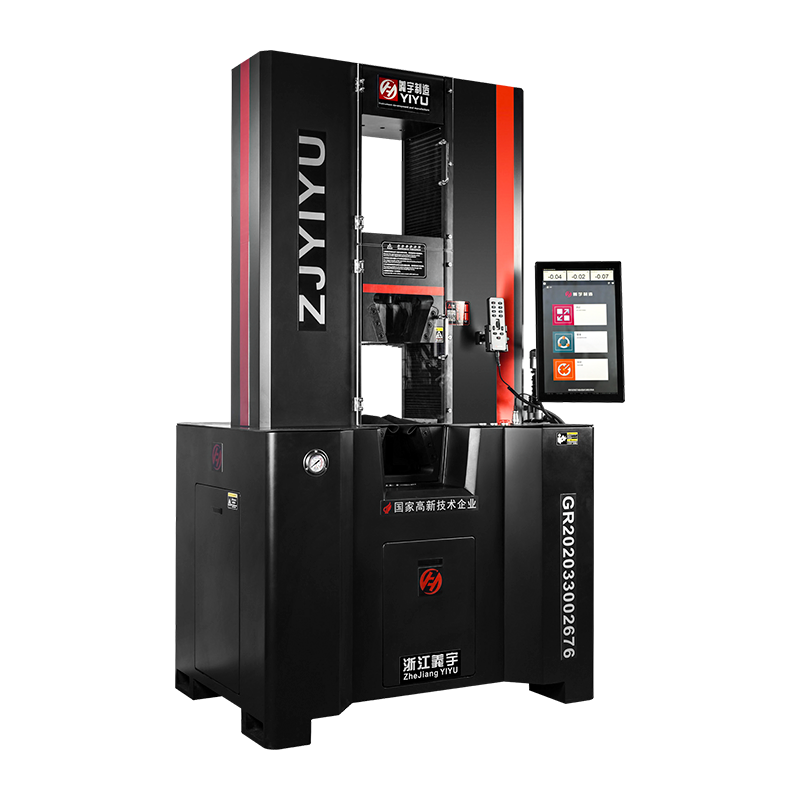
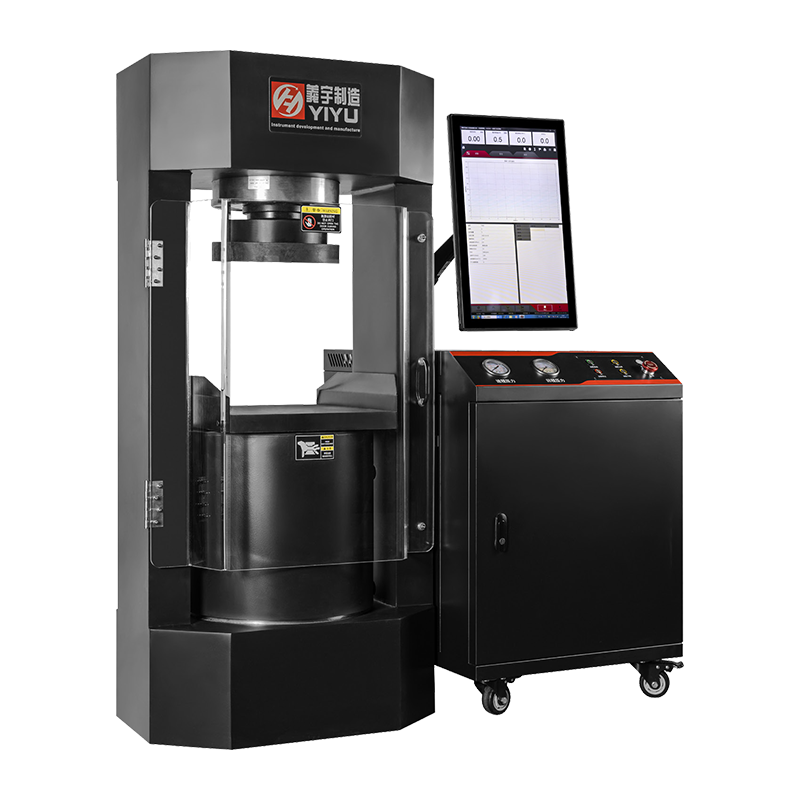
Concrete, cement, large structural samples |
| Electromechanical |
5–600 kN |
Servo-motor, screw-driven |
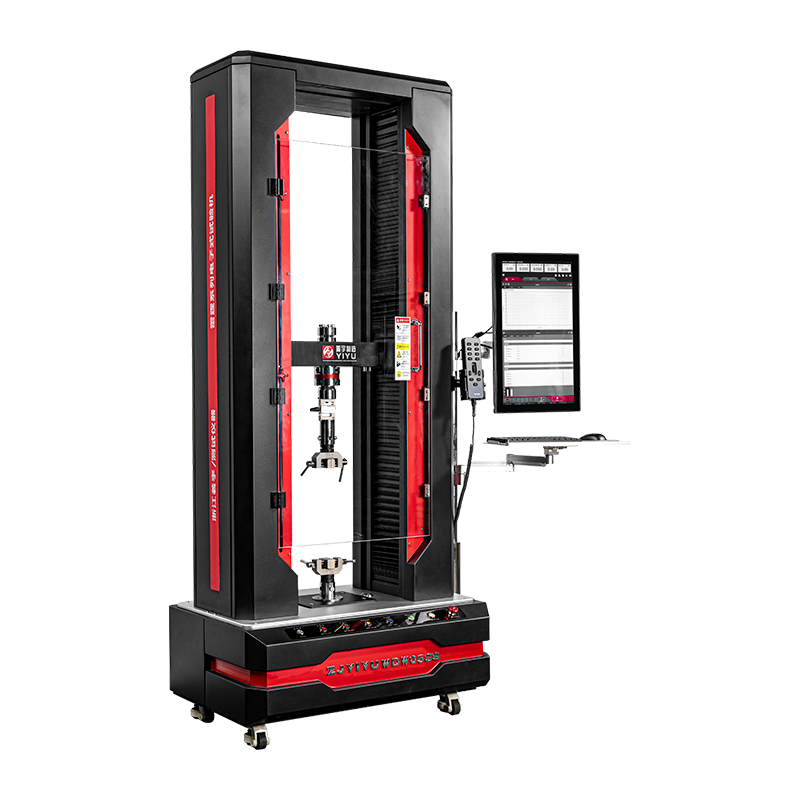
Plastics, foams, packaging, small metal coupons |
| Manual/Lever-Operated |
Up to 300 kN |
Hand pump or lever arm |
Field testing, education, low-volume labs |
Servo-hydraulic systems are increasingly preferred even at high capacities because they maintain a constant loading rate within ±2%, which is required by most modern testing standards and reduces operator-to-operator variability.
Key Specifications to Evaluate Before Purchasing
Choosing the wrong specification is the most common reason labs end up with equipment that cannot handle their actual testing volume or specimen geometry. Four specifications matter most.
Load Capacity and Accuracy Class
Capacity should exceed your highest expected failure load by at least 20% to keep readings within the calibrated range, since most accuracy classes (ISO 7500-1 Class 1) only guarantee ±1% accuracy between 20% and 100% of full scale, not below it.
Platen Size and Daylight Clearance
Platen diameter must accommodate your largest specimen with clearance on all sides; for 150 mm concrete cylinders, a minimum platen of 216 mm is standard, while cube testing often requires platens up to 300 mm.
Loading Rate Control
Look for machines offering programmable loading rates from 0.05 to 5 mm/min or stress-controlled rates in MPa/s, since different standards (ASTM, EN, GB) specify different rate ranges by material type.
Data Acquisition and Software
Integrated software that automatically calculates compressive strength, generates load-deformation curves, and exports reports in PDF or CSV format saves significant time compared to manual calculation, especially in labs running more than 50 tests per week.
Standards That Govern Compression Testing
Compliance with recognized standards is non-negotiable for certified labs, since test reports without standard traceability are typically rejected by clients, regulators, or contracting authorities.
- ASTM C39 / C39M – Compressive strength of cylindrical concrete specimens
- EN 12390-3 / 12390-4 – Concrete testing, including machine performance requirements
- ISO 7500-1 – Verification and calibration of static uniaxial testing machines
- ASTM E9 – Compression testing of metallic materials at room temperature
- GB/T 50081 – Chinese national standard for concrete mechanical property testing
Machines should be recalibrated against a certified load cell at least once every 12 months, or more frequently if used above 5,000 cycles annually, to remain compliant with ISO 7500-1 accuracy classes.
Common Mistakes That Distort Test Results
Even a high-quality machine produces unreliable data if operating procedure is flawed. The most frequent errors include the following.
- Loading specimens off-center, which can reduce recorded strength by up to 15% due to uneven stress distribution.
- Using worn or non-planar platens, which creates point-loading instead of uniform compression.
- Applying loading rates outside the standard-specified range, skewing strength values higher or lower depending on speed.
- Skipping specimen capping or grinding for concrete cylinders, leaving uneven end surfaces that cause premature local failure.
- Delaying calibration checks, allowing load cell drift to go undetected for months.
Typical Applications Across Industries
Compression testing machines serve far more sectors than construction alone, with each industry applying different specimen types and acceptance criteria.
- Construction and civil engineering – concrete cubes, cylinders, bricks, and paving blocks
- Metals and manufacturing – yield strength of castings, forgings, and structural components
- Packaging – box compression testing (BCT) for shipping cartons, often using ASTM D642
- Polymers and foams – compressive modulus testing per ASTM D695 or ISO 604
- Ceramics and composites – brittle material failure analysis for aerospace and electronics
How to Choose the Right Machine for Your Lab
Start by listing the maximum expected failure load across all materials you test, then add a safety margin of at least 20% to determine required capacity. Next, confirm which standards your reports must comply with, since this dictates required accuracy class and loading rate controls.
For labs testing fewer than 20 specimens per week, a manual or semi-automatic hydraulic machine is usually sufficient and more cost-effective. Labs running high volumes or requiring detailed stress-strain data should invest in a servo-controlled system with automated reporting software, since the time saved on calculation and documentation typically offsets the higher upfront cost within 12–18 months.
Maintenance and Calibration Best Practices
Routine maintenance extends machine lifespan and protects test accuracy. Inspect platens for flatness and wear before each testing session, and replace them once surface deviation exceeds 0.02 mm, the typical tolerance specified in ASTM C39.
Hydraulic systems should have fluid levels and seals checked monthly, while load cells require annual calibration against a traceable reference standard. Keeping a calibration log with dates, results, and technician sign-off is essential for passing third-party lab accreditation audits such as ISO/IEC 17025.

 简体中文
简体中文
 English
 русский