Compression testing is a mechanical test method that applies a controlled compressive load to a material or component to measure its behavior under squeezing forces — specifically its compressive strength, deformation characteristics, and failure point. A compression testing machine (also called a compression tester or universal testing machine in compression mode) delivers and measures this load with precision. The result tells engineers whether a material is strong enough, stiff enough, or ductile enough for its intended application.
What Compression Testing Actually Measures
When a compressive force is applied to a specimen, the material responds in measurable ways. A compression test captures several key mechanical properties simultaneously:
- Compressive strength: The maximum stress a material can sustain before failure, expressed in MPa or psi. Concrete, for example, typically has a compressive strength of 20–40 MPa for standard structural grades.
- Compressive yield strength: The stress at which a material begins to deform permanently, without yet fracturing — critical for metals and polymers.
- Young's modulus (elastic modulus) in compression: The ratio of stress to strain in the elastic region, indicating stiffness.
- Deformation and strain at failure: How much the specimen compresses before breaking, indicating brittleness or ductility.
- Crush load and energy absorption: For packaging and automotive crash components, how much force and energy the structure absorbs before collapsing.
The test generates a stress-strain curve — a graph plotting applied stress against resulting strain — which is the primary output engineers use for design validation and material qualification.
How a Compression Testing Machine Works
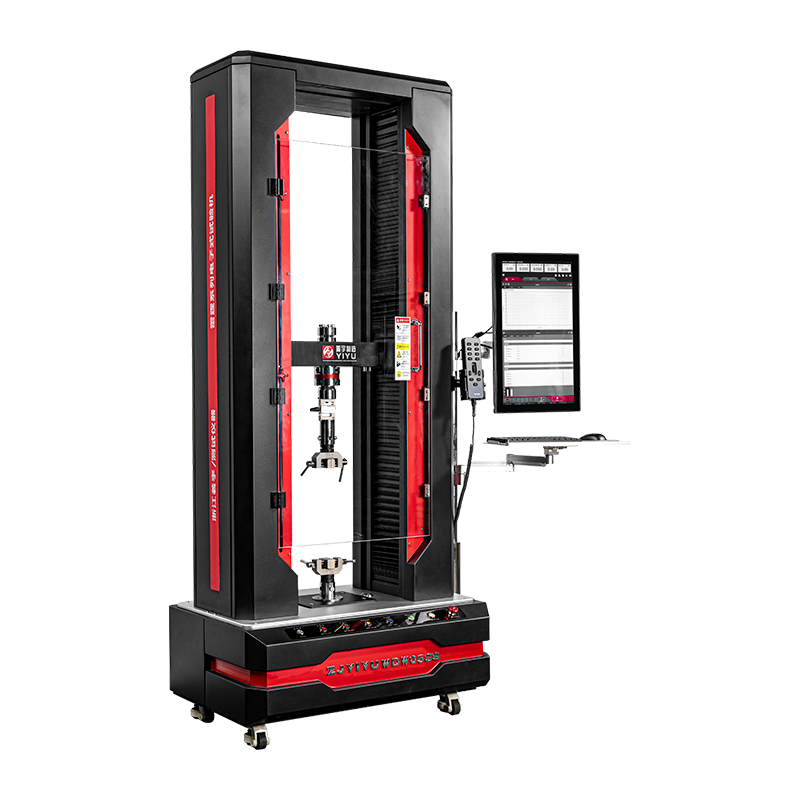
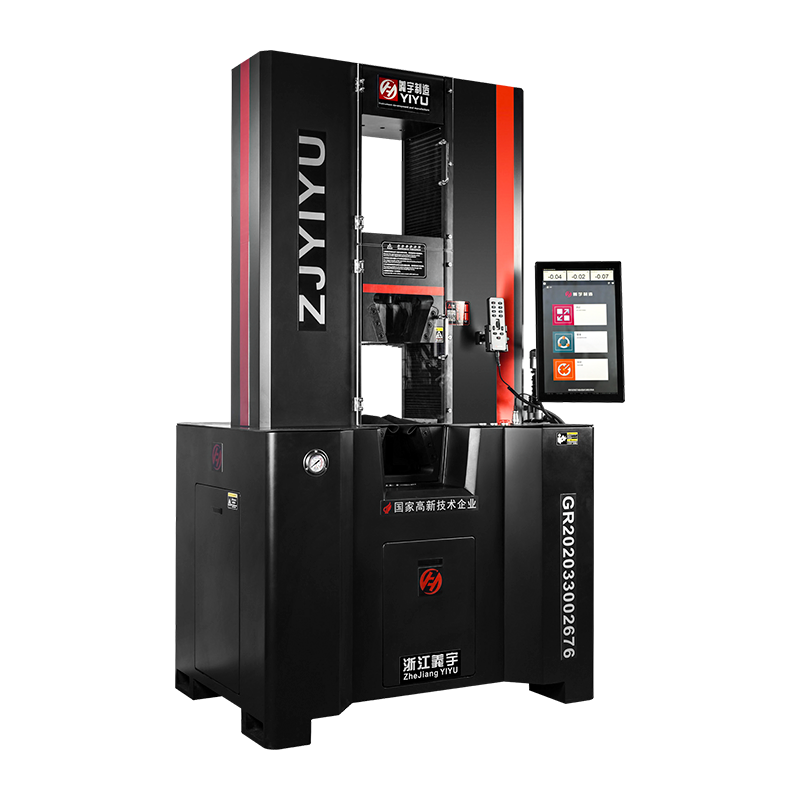
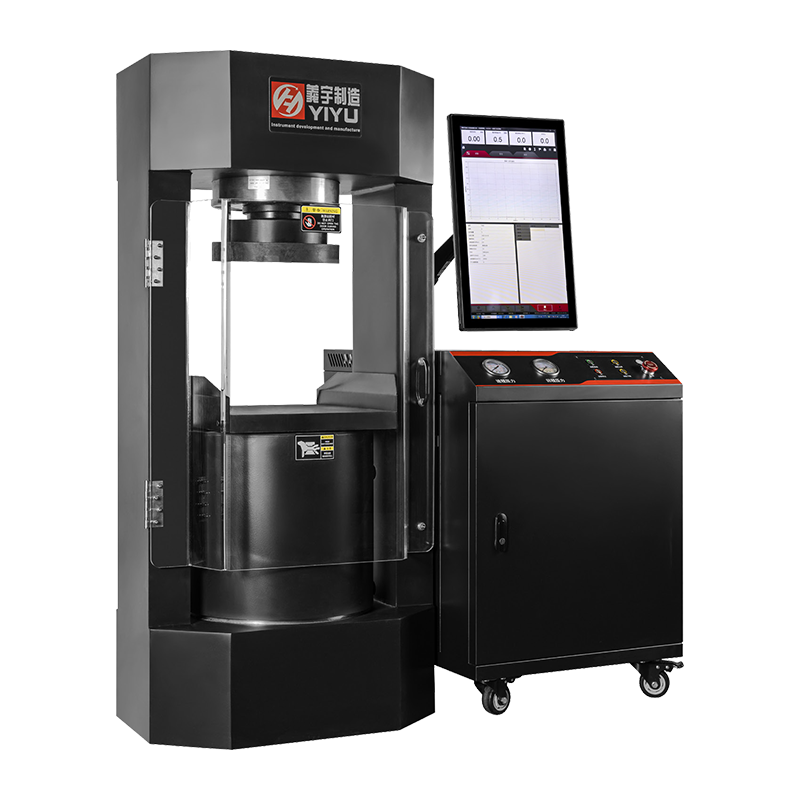
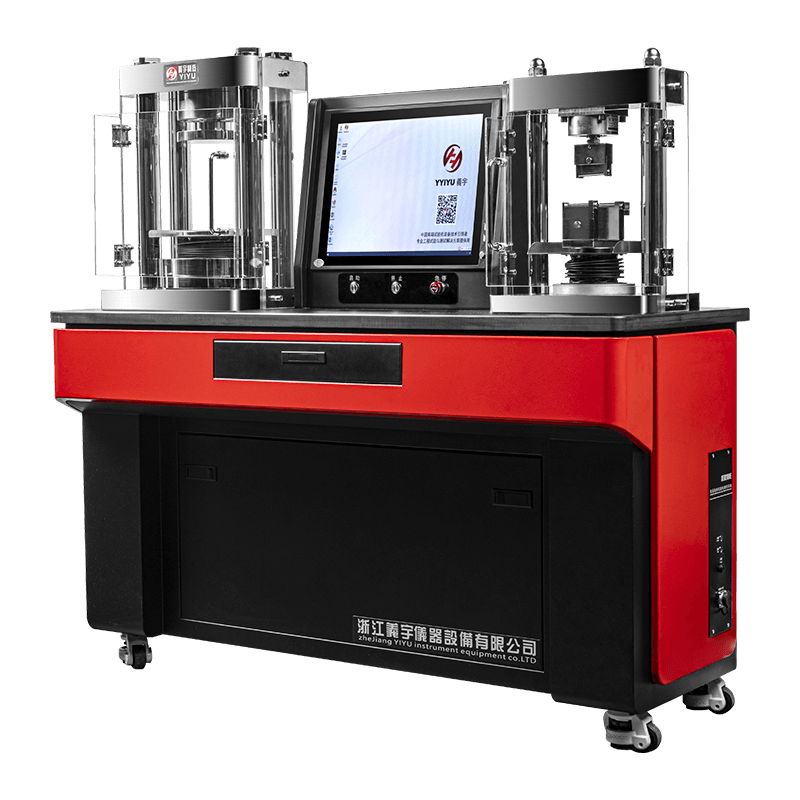
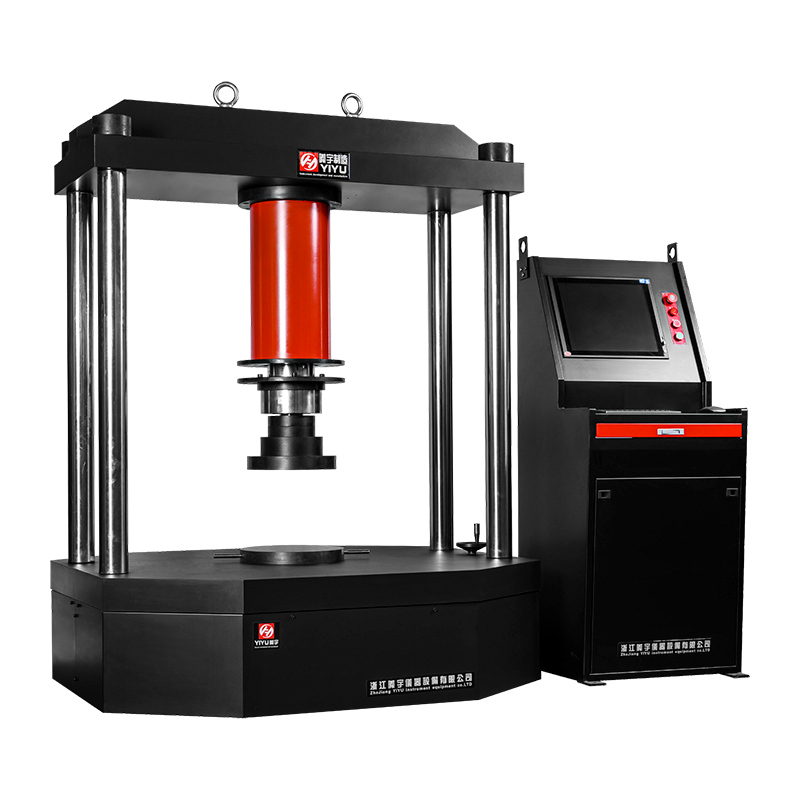
A compression testing machine applies a measured, increasing force to a specimen held between two rigid platens. The core operating principle is straightforward: one platen is fixed, the other moves toward it at a controlled rate, squeezing the specimen between them. Load cells measure the applied force in real time; displacement transducers or extensometers measure the change in specimen height.
Main Components of a Compression Testing Machine
- Load frame: The structural backbone — typically a steel column or four-post frame — that must be rigid enough to absorb reaction forces without deflecting. Frame stiffness directly affects result accuracy.
- Actuator (crosshead): The moving element that applies the compressive force. It is driven by a hydraulic piston, electromechanical ball screw, or servo motor depending on machine type.
- Load cell: A precision force transducer that measures applied load. Typical accuracy is ±0.5% of indicated load per ISO 7500-1 Class 1 calibration.
- Compression platens: Hardened steel plates (typically HRC 60+) that contact the specimen. Self-aligning spherical-seat platens ensure uniform load distribution even if specimen surfaces are not perfectly parallel.
- Displacement measurement system: Crosshead position encoders or clip-on extensometers track deformation to ±0.001 mm resolution on precision machines.
- Control system and software: Modern machines use closed-loop servo control to maintain constant crosshead speed (displacement control) or constant load rate (load control). Software records data and generates stress-strain curves automatically.
Hydraulic vs. Electromechanical Compression Testers
The two dominant drive technologies differ significantly in capability and application:
| Feature |
Hydraulic |
Electromechanical |
| Force range |
Up to 5,000 kN+ |
Typically 2–600 kN |
| Speed control precision |
Good (servo-hydraulic) |
Excellent |
| Displacement accuracy |
Moderate |
Very high (±0.001 mm) |
| Maintenance |
Higher (seals, fluid) |
Lower |
| Best for |
Concrete, rock, structural steel |
Polymers, foam, composites, small metals |
| Typical cost |
$15,000–$250,000+ |
$5,000–$100,000 |
Key differences between hydraulic and electromechanical compression testing machines
The Standard Compression Test Procedure
Most compression tests follow a standardized sequence regardless of material or machine type. Deviating from procedure — especially in specimen preparation — is the leading cause of inaccurate results.
- Specimen preparation: Machine the specimen to the required geometry. For metals, ASTM E9 specifies a height-to-diameter ratio of 1:1 to 3:1. For concrete cubes, BS EN 12390-3 requires 150mm × 150mm × 150mm specimens with surfaces ground flat to within 0.05 mm.
- Dimensional measurement: Measure cross-sectional area to calculate stress (Force ÷ Area). A 1% error in diameter measurement causes a 2% error in reported compressive strength.
- Machine setup: Select the appropriate load cell range (specimen failure load should fall between 20% and 80% of full scale for best accuracy). Calibrate the zero-load offset.
- Specimen placement: Center the specimen on the lower platen. Misalignment creates eccentric loading, producing artificially low results and asymmetric failure modes.
- Lubrication (if required): Some standards require lubricant on platens to reduce friction-induced lateral restraint, which can artificially increase apparent strength by 10–20%.
- Test execution: Apply load at the specified rate. ASTM C39 for concrete specifies 0.25 ± 0.05 MPa/s. Higher loading rates produce higher apparent strength.
- Data capture and analysis: Record force and displacement continuously. Software calculates peak stress, yield point, elastic modulus, and energy to failure automatically.
Key Industries and Applications for Compression Testing
Compression testing is fundamental across a wide range of sectors, each with specific standards and requirements:
Construction and Civil Engineering
Concrete compression testing is the most frequently performed mechanical test in the world. Every structural concrete pour requires cube or cylinder testing under ASTM C39 or BS EN 12390-3 to verify the specified design strength (f'c) has been achieved before loading. A typical high-rise project may test hundreds of specimens per floor. Rock mechanics testing for tunneling and foundation design also relies on uniaxial compression testing per ISRM standards.
Metals and Alloys
While tensile testing dominates metals qualification, compression testing is essential for brittle metals (gray cast iron, cemented carbides) that are stronger in compression than tension, and for characterizing bulk forming processes like forging and rolling. Aerospace aluminum alloys are compression-tested per ASTM E9 to validate forming simulations.
Polymers, Foams, and Rubber
Polyurethane foams used in automotive seating, packaging, and insulation are tested per ASTM D1621 to measure compressive strength and 25% compression deflection force (CLD). Rubber compounds used in vibration isolators are compression-tested to verify stiffness under service loads. These tests use electromechanical machines at very low speeds (1–10 mm/min).
Pharmaceutical and Food Industries
Tablet hardness testing — a form of compression testing — is required for every pharmaceutical batch to confirm that tablets will survive packaging and handling without crumbling, yet dissolve correctly in the body. Target hardness values typically fall between 4 and 40 kP (kiloponds). Food texture analysis uses miniature compression probes to measure crunch, firmness, and chewiness of products from cheese to biscuits.
Packaging
Box compression testing (BCT) per ASTM D642 measures the stacking strength of corrugated cardboard boxes — the maximum load a box can sustain before collapsing. This directly determines how many boxes can be stacked in a warehouse or shipping container. A typical retail corrugated box must withstand 300–1,000 lbs of compressive force.
Common Compression Test Standards by Industry
| Industry |
Material / Product |
Key Standard |
Typical Machine Capacity |
| Construction |
Concrete cubes/cylinders |
ASTM C39 / EN 12390-3 |
2,000–3,000 kN |
| Metals |
Metal alloys |
ASTM E9 / ISO 604 |
100–600 kN |
| Plastics & Polymers |
Rigid plastics |
ISO 604 / ASTM D695 |
5–50 kN |
| Foam & Rubber |
Cellular materials |
ASTM D1621 / ISO 844 |
1–10 kN |
| Packaging |
Corrugated boxes |
ASTM D642 / ISO 12048 |
5–50 kN |
| Pharmaceutical |
Tablets |
USP ‹1217› / Ph. Eur. 2.9.8 |
0.05–0.5 kN |
Compression testing standards and typical machine capacities across major industries
Compression Testing vs. Tensile Testing: When to Use Which
Both tests characterize mechanical behavior, but they probe different failure modes. Choosing correctly matters because some materials behave very differently in tension versus compression:
- Concrete has a tensile strength of only 10% of its compressive strength — which is why steel reinforcement is added. Compression testing is the primary characterization method.
- Cast iron is 3–4× stronger in compression than tension. Compressive strength values are used for design of columns and bearing surfaces.
- Structural steel has nearly equal tensile and compressive yield strength, but tensile testing is the standard qualification method (ASTM A370).
- Foam is almost exclusively characterized in compression since its primary service load is squeezing, not stretching.
- Composites often require both — carbon fiber laminates can have compressive strength 40–60% lower than tensile strength due to fiber microbuckling.
Selecting the Right Compression Testing Machine
The right machine depends on five key parameters. Specifying any one of them incorrectly — particularly load capacity — will either produce inaccurate results or create safety hazards.
Load Capacity
Choose a machine where your expected peak load falls between 20% and 80% of the machine's full-scale capacity. Testing a 50 kN specimen on a 2,000 kN concrete press wastes capital and reduces resolution. Testing a 1,500 kN concrete cube on a 500 kN machine risks catastrophic failure.
Platen Size and Geometry
Platens must be larger than the specimen's cross-section. Concrete testing machines typically use 200mm × 200mm platens minimum; foam testing may use 50mm × 50mm or circular probes. One platen should incorporate a spherical self-aligning seat to accommodate slight surface non-parallelism.
Crosshead Speed Range
Confirm the machine's speed range covers your required test standard. Polymer and foam tests may require speeds as low as 1 mm/min; impact compression tests use rates above 1,000 mm/min. Most standard electromechanical machines cover 0.001 to 500 mm/min.
Environmental Chamber Compatibility
If you need to test at elevated or sub-ambient temperatures, confirm the machine frame geometry accommodates a temperature chamber and that the load cell is rated for the required temperature range.
Calibration and Compliance Requirements
For quality-critical applications (structural concrete, aerospace, pharmaceutical), the machine must be calibrated to a traceable national standard. ISO 7500-1 Class 1 calibration (±1% accuracy) is the minimum for most structural applications; Class 0.5 (±0.5%) is required for precision materials research. Calibration is typically required annually or every 500 operating hours, whichever comes first.
Key Sources of Error in Compression Testing
Understanding where errors originate allows labs to control them systematically. The most impactful error sources are:
- Non-parallel specimen surfaces: A 1° tilt creates stress concentrations that can reduce measured strength by 15–25%. End grinding to within 0.05mm is essential for metals and concrete.
- Friction between specimen and platens: Unlubricated steel platens on metal specimens create a "barreling" effect that artificially constrains lateral expansion, inflating apparent strength.
- Incorrect loading rate: Faster loading produces higher strength. A loading rate 10× the specified rate can increase reported compressive strength of concrete by 5–10%.
- Out-of-calibration load cell: Drift in load cell zero offset or span is invisible without periodic calibration. A 2% span error directly translates to a 2% error in every reported value.
- Specimen eccentricity: Placing the specimen off-center by even 5mm introduces bending moments that mask true compressive behavior.

 简体中文
简体中文
 English
 русский