Two laboratories test identical concrete cubes from the same delivery, yet one reports 41.2 MPa and the other 37.9 MPa. The difference is usually not the concrete; it is the compression testing machine. Frame rigidity, loading-rate control, platen alignment, and calibration condition all influence the value a machine records. Selecting a compression testing machine therefore means matching the hardware to your test standards, specimen types, and the accuracy your quality system demands. This article explains the working principles, key specifications, control options, and capacity-planning decisions that determine whether a machine will serve a laboratory reliably for decades.
How Compression Testing Machines Work
A compression testing machine applies a uniaxial compressive force to a specimen placed between two hardened platens. The lower platen rests on a rigid base, the upper platen connects to a movable piston or crosshead, and a load cell or pressure transducer measures the force transmitted through the specimen. The control system regulates the loading rate as the specimen deforms, and the machine records the maximum force reached at failure.
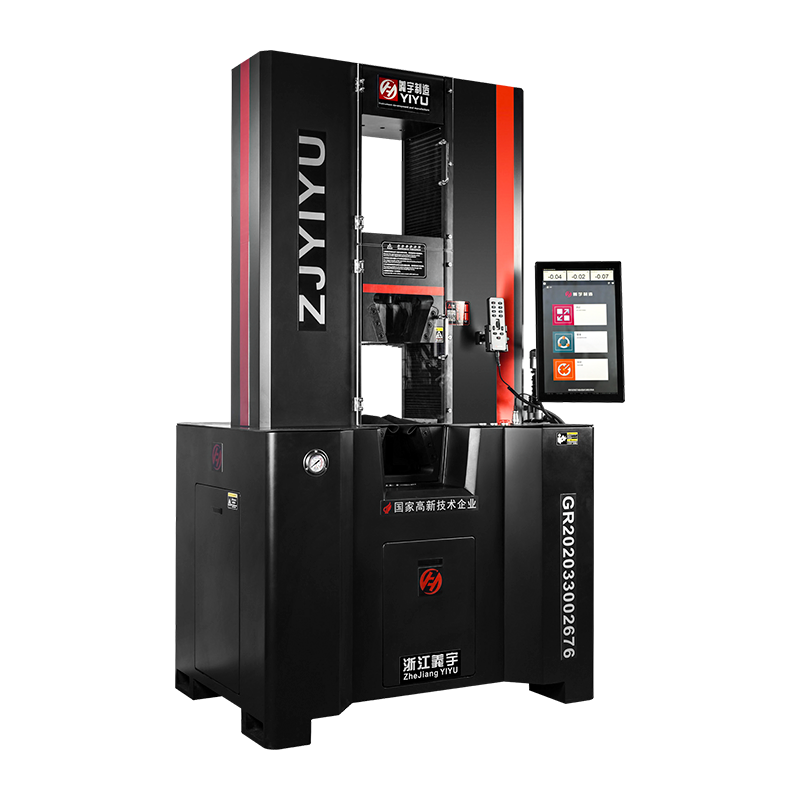
Hydraulic systems dominate construction material testing. A hydraulic pump drives a piston that advances the upper platen, and the pressure in the system corresponds to the applied force. Because hydraulic actuators generate hundreds or thousands of kilonewtons within a compact frame, they suit concrete cubes, cement mortar prisms, bricks, blocks, and rock specimens. Electromechanical machines, which use servo motors and ball screws, give better positional control at lower forces and are preferred for plastics, composites, and small components.
Frame rigidity is the most overlooked factor. A frame that flexes under load stores energy and distorts the loading geometry, causing uneven stress on the specimen and unreliable failure values. Quality machines use thick steel columns, carefully machined platens, and a spherical seating on one platen to self-align with slight irregularities on the specimen surface. These features matter especially for concrete cubes and cylinders, where mold surface variations are unavoidable.
Key Specifications to Evaluate
The specification sheet of a compression testing machine contains several parameters, but only a few directly affect whether your test results are credible.
Typical parameters to compare when evaluating compression testing machines
| Specification |
What to compare |
Practical impact |
| Force capacity |
300 kN for cement mortar, 2000-3000 kN for concrete cubes, up to 5000 kN for high-strength concrete |
Choose so routine specimens use 30-80 percent of rated force |
| Accuracy class |
Grade 1 or Grade 0.5 per ISO 7500-1 or ASTM E4 |
Determines measurement uncertainty and whether results hold up in disputes |
| Platen diameter |
Usually 150-300 mm |
Must fully cover the specimen cross-section to avoid edge effects |
| Crushing space |
Vertical distance between platens at full stroke |
Limits the maximum specimen height you can test |
| Loading-rate control |
Manual valve, digital indicator, or closed-loop servo |
Affects repeatability and compliance with standards that specify loading rates |
| Data output |
Digital display, PC software, export functions |
Determines how easily you can generate traceable reports |
Accuracy class is a useful first filter. Grade 1, which allows an error of plus or minus one percent of the indicated force, satisfies most construction material standards. Grade 0.5 matters for research laboratories or for testing where small measurement differences change pass or fail decisions.
Loading-rate control deserves equal attention. A standard such as EN 12390-3 requires a loading rate of 0.6 MPa/s with a tolerance of 0.2 MPa/s for concrete cubes. On a manual machine, holding that rate through the whole test takes skill and constant attention; a closed-loop controller does it automatically.
Choosing the Right Control System
Compression testing machines fall into three control categories, and the choice affects both accuracy and daily productivity.
Manual analog machines require an operator to adjust a hydraulic valve as the load rises. They are inexpensive and acceptable for occasional testing, but the loading rate depends heavily on operator skill and is difficult to hold steady across the full range.
Digital machines display the load electronically and may show a loading-rate indicator, but the operator still manages the hydraulic valve. They are a reasonable upgrade for small laboratories with low throughput.
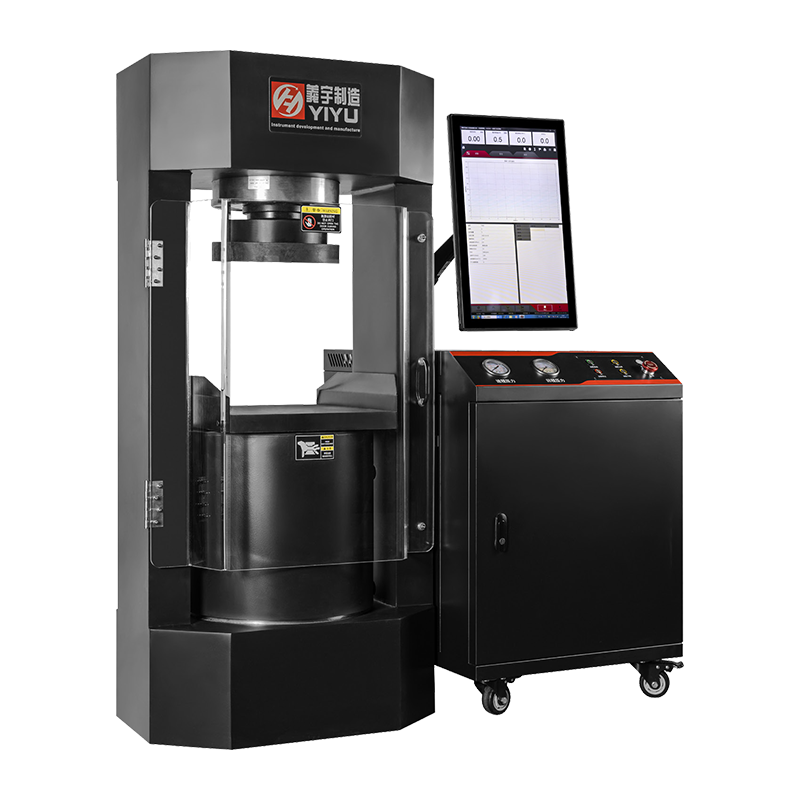
Microcomputer-controlled electrohydraulic servo systems close the control loop electronically. A controller compares the measured force with the target loading rate and adjusts the valve continuously during the test. The machine holds the required rate automatically, records the complete data set, and exports results for reporting. For laboratories that test concrete, cement, blocks, or other construction materials every day, this control class removes operator influence and provides the repeatability that certification bodies expect.
The YAW series microcomputer-controlled electrohydraulic servo pressure testing machines are a representative example of this class, combining a rigid frame with automatic loading-rate control and built-in data acquisition.
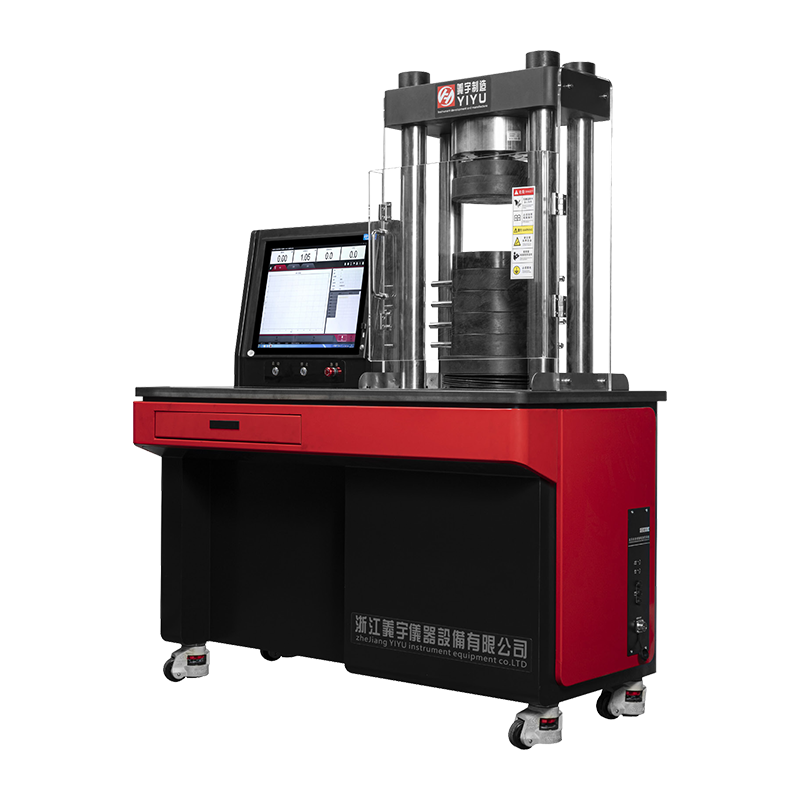 OEM/ODM Micro Computer Controlled Electro-Hydraulic Servo Pressure Testing MachiZhejiang Yiyu Instrument Equipment Co., Ltd. is China Micro Computer Controlled Electro-Hydraulic Servo Pressure Testing Machine Supplier...View Product →
For a deeper look at how hydraulic control affects compression test accuracy, see this guide to hydraulic precision testing in compression machines.
Matching the Machine to Your Material Standards
Different test methods place different demands on a compression testing machine. The specimen geometry, loading rate, and failure force are all defined by the standard you follow, and the machine must satisfy each parameter.
- Concrete cubes and cylinders. ASTM C39 and EN 12390-3 govern the compression testing of concrete specimens. A 2000 kN machine covers routine 150 mm cubes of normal-strength concrete, while high-strength mixes require 3000 kN or more.
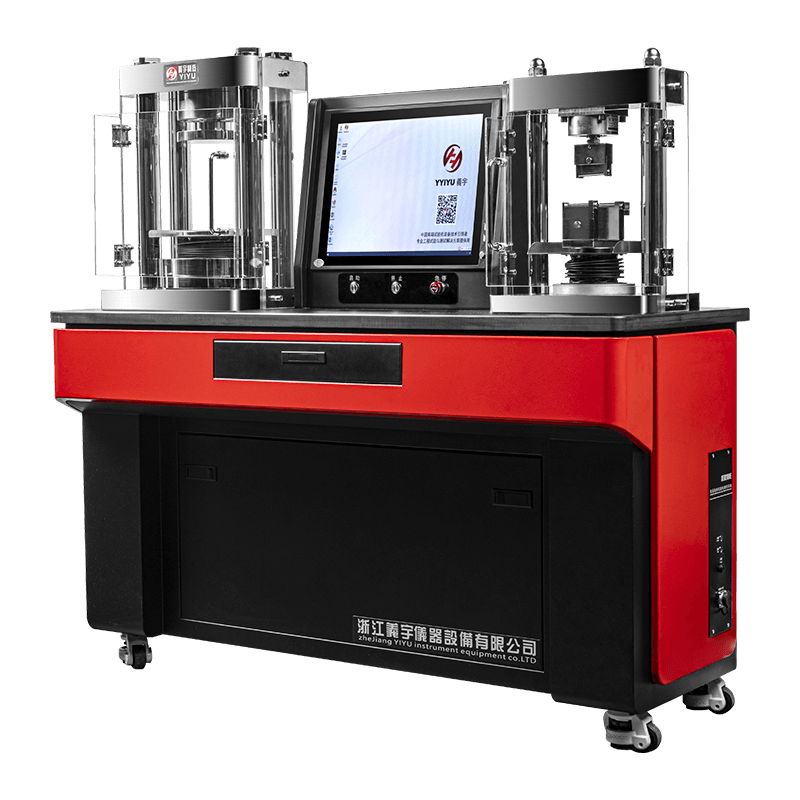
- Cement mortar prisms. EN 196-1 requires flexural testing of 40 mm by 40 mm by 160 mm prisms, followed by compression testing of the two broken halves. A combined compression-flexure machine handles both steps without moving specimens to separate equipment.
- Bricks, blocks, and road elements. Brick and block testing needs larger platens or special fixtures, and curbstone testing requires a loading space that fits the specimen dimensions.
For cement and mortar laboratories, a compression-flexure integrated machine simplifies the workflow and reduces operator handling. The YAWD series cement compression and flexural all-in-one machine is designed for this combined procedure, with one frame and one control system managing both test types.
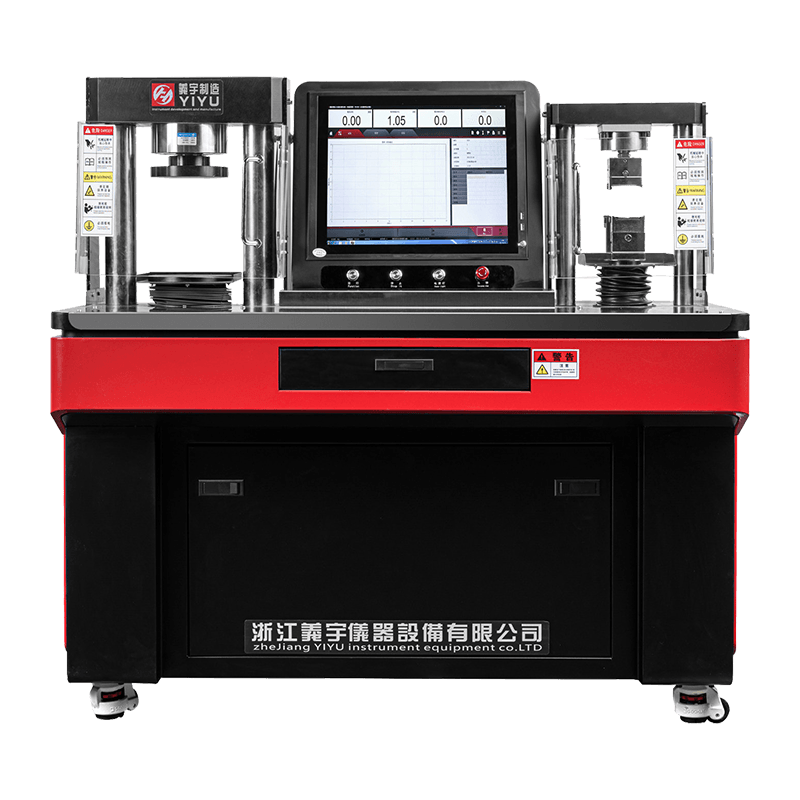 OEM/ODM Microcontroller Controlled Cement Compressive And Flexural All-In-One MaZhejiang Yiyu Instrument Equipment Co., Ltd. is China Microcontroller Controlled Cement Compressive And Flexural All-In-One Machine Suppl...View Product →
Laboratories that test several material families can use a machine with interchangeable platens and accessories, avoiding the cost of separate systems for each standard.
Capacity Planning and Future-Proofing
Getting the capacity wrong is the most common buying mistake. A machine that is too small cannot test high-strength specimens, while a machine that is too large loses resolution at low loads. As a practical rule, select a capacity so that routine specimens load the machine to between 30 percent and 80 percent of its rated force.
For example, a 150 mm concrete cube with a compressive strength of 40 MPa fails at roughly 900 kN. A 2000 kN machine places that test comfortably in the working range. The same cube at 80 MPa fails near 1800 kN, so a 3000 kN machine gives the margin needed for high-strength concrete and for future mixes in higher strength classes.
Specimen dimensions also determine the required crushing space and platen size. If your program includes 200 mm cubes or large rock cores, verify the usable height and width before choosing a model. Standards continue to evolve toward higher strength classes, and buying a machine that covers the next five to eight years of planned work is usually more economical than replacing equipment later.
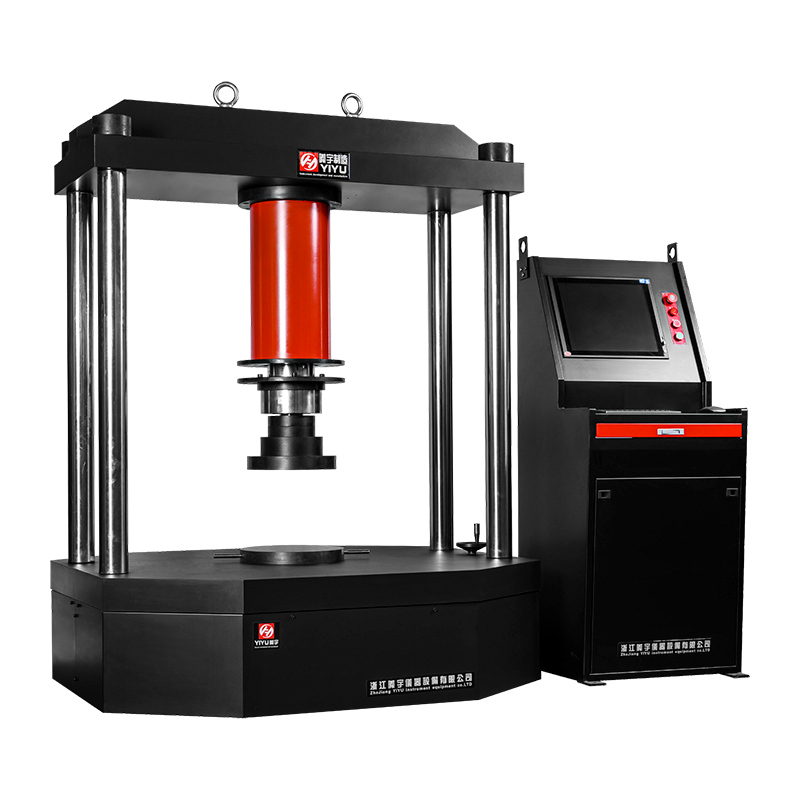
For laboratories that handle high-strength concrete and large specimens, the YAW3000-5000 fully automatic pressure testing machine supports the upper range of routine concrete testing.
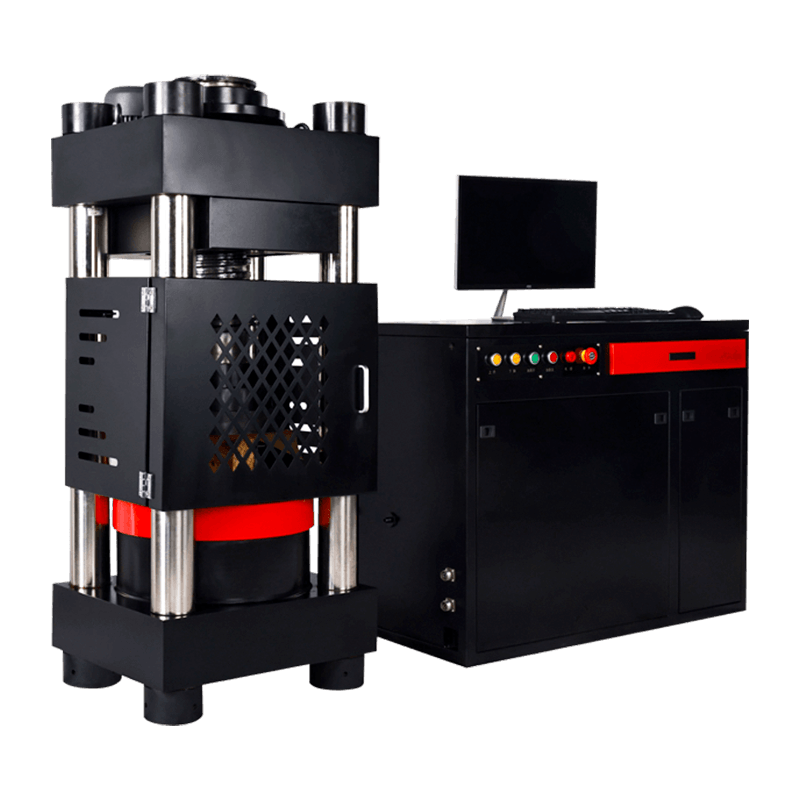 OEM/ODM Microcomputer Controlled Fully Automatic Pressure Testing Machine SuppliZhejiang Yiyu Instrument Equipment Co., Ltd. is China Microcomputer Controlled Fully Automatic Pressure Testing Machine Suppliers and OEM...View Product →
If you are not sure which capacity fits your specimen mix, discuss the calculation with the manufacturer's engineering team before finalizing the purchase.
Practical Buying Considerations
Beyond the specification sheet, four factors determine long-term satisfaction with a compression testing machine.
- Calibration and verification. Traceable verification with a proving device or reference load cell is required at defined intervals. Confirm that the supplier provides calibration certificates and that the machine allows routine verification without difficult disassembly.
- Safety and guarding. Specimens often shatter at failure. Look for protective guards, an emergency stop, and a layout that keeps the operator away from the crushing zone.
- Installation and environment. Hydraulic machines need space for the power pack, the correct electrical supply, and sometimes a vibration-free foundation. Confirm site requirements before delivery.
- Supplier capability. A manufacturer that designs and builds machines in-house, such as Zhejiang Yiyu Instrument Equipment Co., Ltd., can respond with spare parts, service, and customization more quickly than a reseller.
Zhejiang Yiyu produces a wide range of pressure testing machines, compression-flexure integrated systems, and complementary field instruments for construction material laboratories, and it has delivered testing equipment to users in many countries. A documented service record and access to application support are worth as much as the machine itself.
The right compression testing machine is not the one with the highest capacity or the lowest price. It is the machine whose frame rigidity, control system, accuracy class, and platen arrangement match the standards you test against and the specimens you run. Start with the test standard, confirm the capacity and accuracy requirements, choose a control level that fits your throughput, and verify that the supplier can support the machine over its working life. A properly matched machine will deliver consistent, traceable results for decades.

 简体中文
简体中文
 English
 русский