A compression testing machine is one of the most fundamental pieces of equipment in any materials testing laboratory. Whether you are verifying the compressive strength of concrete cubes for a high-rise project or checking the crush resistance of a new plastic compound, the machine applies a controlled compressive force to a specimen and records how it responds. Understanding how the machine works helps operators produce reliable results, maintain equipment correctly, and select the right model from the start.
What Is a Compression Testing Machine?
A compression testing machine, commonly abbreviated as CTM, is designed to apply a gradually increasing compressive load to a specimen until a predetermined condition is reached — typically failure, yield, or a specified amount of deformation. The machine measures the applied force and the corresponding displacement, allowing engineers to calculate compressive strength, modulus of elasticity, and other mechanical properties.
Compression testing is the mirror image of tensile testing. Instead of pulling a specimen apart, the machine pushes two platens together, squeezing the sample between them. This makes it essential for brittle materials such as concrete, cement, brick, stone, ceramics, and many plastics, which are often far stronger in compression than in tension.
Core Components of a Compression Testing Machine
Modern compression testing machines share a common architecture, whether they are benchtop models or 3000 kN floor-standing systems. The main components include:
- Load frame: the rigid structure that supports the platens and absorbs the reaction force. Hydraulic machines typically use a four-column or two-column design that provides high stiffness and minimizes frame deflection during the test.
- Hydraulic power unit: a hydraulic pump generates the large forces required by driving oil into a piston-and-cylinder assembly, moving the platen against the specimen.
- Load cell: a precision force transducer mounted in the load path that converts mechanical force into an electrical signal for the controller.
- Compression platens: hardened steel plates with ground, parallel surfaces that distribute the load evenly across the specimen ends.
- Control and data acquisition system: a microcomputer or digital controller that regulates the loading rate, captures force and displacement data, and plots the stress-strain curve in real time.
On a microcomputer-controlled electrohydraulic servo machine, the servo valve adjusts the oil flow continuously to hold the loading rate steady, even as the specimen deforms or begins to crack. This is the key difference between a basic manual machine and a precision servo-controlled system.
How the Compression Test Works Step by Step
Once the machine is set up, the test follows a straightforward sequence:
- Prepare the specimen. Concrete specimens are usually cast as 150 mm cubes, 100 mm cubes, or cylinders. The ends must be flat, and the dimensions must be measured accurately because compressive strength is calculated as force divided by cross-sectional area.
- Position the specimen. Place it centrally on the lower platen so that the load axis passes through the center of the specimen.
- Set the test parameters. Enter specimen dimensions, the required loading rate, and the target end condition into the controller. Standards such as ASTM C39 and EN 12390 define these values for concrete.
- Start the test. The hydraulic system moves the platen upward until the specimen contacts the upper platen, then applies load at the programmed rate.
- Record data. The load cell and displacement transducer constantly send signals to the controller, which plots load versus displacement in real time.
- Detect failure. When the specimen fractures, the load drops sharply. The machine detects the drop, records the peak load, and automatically stops or reverses the platen.
- Calculate results. Peak load divided by the original cross-sectional area gives compressive strength. Additional calculations can yield modulus of elasticity, yield point, and energy absorption.
Each step is straightforward, but the details matter — from specimen preparation to loading rate control — because they directly affect the credibility of your test results.
Types of Compression Testing Machines
Not all compression testing machines are built the same. The right configuration depends on the material, the force range, and the test standard you need to meet.
Common compression testing machine configurations
| Machine type |
Loading mechanism |
Typical applications |
| Hydraulic pressure testing machine |
Hydraulic pump with manual or servo valve |
Concrete cubes and cylinders, building materials |
| Microcomputer-controlled electrohydraulic servo |
Servo valve with closed-loop feedback |
Precision tests requiring constant loading rate |
| Electronic / electromechanical |
Motor-driven ball screw |
Plastics, rubber, low-force specimens |
| Compression-flexure integrated |
Hydraulic or servo with dual test spaces |
Cement mortar, flexural strength of beams |
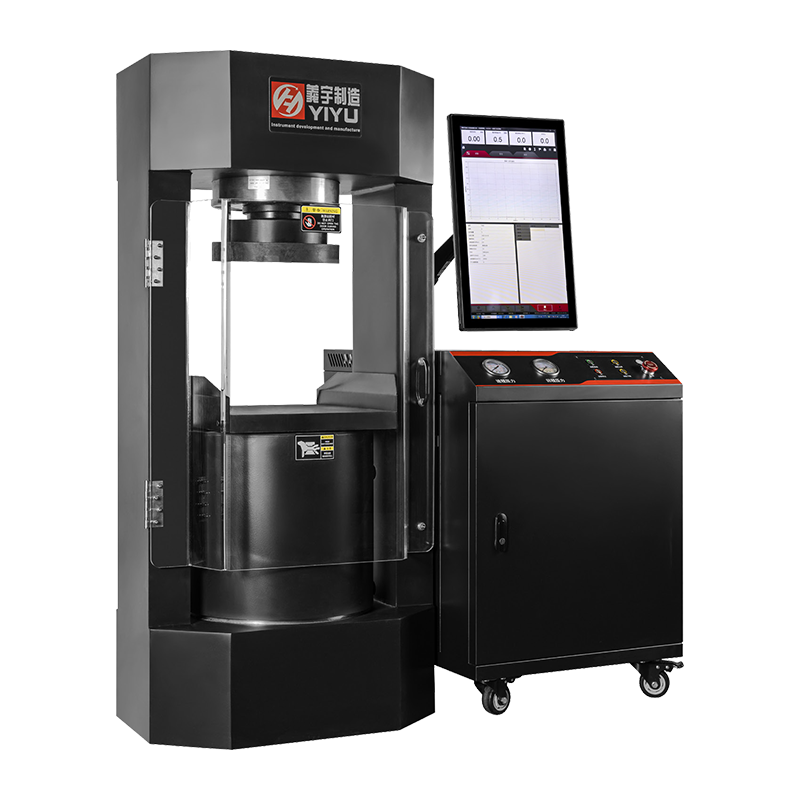
For laboratories that certify concrete quality, a microcomputer-controlled electrohydraulic servo pressure testing machine such as our YAW series offers the repeatability required by modern standards.
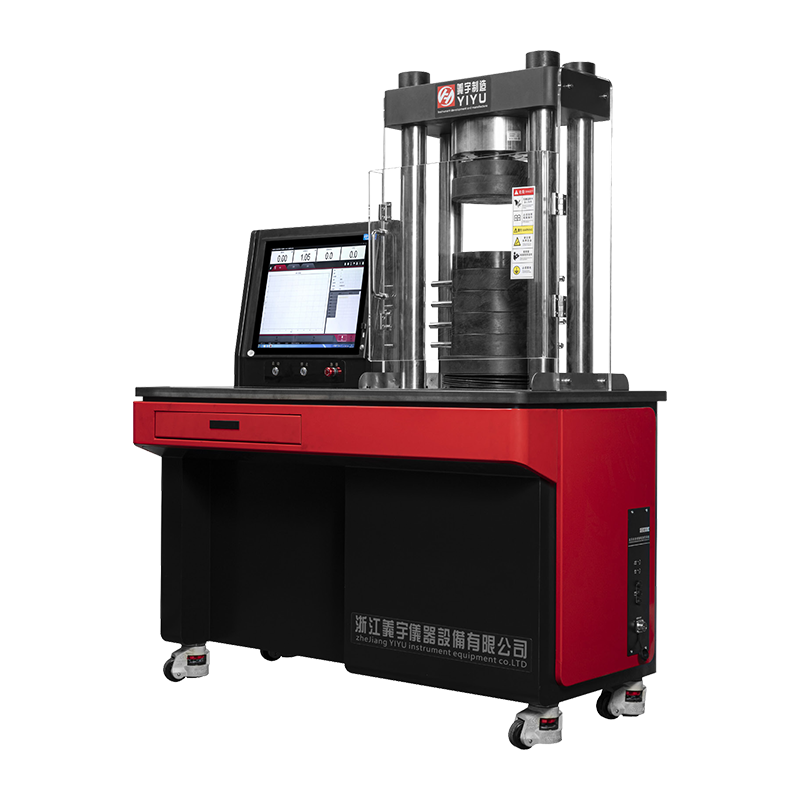 YAW Series Microcomputer-Controlled Electro-Hydraulic Servo Compression TesterThis high-rigidity four-column machine is designed for compressive testing of construction materials and composites, offering 0.5% accuracy and quiet servo-hydraulic operation. It suits labs requiring dependable, automated strength verification for concrete quality.View Product →
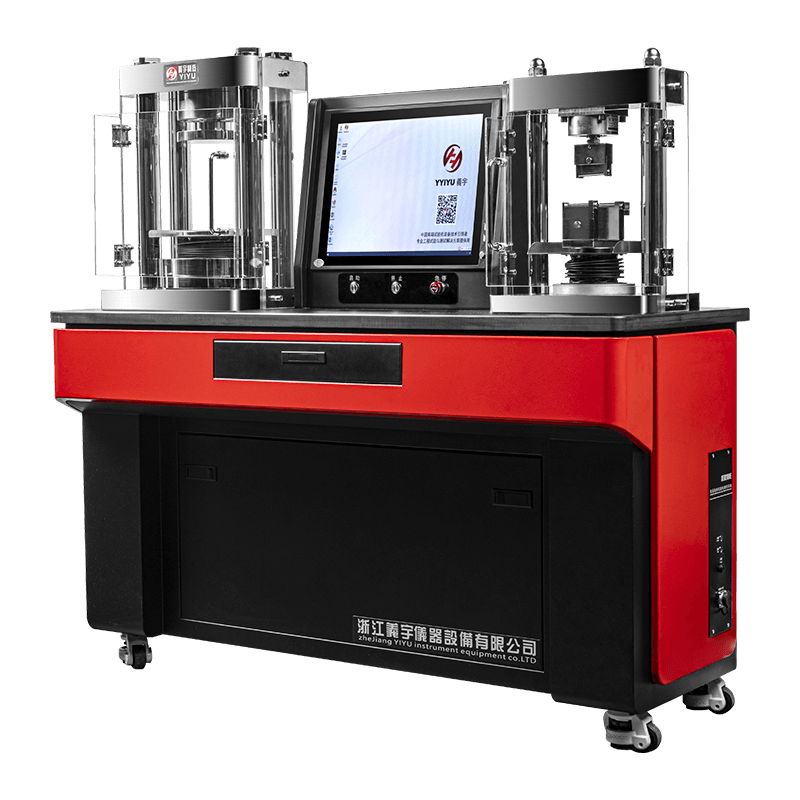
Labs that handle both compressive and flexural testing of cement often prefer an integrated machine such as our YAWD series, which consolidates two test stations into one frame and simplifies the daily workflow.
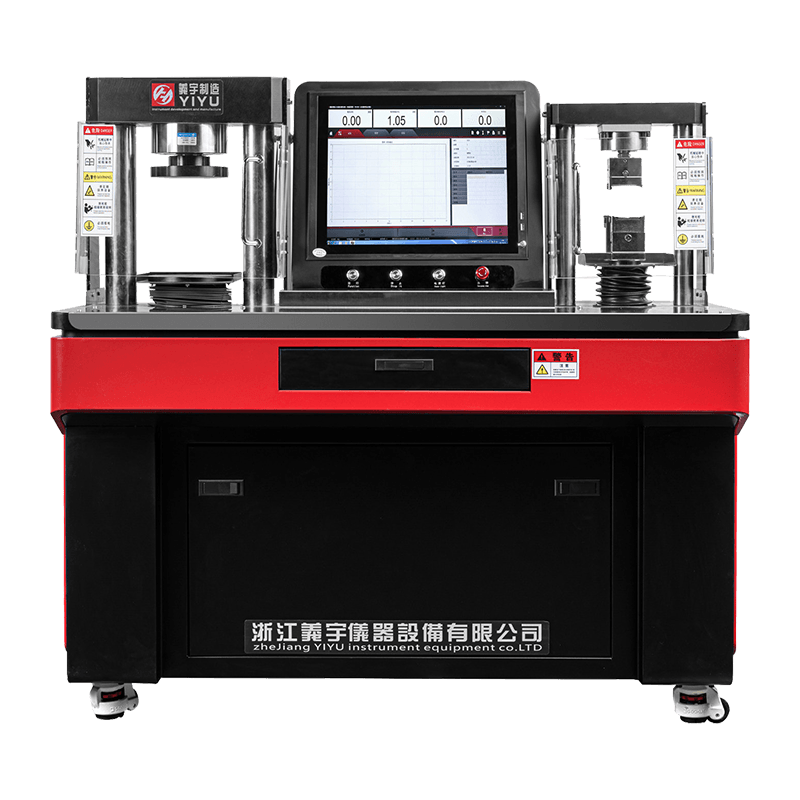 YAW-D Series Cement Compression and Flexural All-In-One Testing MachineCombining a dual-column compression frame with an electric-cylinder flexural unit, this model runs both tests simultaneously on one platform. Built-in sensors and a touchscreen interface streamline cement mechanical property evaluation while enhancing lab safety.View Product →
What Materials and Products Can Be Tested?
Compression testing machines appear in nearly every industry that uses structural materials:
- Construction and civil engineering — concrete cubes, cylinders, bricks, blocks, paving stones;
- Cement production — cement mortar prisms for compressive and flexural strength;
- Metals — steel bars, cast iron, sintered components;
- Plastics and rubber — pipe fittings, gaskets, foams, bottle caps;
- Ceramics and glass — tiles, insulators, refractory bricks;
- Prefabricated components — manhole covers, curb stones, concrete pipes, scaffolding fittings.
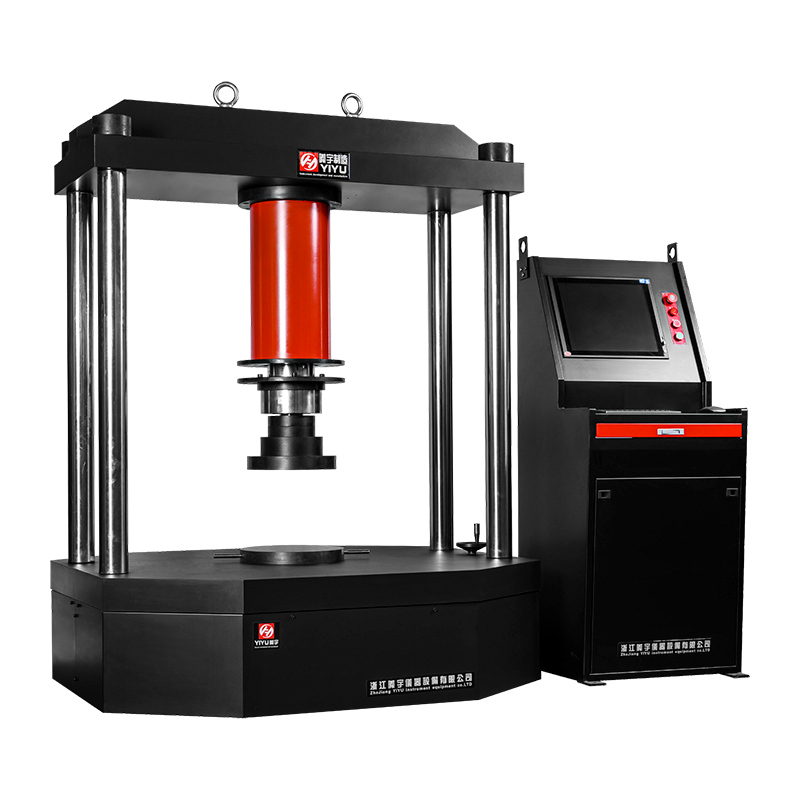
Each application brings its own fixture requirements and acceptance criteria. A concrete laboratory may need nothing more than flat platens, while a producer of municipal manhole covers requires a large-frame machine with high load capacity to simulate real traffic loads.
Choosing the Right Compression Testing Machine
We are often asked, "What capacity do I need?" The answer depends on three questions: what is the strongest material you will test, what is the largest specimen size, and which standard governs your acceptance criteria.
As a rule of thumb, the rated capacity should be at least one and a half times the expected maximum load. A machine that operates near its limit for every test develops hydraulic seal problems faster and gives less stable readings. Frame stiffness matters too — a soft frame stores strain energy and can produce misleading early failure readings on high-strength specimens.
For general concrete work, a 2000 kN pressure testing machine is a common choice because 150 mm cubes typically fail between 500 kN and 1800 kN depending on the concrete grade. If you also produce cement mortar specimens, an integrated compression-flexure machine may be the better investment because it replaces two separate machines.
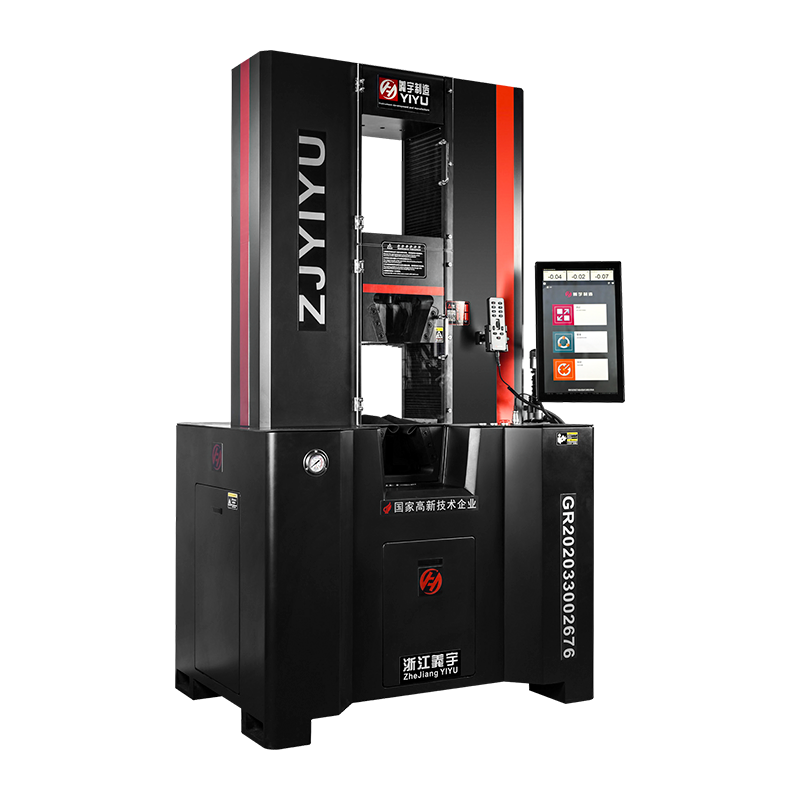
If your lab works with metals and needs tension, bending, and compression on the same platform, a universal testing machine from our WAW series is a practical route to consider.
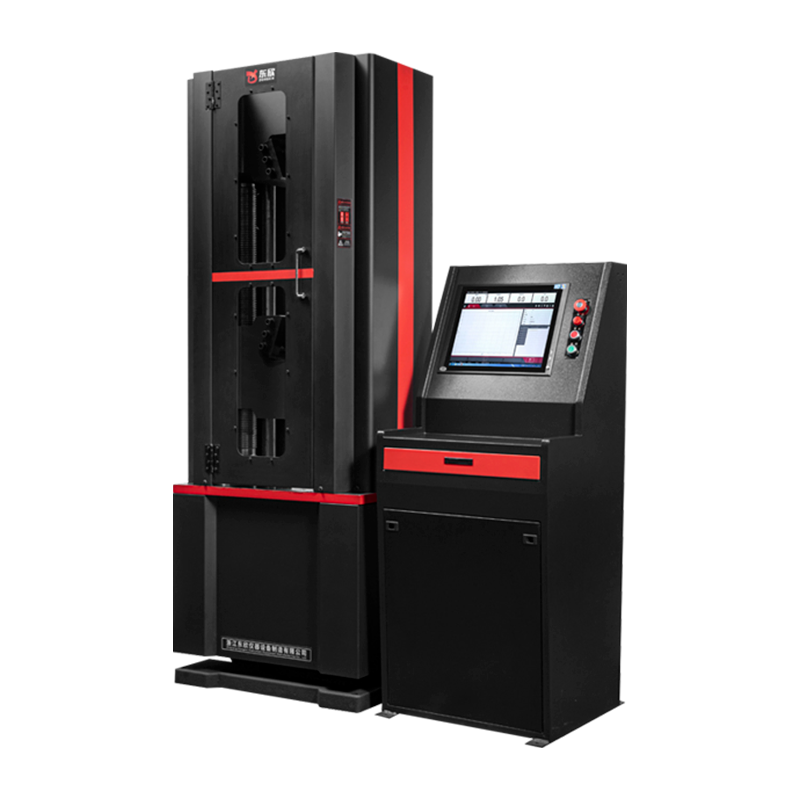 WAW Series Electro-Hydraulic Servo Universal Material Testing Machine (100-1000kN)With load capacities from 100 to 1000kN and a six-column rigid frame, this universal tester handles tension, bending, and compression for steel and civil engineering materials. Its class 1 accuracy and standalone control cabinet support high-load mechanical testing.View Product →
Operation and Maintenance Tips
Regardless of which machine you choose, a few practices will keep results accurate and extend the equipment's service life:
- Calibrate the load cell at least once a year, or as often as your quality system requires.
- Inspect platens regularly for nicks, burrs, and uneven wear; damaged platens ruin specimen alignment.
- Check hydraulic oil level and change the oil according to the manufacturer's schedule.
- Always use a platen at least as large as the specimen face.
- Clean specimen debris after every test — concrete dust is abrasive and accelerates seal wear.
If you need a detailed routine for daily operation, our full guide on how to use a compression testing machine walks through start-up checks, specimen placement, and shutdown procedures.
A compression testing machine works by combining a rigid load frame, a precise hydraulic or electromechanical loading system, and a sensitive force-measuring chain to crush a specimen in a controlled, repeatable way. The concept is simple, but the engineering that makes the results trustworthy is not. Look beyond the maximum force rating — consider frame rigidity, control accuracy, software capability, and the manufacturer's experience in your field. If you are unsure which compression testing machine fits your laboratory, our engineers at Zhejiang Yiyu Instrument Equipment are ready to help. Contact us with your test standard and specimen sizes, and we will recommend the right solution.

 简体中文
简体中文
 English
 русский