Ask ten engineers how slippery a material is and you will get ten different opinions. Ask them how the coefficient of friction is measured, and the answers come back to a single idea: drag one surface across another, measure the force that resists the movement, and divide it by the load pressing the two surfaces together. Everything else — fixtures, speeds, standards, conditioning — exists to make that one ratio repeatable.
Below we walk through the classic hand methods, the testing-machine approach used in modern laboratories, the standards that define the details, and the habits that separate a trustworthy number from a misleading one.
The Physics Behind Every Friction Measurement
The coefficient of friction, usually written as the Greek letter mu, is a ratio: the friction force divided by the normal force pressing the surfaces together. Because it is a ratio of two forces it carries no unit, which is exactly why it is so useful — a value of 0.3 means the same thing whether it came from a packaging film or a concrete slab.
Two numbers are normally reported for the same pair of materials:
- Static friction — the force needed to start motion, captured at the instant the surfaces break free.
- Kinetic friction — the force needed to keep them sliding at a steady speed.
Static friction is usually the higher of the two, which is why a heavy crate takes a hard shove to get moving and then slides along more easily. Every method, from a spring scale to a servo-hydraulic frame, is simply a different way of arranging two jobs: apply a known normal load, and capture the friction force at the right moment.
Classic Bench Methods You Can Set Up Today
The sled or drag test
A block of known weight rests on a flat sample of the material. A spring scale or handheld force gauge pulls the block horizontally at as steady a speed as the operator can manage. The reading at the moment the block breaks free gives static friction; the average reading during steady sliding gives kinetic friction. Divide by the block's weight and you have the coefficient.
The weak point is the hand doing the pulling. Reading a moving scale while holding a constant velocity is genuinely difficult, and small jerks inflate the peak. The test is excellent for teaching and rough comparisons, less so for a formal test report.
The inclined plane
The sample is fixed to a plane that tilts slowly until the block starts to slide. At that angle the static coefficient equals the tangent of the tilt angle — gravity supplies the normal force, so no load cell is required, only a protractor and patience. It suits stiff, flat materials, but the exact slip angle is easy to misjudge and the method says nothing about kinetic friction.
Where bench methods stop being enough
Low-friction films, lubricated surfaces, very small normal loads and anything that must be documented for a customer or a certification body will quickly expose the limits of hand testing. When the result has to be defensible, the pulling has to be done by a machine.
Measuring the Coefficient of Friction on a Universal Testing Machine
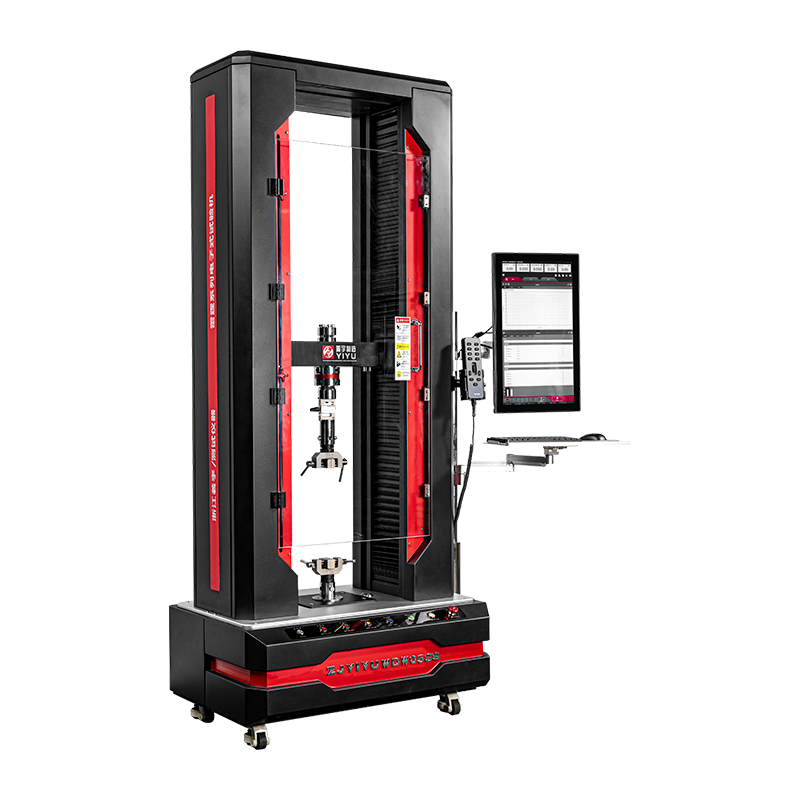
In the laboratory the sled is usually pulled by a universal testing machine. The specimen is clamped to a flat sled, the normal load is set with calibrated weights or a pneumatic puck, and a low-friction pulley or horizontal fixture converts the crosshead travel into a straight pull. From there the machine does what a hand cannot: it holds a precisely defined speed — 150 mm per minute in the classic film sled test, for instance — while a load cell samples the force hundreds of times per second.
The result is a force–displacement curve. The first peak, where the trace jumps, is the static friction force. The plateau that follows, once the sled is moving steadily, is the kinetic value. Test software divides each region by the applied normal load and reports both values directly, and a repeat is simply a matter of loading the next specimen.
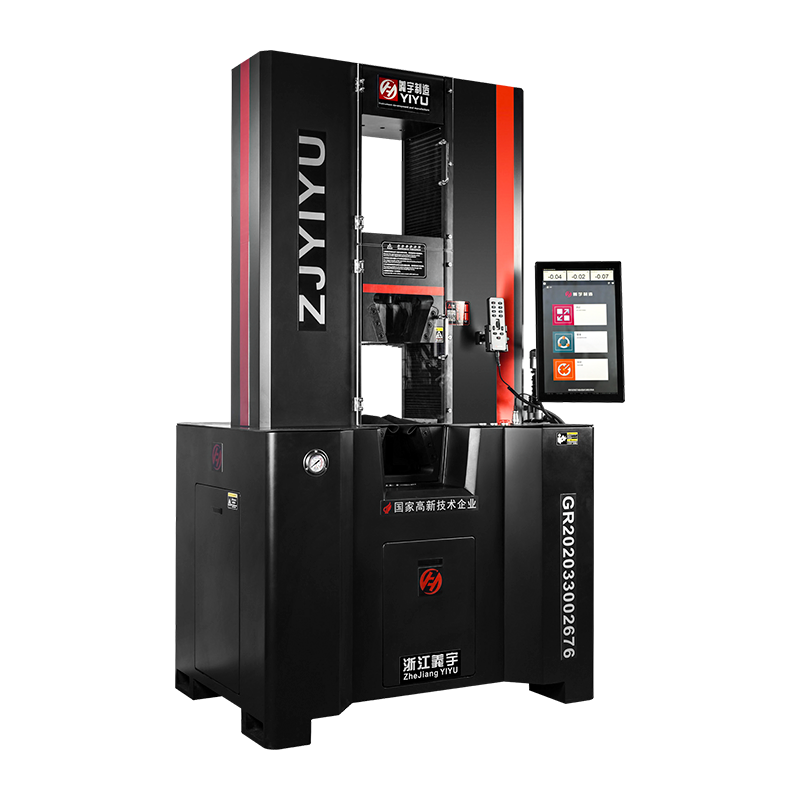
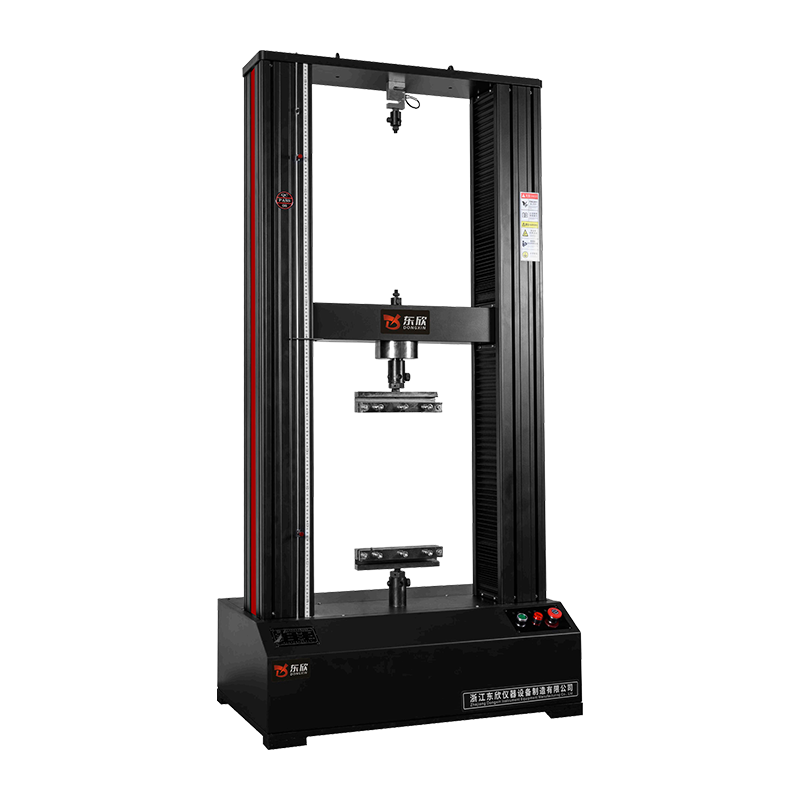 WDW Series Computerized Electronic Universal Testing MachineView this WDW Series electronic universal testing machine when low-force friction tests on films, coatings, paper or elastomers require a sensitive electronic frame.View Product →
For films, coatings, paper and elastomers the friction forces involved are often only a few newtons, so a low-capacity electronic frame with a sensitive load cell is the natural choice. If you are still deciding what to look for in the frame itself, our complete guide to universal testing machines covers frames, load cells and fixtures in more depth.
When the specimen gets heavy
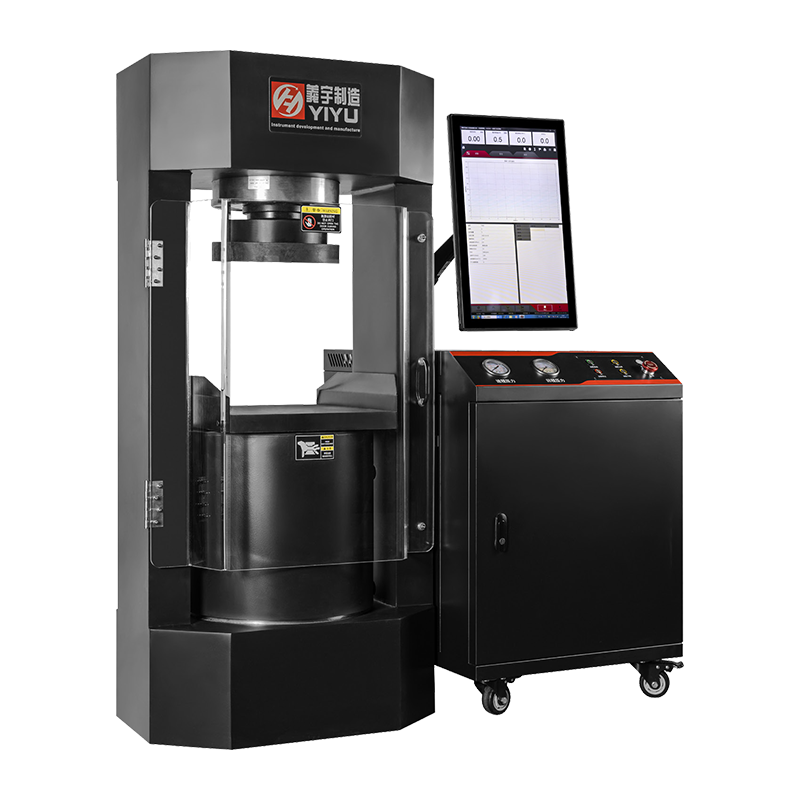
Not every friction study involves a thin film. Concrete blocks sliding on geomembranes, thick rubber pads and coated pipe sections all demand a stiffer frame and much greater capacity, because the normal load alone may reach several kilonewtons. Servo-hydraulic machines handle those jobs with the same test logic, just on a heavier scale.
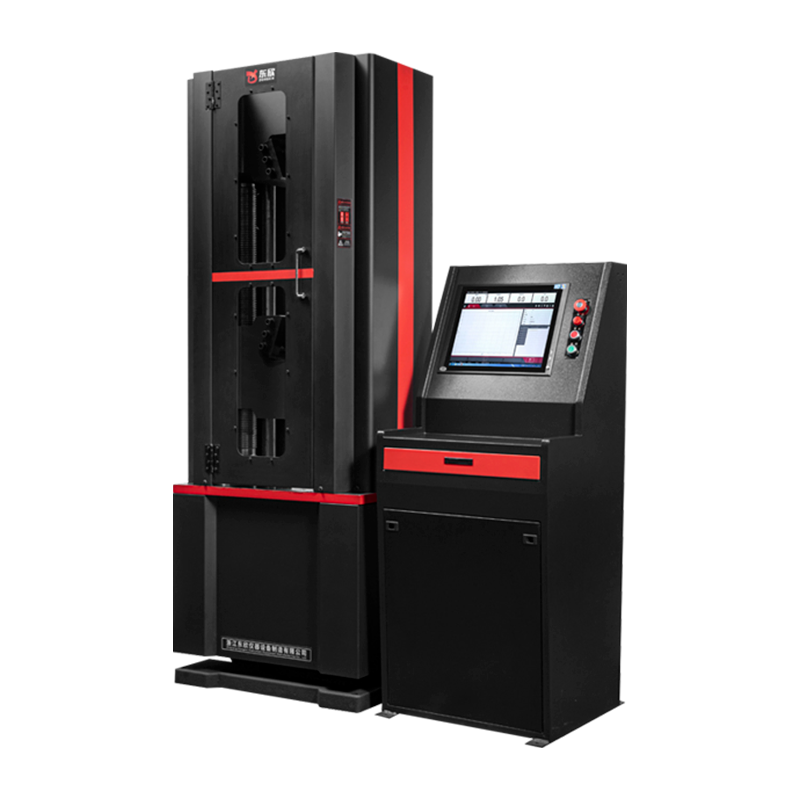 WAW-100/300/600/1000B Electro-Hydraulic Servo Universal Testing MachineFor stiffer, higher-capacity friction studies such as concrete on geomembranes or thick rubber pads, this hydraulic servo machine offers a heavier-scale test option.View Product →
Comparing the Main Measurement Methods
Each approach answers a slightly different question, and the right one depends on the material and on what you intend to do with the number.
Comparison of common coefficient of friction measurement methods, what they output and where they are typically used.
| Method |
Typical setup |
What you get |
Best suited for |
| Sled or drag test |
Block on a flat sample, spring scale or force gauge |
Static and kinetic values, read manually |
Quick checks, teaching, field estimates |
| Inclined plane |
Sample tilts until sliding begins |
Static coefficient from the slip angle |
Stiff flat materials, demonstrations |
| Motorised sled on a testing machine |
Sled pulled by the crosshead under a calibrated normal load |
Continuous force curve, both values from software |
Films, packaging, coatings, rubber, quality control |
| Direct shear or interface test |
Shear box or inclined frame under normal stress |
Interface friction angle, converted to a coefficient |
Soils, geosynthetics, concrete and steel interfaces |
| Pendulum or skid tester |
Portable pendulum or trailer-mounted device |
Skid resistance index, a proxy rather than a true coefficient |
Road surfaces, floors and ramps |
Standards Define How, Not Just What
A friction number is only meaningful if someone else can reproduce it, which is why standards spell out specimen size, conditioning, sled mass, speed and calculation. The ones you are most likely to meet:
- ASTM D1894 and ISO 8295 — static and kinetic friction of plastic film and sheeting using the sled method, with a defined sled mass and speed.
- ASTM G115 — a general guide to measuring and reporting friction coefficients when no product-specific method applies.
- ASTM D5321 — direct shear determination of soil–geosynthetic and geosynthetic–geosynthetic interface strength.
- ASTM E303 — the British Pendulum method for pavement surface friction, which reports an index rather than a true coefficient.
- ASTM D2394 — simulated service testing of wood and wood-base flooring, which includes friction behaviour.
Read the scope clause first. A method written for thin polyethylene film will not serve a 40 mm concrete paver, no matter how carefully you follow it.
When Friction Is Reported as an Angle
Geotechnical and civil engineers rarely quote a coefficient for soil, sand or geosynthetics. Instead they run a direct shear test: the sample is consolidated under a normal stress, then sheared slowly while shear force and horizontal displacement are logged. The slope of shear stress against normal stress gives the interface friction angle, and the coefficient is simply the tangent of that angle.
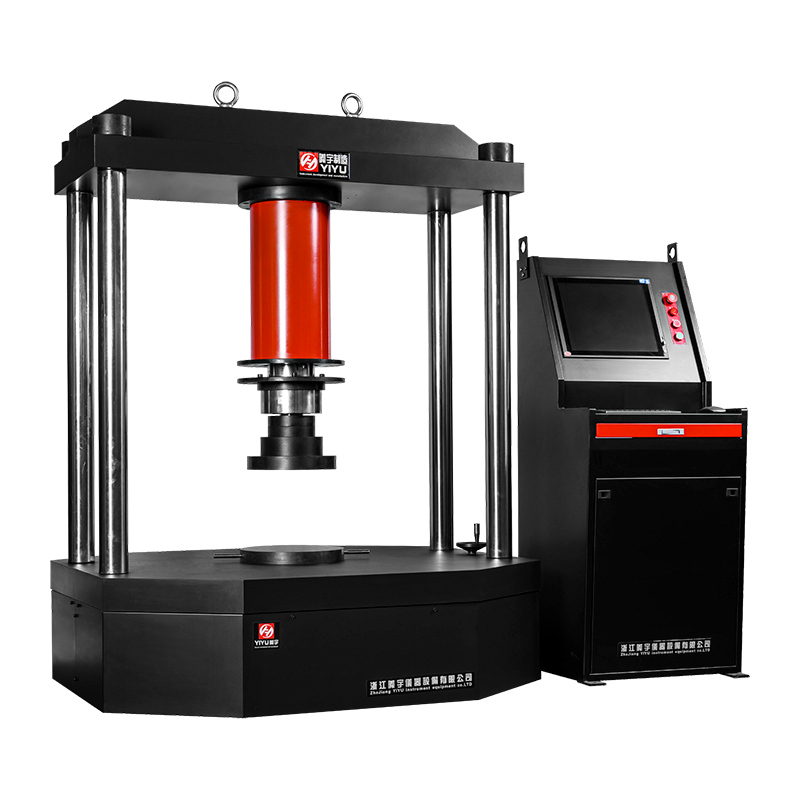
These tests are slower and use larger specimens than a film sled test, and the equipment has to hold a constant normal load while shearing at a controlled rate. A bench-top servo shear frame with a rigid loading platen and displacement measurement across the sample does the job reliably.
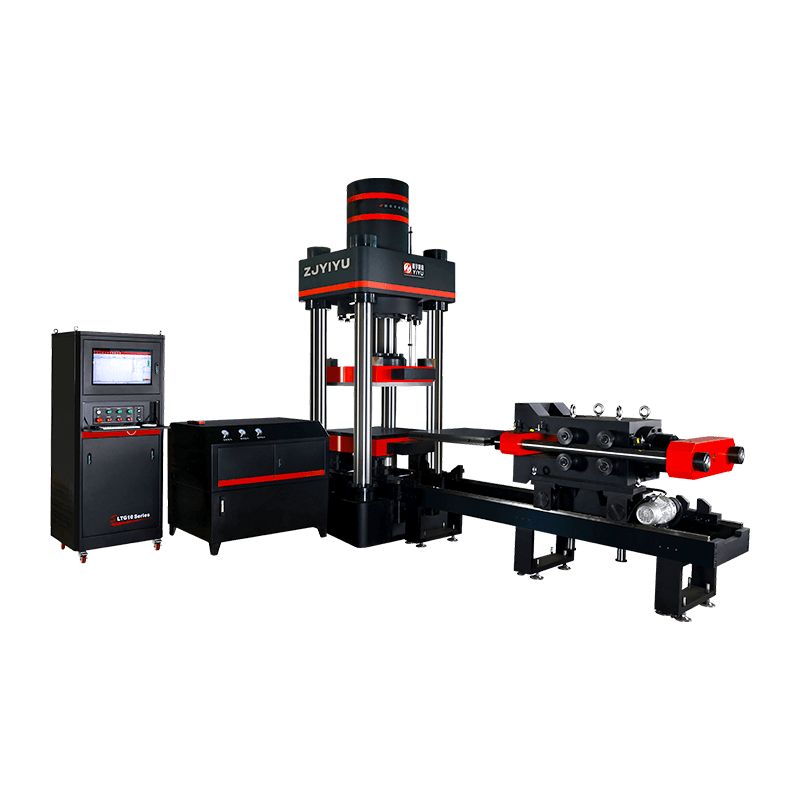 YJWSS Series Microcomputer-Controlled Electro-Hydraulic Servo Shear Testing MachineFor slower, larger-specimen interface shear tests that need a constant normal load and controlled shearing, view this servo shear testing machine.View Product →
In the field, related interface resistance is often assessed by pull-out or pull-off tests, which measure the force needed to separate a bonded or embedded element rather than a sliding coefficient.
What Changes the Number You Get
Two laboratories can test the same material pair and report noticeably different values. The usual reasons:
- Surface condition — roughness, oxidation, dust, fingerprints and release agents all move the result, sometimes dramatically.
- Normal load — real contact area grows with load, so the coefficient can drift slightly as the applied weight changes.
- Sliding speed — viscoelastic materials such as rubber and polymers are strongly rate dependent.
- Temperature and humidity — films and lubricants are especially sensitive, so conditioning before the test is not optional.
- Dwell time and orientation — the longer the surfaces sit in contact before motion starts, the higher the static value tends to be, and direction matters for textured materials.
Practical Habits That Improve Repeatability
- Clean specimens with the solvent named in the standard, then condition them for the specified time.
- Set the normal load with calibrated weights or a verified pneumatic system rather than by feel.
- Keep the pull axis parallel to the surface; a few degrees of misalignment adds a vertical component that distorts the ratio.
- Use the same sled, contact area and orientation for every repeat.
- Record the first peak and the steady plateau separately, because averaging them together hides the static value.
- Run at least three replicates, report the range, and log speed, temperature, humidity and normal load alongside the result.
Final Thoughts
How the coefficient of friction is measured comes down to one honest measurement of force and one honest measurement of load, repeated under conditions someone else can copy. Hand methods still have a place on the bench, but as soon as the number has to survive a design review, a customer audit or a certification file, a controlled testing machine becomes the practical choice.
We build these machines for a living and we are always glad to talk through fixtures, load ranges and standards with anyone wrestling with a friction problem. If you would like a second opinion on your setup, contact our team — we will tell you honestly what your test needs and what it does not.

 简体中文
简体中文
 English
 русский