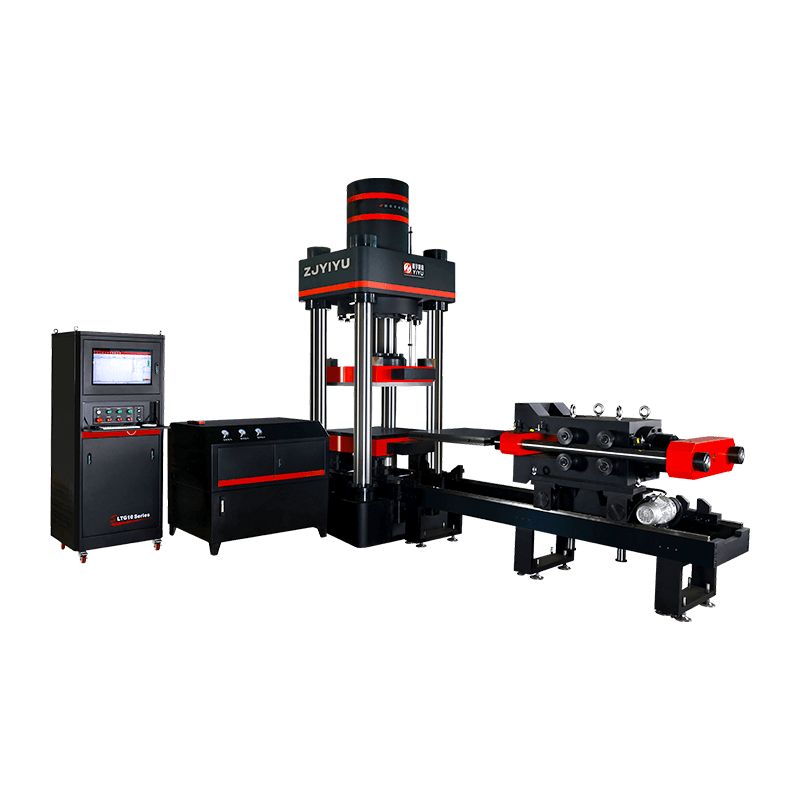
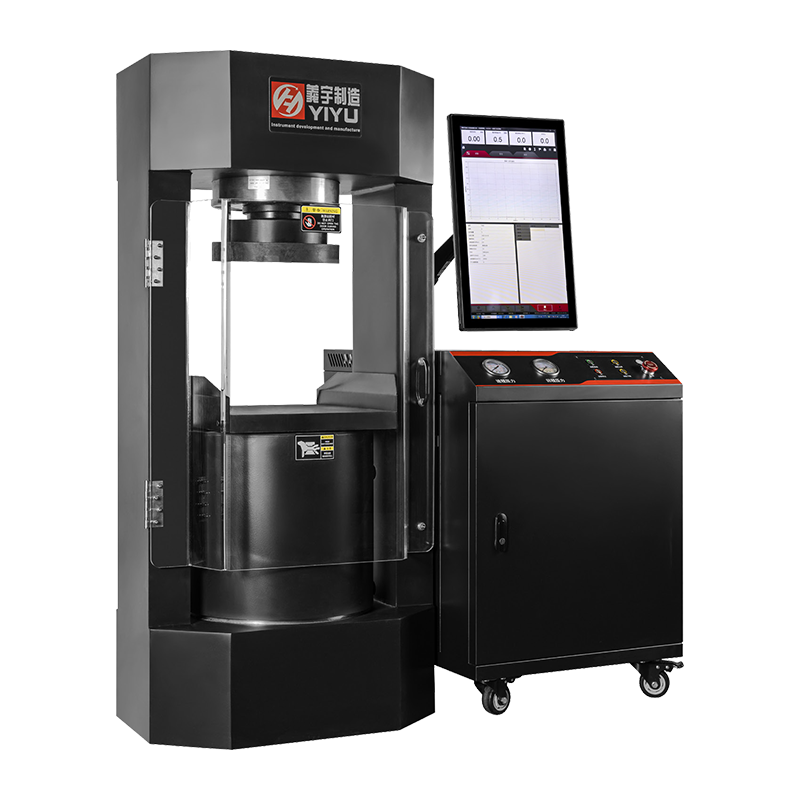
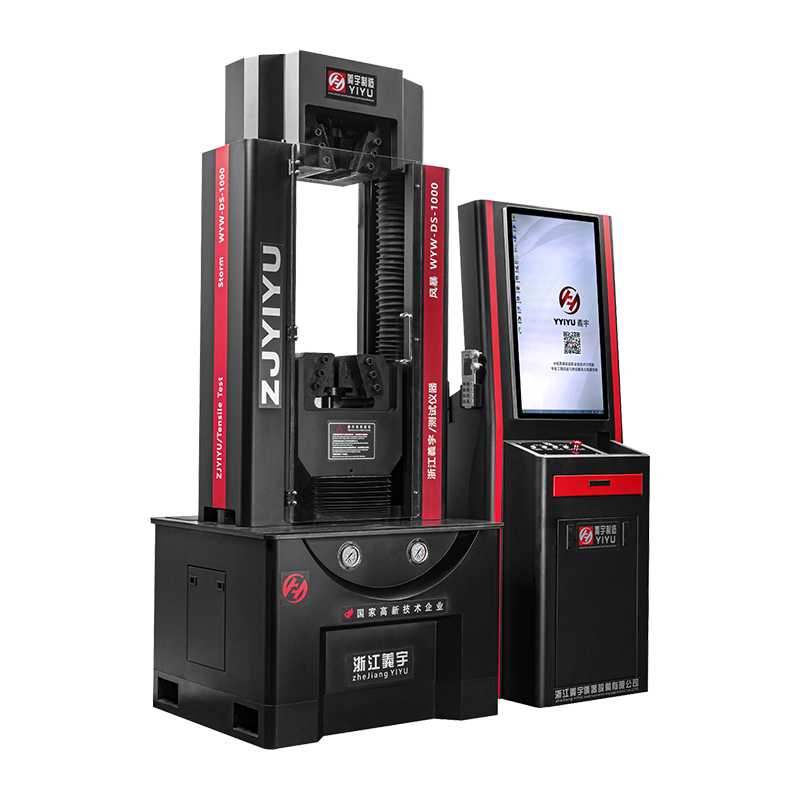
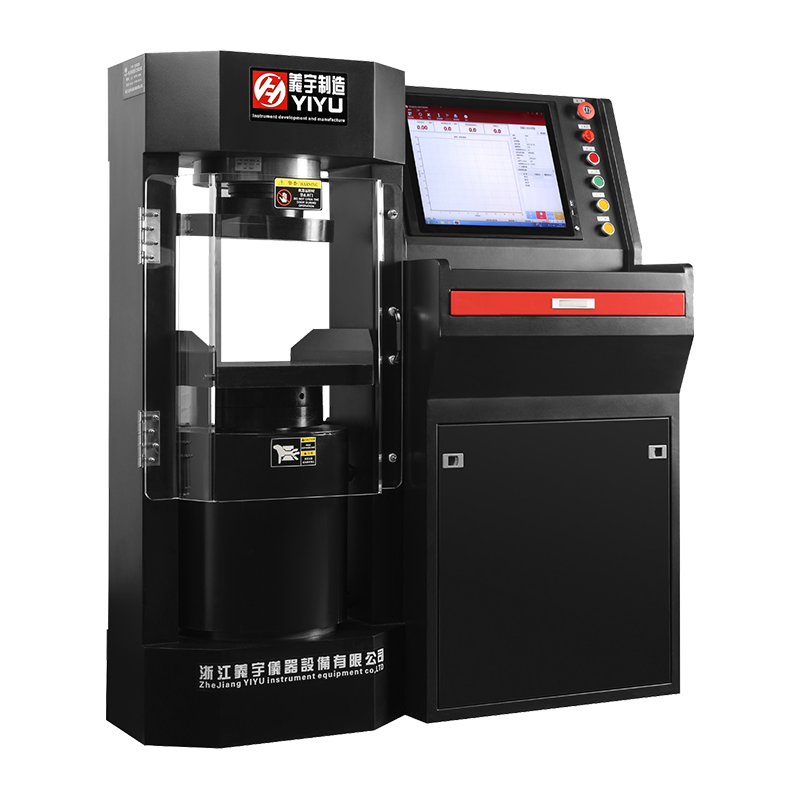
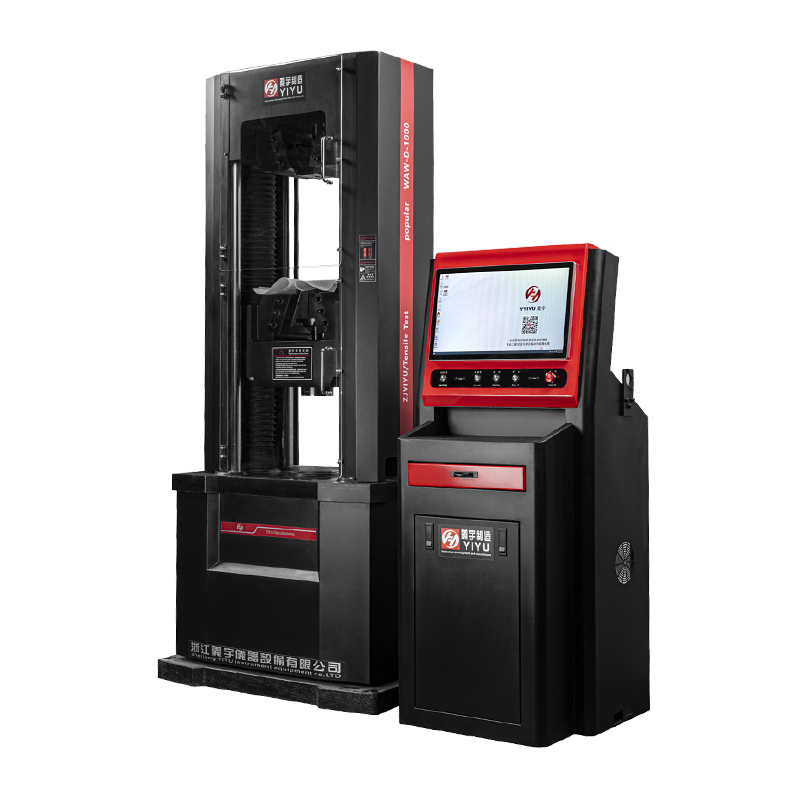
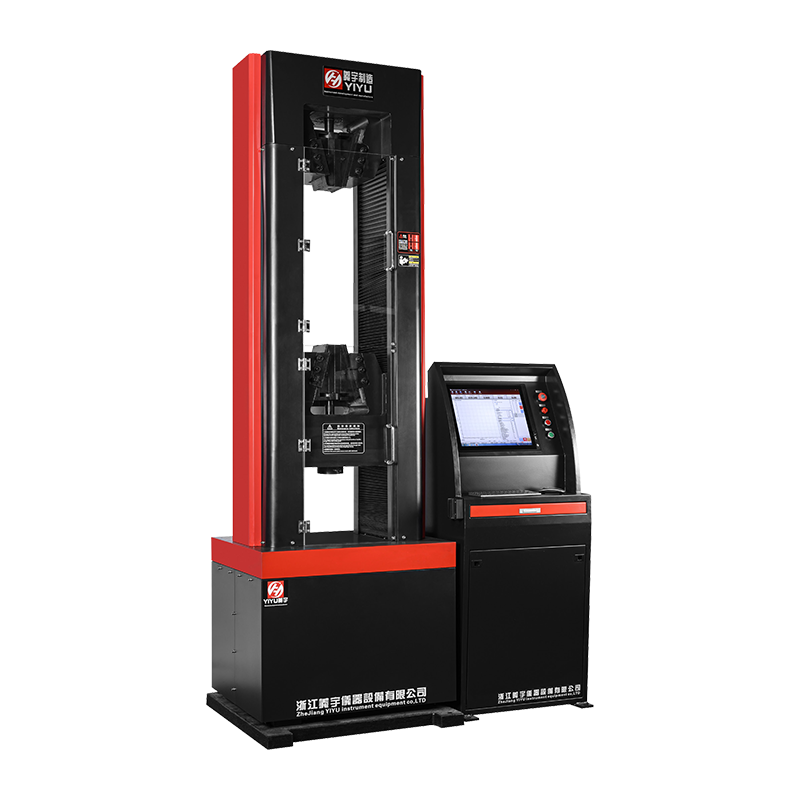
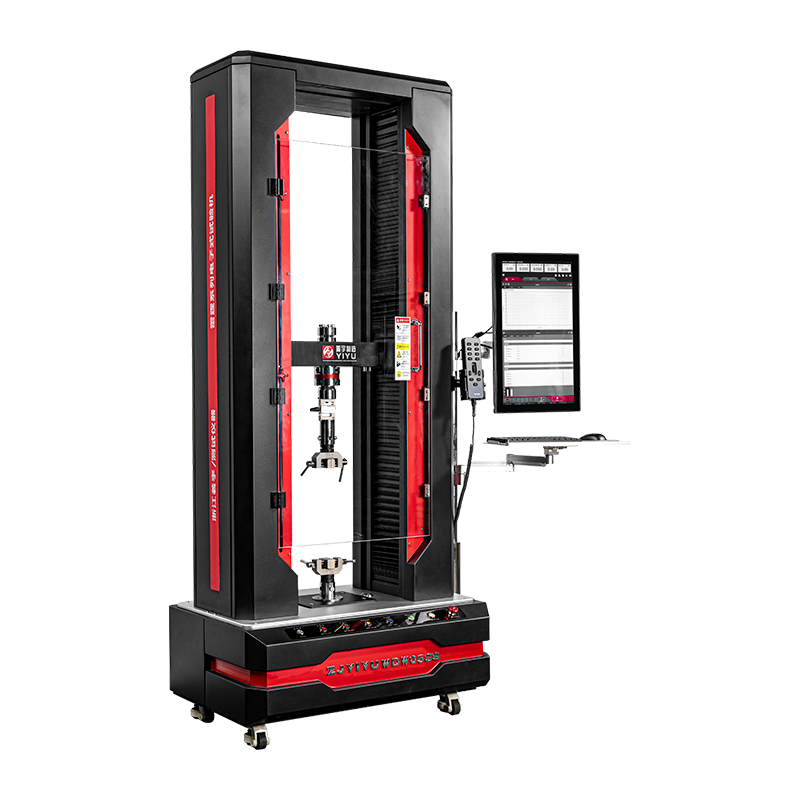
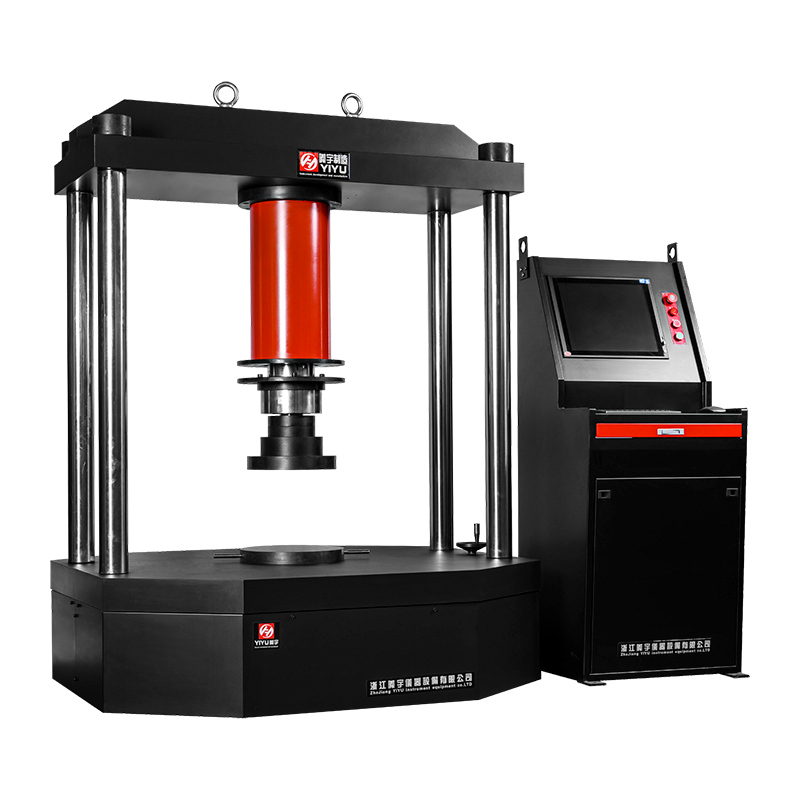
The YJWSS Series Microcomputer-Controlled Electro-Hydraulic Servo Shear Testing Machine is a specialized, ultra-high-tonnage mechanical testing system developed and manufactured by Zhejiang Yiyu Instrument Equipment Co., Ltd. Utilizing advanced microcomputer-controlled electro-hydraulic servo technology, this machine is primarily designed to test the mechanical properties of materials and components such as rubber bearings, dampers, and shock absorbers. Renowned for its exceptional rigidity, superior measurement accuracy, and fully automated control capabilities, the equipment is widely used in road and bridge construction, seismic isolation for buildings, and related scientific research fields.
Core Design and Functional Highlights
Ultra-Rigid Mainframe Structure:
- The mainframe features an ultra-rigid frame structure composed of four columns and a crosshead, ensuring exceptional stability during high-load testing and guaranteeing the precision of test results.
Advanced Hydraulic Drive System:
- Top-Mounted Cylinder: Equipped with a top-mounted, large-bore, low-pressure bidirectional cylinder, offering superior durability and operational stability.
- Flexible Adjustment: Supports electric drive for longitudinal (front-to-back) movement and hydraulic drive for vertical height adjustment, greatly facilitating the installation and alignment of specimens of various specifications.
- Quiet Operation: The hydraulic system utilizes a servo motor paired with a radial piston pump, ensuring high efficiency and stability with minimal noise, thereby creating a quiet working environment for the laboratory.
Precision Measurement and Intelligent Control:
- High-Precision Sensors: Features a built-in 5000kN high-precision load cell to ensure the reliability and accuracy of force data acquisition.
- Intelligent Interaction: Equipped with a Lenovo PC running the proprietary SmartTest interactive interface, ensuring smooth system operation and an enhanced user experience.
- Multifunctional Control Box: Includes an ergonomic manual control box, allowing operators to perform on-site fine-tuning with ease.
Testing Capabilities and Applications
The equipment offers extensive testing capabilities, enabling the following tests:
- Rubber Bearing Tests: Compressive strength, elastic modulus, shear (static) elastic modulus, bonding performance, aging tests, friction coefficient tests, and rotation tests.
- Bridge Pot Bearing Tests: Measurement of axial and radial deformation under load.
- Damping Component Tests: Mechanical performance evaluation of dampers and shock absorbers.
Frequently Asked Questions (FAQ)
Q1: Which industries and products is the YJWSS series designed for?
A: This series is specifically designed for the bridge engineering and structural damping industries. It is primarily used to test the load-bearing capacity, deformation, and durability of various bridge rubber bearings, pot bearings, as well as structural dampers and shock absorbers.
Q2: Can this machine perform compression, shear, and rotation tests simultaneously?
A: Yes. The equipment features multi-directional loading capabilities; it can exert a maximum compressive force of 5000 kN while simultaneously applying shear forces up to 1000 kN and rotational forces up to 300 kN, supporting complex combined-load testing.
Q3: Why does this equipment utilize horizontal adjustment and hydraulic height adjustment?
A: Since the bearings to be tested are typically large and heavy, electric-driven horizontal positioning and hydraulic-driven vertical height adjustment allow operators to position specimens precisely and effortlessly, thereby improving testing efficiency.
Q4: How does the SmartTest software interface assist with testing operations?
A: The SmartTest interface is specially optimized with a clear, logical workflow. It monitors the testing process in real-time, automatically acquires high-precision force and deformation data, and generates professional test reports, greatly simplifying complex test management tasks.
Q5: Is the hydraulic system noisy?
A: No, the noise level is low. It employs an advanced combination of servo motors and radial piston pumps to achieve "ultra-low-decibel" operation—a highly advanced design for 10,000-ton class large-scale presses that effectively improves the laboratory working environment.


 简体中文
简体中文
 English
 русский