Why Hydraulic Universal Testing Machines Still Lead the Lab
Every working day, a laboratory somewhere accepts or rejects a shipment of steel rebar, structural plate, or anchor hardware based on a single load-elongation curve. If that curve does not faithfully represent the material, the mistake may only show up months later on a construction site. A hydraulic universal testing machine (UTM) exists to prevent that outcome. Hydraulic UTMs remain the preferred platform for metals and construction materials because they deliver higher force, a stiffer frame, and the loading control that modern test standards require. The real challenge for buyers is not deciding whether to buy one; it is matching the machine to the specimens, the applicable standards, and the operating budget.
What Is a Hydraulic Universal Testing Machine?
A hydraulic universal testing machine is a test frame that generates tensile, compressive, flexural, and shear forces with a hydraulic actuator instead of a motor-driven screw. Hydraulic systems dominate metal and building-material laboratories because a hydraulic cylinder can produce very large forces — typically from 300 kN up to 2,000 kN and beyond — while keeping the frame stiff and compact. What matters even more than peak force is measurement quality: a reliable machine reports the exact values engineers and inspectors need, including yield strength, ultimate tensile strength, elongation, and, for ductile metals, reduction of area.
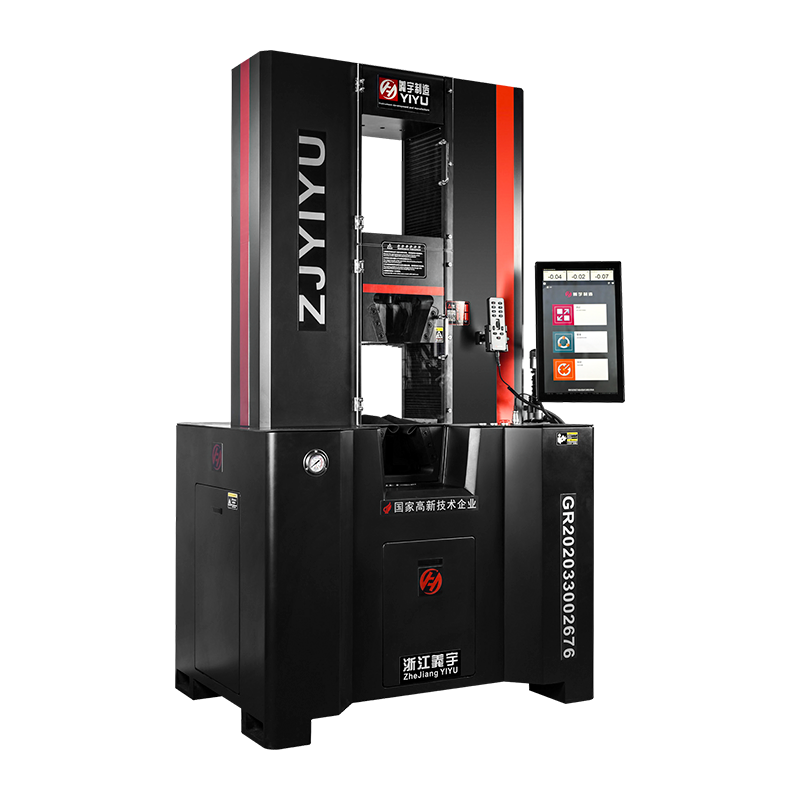
Machines with this architecture are commonly described as microcomputer-controlled electro-hydraulic servo universal testing machines. The WAW100-300-600-1000B microcomputer-controlled electro-hydraulic servo universal material testing machine, available in capacities from 100 kN to 1,000 kN, is a typical example of this class and covers most routine metals-testing requirements in one frame.
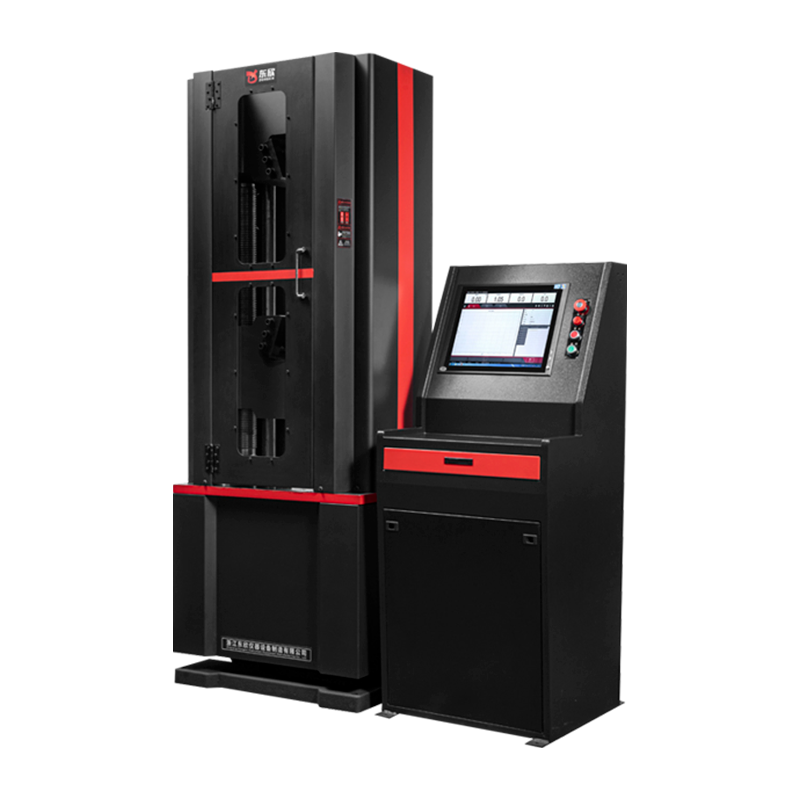 OEM/ODM Microcomputer Controlled Electro-Hydraulic Servo Universal Material TestZhejiang Yiyu Instrument Equipment Co., Ltd. is China Microcomputer Controlled Electro-Hydraulic Servo Universal Material Testing Machine...View Product →
Working Principle
The hydraulic power unit pressurizes oil and delivers it to a cylinder, and the piston moves the crosshead or the lower table to load the specimen. A load cell measures force, an extensometer measures elongation, and a servo valve regulates oil flow according to commands from the controller. In a closed-loop system, the controller compares the actual load or strain with the set point many times per second and corrects the valve position automatically. That is the difference between a simple manual press and a true testing machine: the ability to hold a constant stress rate through the yield point, which is exactly what ISO 6892-1 requires for metallic materials.
Key Components
- Load frame — two or four columns, upper and lower crossheads, and a moving table; frame stiffness directly affects the accuracy of force and deformation readings.
- Hydraulic power unit — the pump, oil tank, filters, and pressure settings that feed the actuator.
- Servo valve and controller — the precision components that govern loading rate and hold constant stress or strain.
- Load cell — the force transducer that defines the accuracy class of the complete system.
- Extensometer — the device that measures specimen elongation and enables automatic yield-strength calculation.
- Grips and fixtures — wedge grips for round and flat specimens, compression platens, bending tools, and custom tooling for special samples.
Hydraulic or Electronic: Which Drive Is Right for You?
Before choosing a specific model, settle the drive-technology question first. We have published a detailed comparison of electronic versus hydraulic universal testing machines for readers who want the full analysis; the table below condenses the main points.
Typical trade-offs between hydraulic and electromechanical universal testing machines.
| Factor |
Hydraulic UTM |
Electromechanical UTM |
| Typical force range |
300 kN to 2,000 kN and above |
Usually 1 kN to 100 kN; some models reach 300 kN |
| Measurement accuracy |
Class 0.5 or Class 1 per ISO 7500-1 |
Class 0.5 or Class 1 per ISO 7500-1 |
| Control behavior |
Strong servo control for constant load or strain rate at high force |
Very fine position control and wide speed range for low-force materials |
| Best suited for |
Steel bars, plates, wire, strand, anchors, and structural components |
Plastics, rubber, composites, films, and small metal specimens |
| Maintenance load |
Hydraulic oil, filters, and seals need periodic attention |
Simpler routine maintenance of screw drives and belts |
The practical conclusion is straightforward: if you test high-strength metals or large structural components, a hydraulic machine gives you the force capacity and frame stiffness those specimens demand. If most of your workload is below 50 kN, an electromechanical machine is often cheaper to buy and easier to maintain. Many laboratories end up operating both, so the decision usually comes down to which capability is needed first.
Specifications to Check Before You Buy
Once the drive type is decided, the purchasing decision narrows to a few specifications that cause the most problems after installation. For a more complete treatment, read our ultimate guide to choosing a hydraulic universal testing machine; the checklist below covers the criteria that deserve attention first.
- Force capacity and usable range. Place your routine specimens between 20% and 80% of the rated force. A 1,000 kN machine used only for 100 kN tests is unnecessarily expensive and can be less accurate at low loads.
- Accuracy class. Load indication should be verified according to ISO 7500-1 or ASTM E4. Class 0.5 means readings stay within 0.5% of the true force; Class 1 is acceptable for routine quality control, but Class 0.5 is strongly preferred for accredited laboratories.
- Control modes. The controller should support load-rate, position, and strain-rate control, and it should switch automatically between modes when the specimen reaches its yield point.
- Frame stiffness and test space. Check the width between columns, maximum and minimum test space, piston travel, and jaw opening. These dimensions determine whether your longest rebar or widest plate can actually be mounted.
- Extensometer compatibility. Choose an extensometer that complies with ISO 9513 or ASTM E83 and covers the expected strain range of your materials.
- Software and data output. The software must record the full curve, calculate yield, tensile, and elongation values automatically, and export data in formats accepted by your LIMS or audit system.
Where Hydraulic UTMs Earn Their Keep
Hydraulic universal testing machines appear in almost every sector that must prove the mechanical performance of load-bearing materials. The following use cases reflect the questions we hear from customers every week.
Construction and Building Materials
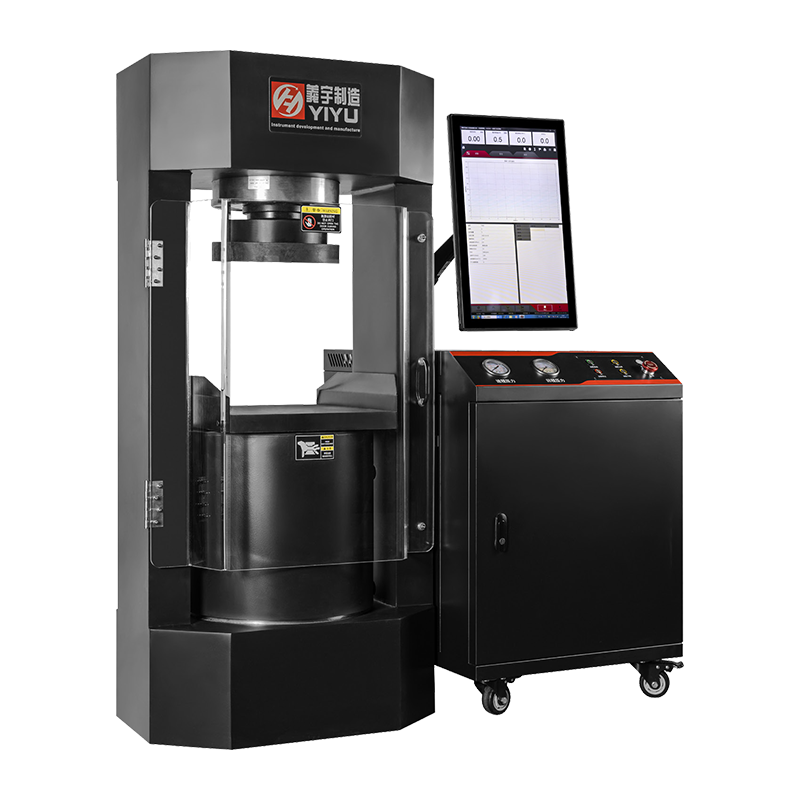
Reinforcing steel bar testing — yield strength, tensile strength, and elongation — is required in nearly every concrete structure project. The same machine also handles steel plates, threaded bars, bolts, and welded joints. Higher-capacity models such as the WAW600-1000G high-capacity universal material testing machine are frequently used in construction-materials laboratories for large-diameter rebar, thick plates, and anchor assemblies, where the test load approaches 1,000 kN.
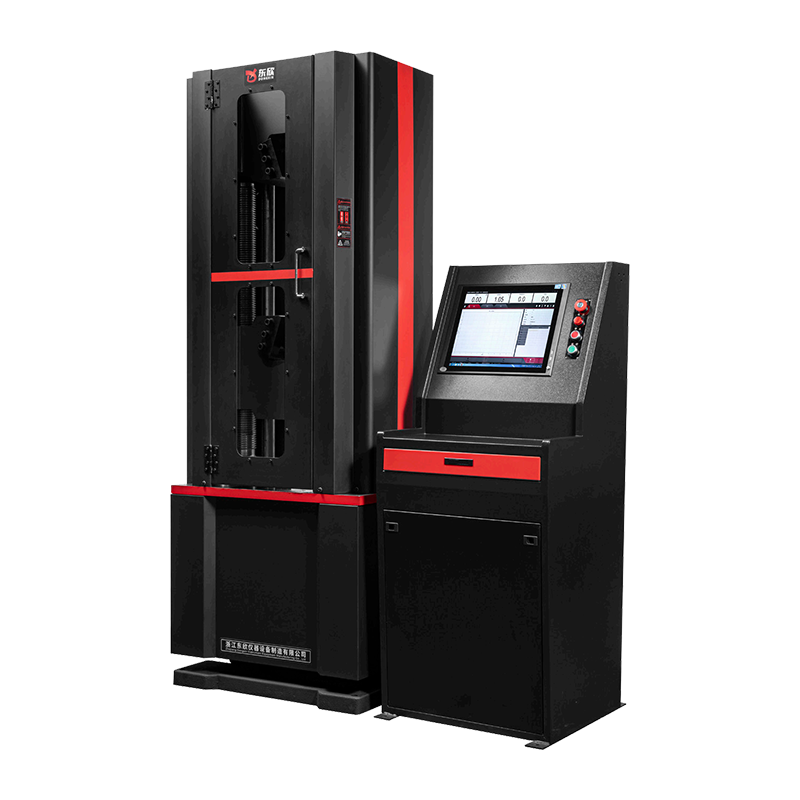 OEM/ODM Microcomputer Controlled Electro-Hydraulic Servo Universal Material TestZhejiang Yiyu Instrument Equipment Co., Ltd. is China Microcomputer Controlled Electro-Hydraulic Servo Universal Material Testing Machine...View Product →
Metal Manufacturing and Quality Control
Metal producers use hydraulic UTMs for incoming material inspection and batch-release testing. Samples from each heat or production coil are pulled to measure yield strength, tensile strength, and elongation, and the results are printed on material certificates. For this reason, the machine must combine high hydraulic force with stable, repeatable electronics that can survive continuous production-floor use.
Research Laboratories and Third-Party Testing Agencies
Accredited agencies and research institutes need machines that are easy to calibrate, audit, and document. They also tend to test unusual specimen shapes. A practical supplier provides customized grips, bending fixtures, compression platens, and temperature chambers to match non-standard samples and test methods.
Procurement and Operation: What Happens After Delivery
A testing machine is a long-term investment. The final cost includes installation, calibration, spare parts, and technical support, so these points should be reviewed with the supplier before purchase.
Calibration and Verification
Load cells drift, and grip wear changes the stress distribution on the specimen. Schedule verification in accordance with ISO 7500-1 or ASTM E4 at least once a year, or more often if the machine is moved or heavily used. Keep calibration certificates in your quality management system because external auditors will ask for them.
Site and Utility Planning
Hydraulic UTMs need a level, stable floor, three-phase power, and a clean, dry environment. Hydraulic oil temperature affects servo response, so keep the power unit away from direct sunlight and heat sources. The pump is the noisiest component of the system, which is worth considering when planning the laboratory layout.
After-Sales Support and Customization
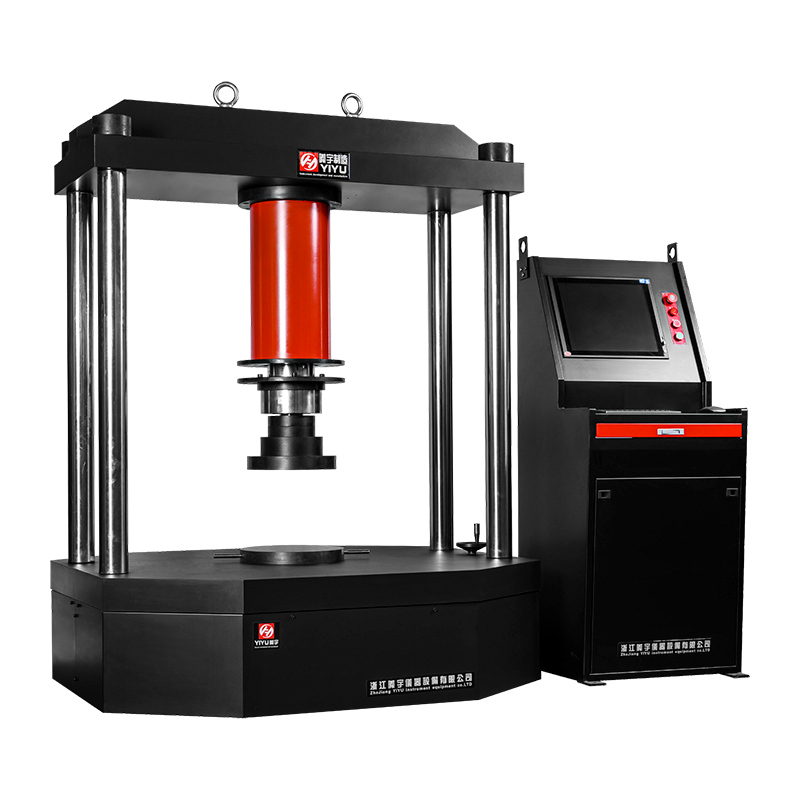
Zhejiang Yiyu Instrument Equipment designs and manufactures hydraulic UTMs to meet national transportation and construction testing standards, and the engineering team also handles custom fixtures and specimen-specific tooling. Precast plants, prestressed-concrete contractors, and rebar processors all ask for different grips, jaw faces, and test routines; a manufacturer that adapts the machine matters as much as the initial specification. The WAWD series electro-hydraulic servo universal testing machine is our standard answer for laboratories that need closed-loop control, precise yield-point detection, and complete data integrity for audits.
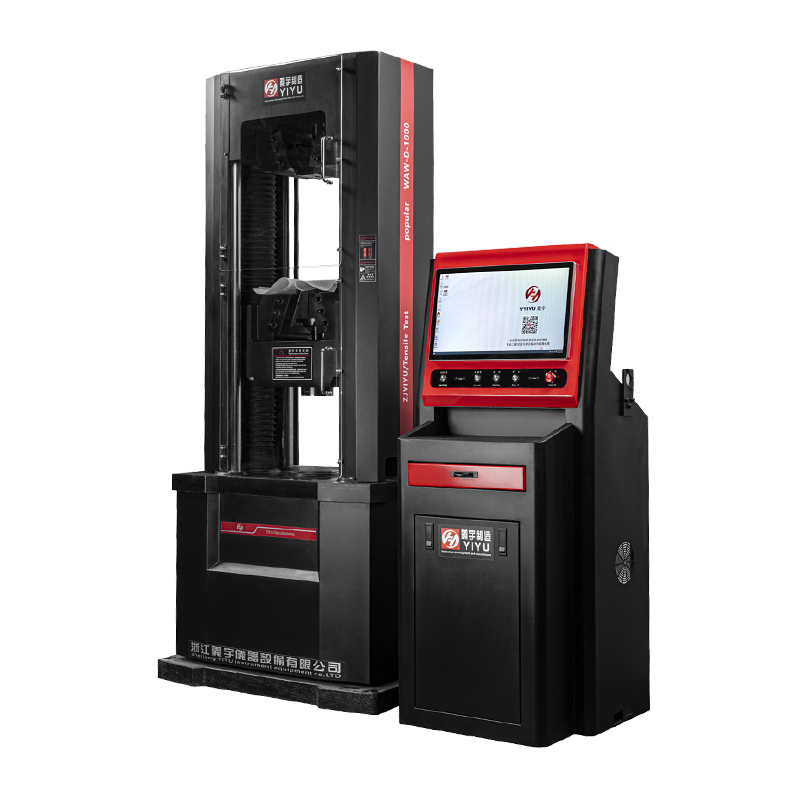 OEM/ODM Microcomputer-Controlled Electro-Hydraulic Servo Universal Testing MachiZhejiang Yiyu Instrument Equipment Co., Ltd. is China Microcomputer-Controlled Electro-Hydraulic Servo Universal Testing Machine Supplier...View Product →
Final Recommendation
Hydraulic universal testing machines remain the backbone of metal and construction-materials testing for concrete reasons: higher force capacity, stiffer frames, true closed-loop servo control, and the ability to test full-size structural components rather than only small coupons. Define your force range, confirm the accuracy class, check the control modes, and choose a manufacturer that will support you after delivery. If you are planning a new machine, contact our team with your specimens, test standards, and sample drawings, and we will recommend a configuration that fits your laboratory.

 简体中文
简体中文
 English
 русский