The HC-GZ1 Concrete Rebound Tester Calibration Anvil is a professional non-destructive testing (NDT) accessory developed and manufactured by Zhejiang Yiyu Instrument Equipment Co., Ltd. As a core tool for rebound hammer calibration, this steel anvil is primarily used to verify whether the concrete rebound hammer's indication system is functioning correctly, and is an important standard component ensuring the accuracy of concrete strength test data.
Core Functions and Technical Specifications
- Standard Calibration Function: This steel anvil provides a standard hardness impact surface for the rebound hammer. According to technical standards, the average calibration rebound value of a qualified concrete rebound hammer on this steel anvil should be [N] = 80 ± 2.
- High Stability Design: As shown in the image, the product adopts a robust cylindrical base design with a stable center of gravity, ensuring no displacement or shaking during the rebound hammer's impact, thus guaranteeing the accuracy of the calibration value.
- Professional Classification: Belongs to the category of NDT (Non-Destructive Testing) Equipment, specifically a dedicated calibration tool.
Application Scenarios
- Routine Calibration: Before heading to the construction site, testing personnel need to use this anvil to calibrate the rebound hammer to ensure the instrument is in good working order.
- Periodic Verification: An essential tool for laboratories or quality inspection agencies to conduct periodic performance checks on the rebound hammer.
- Troubleshooting: When abnormal rebound hammer test data occurs, calibration tests performed on this anvil can quickly determine whether the problem lies with the instrument itself or the concrete surface.
Manufacturer Strength
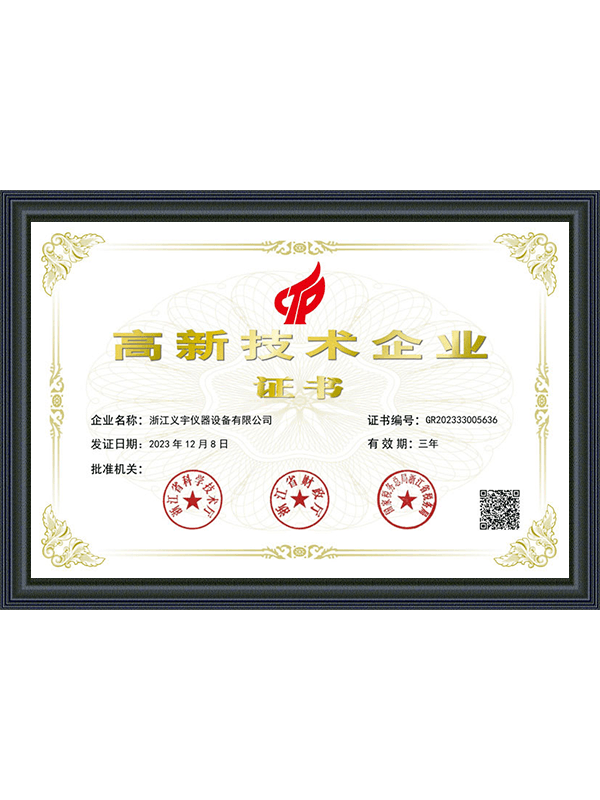
Zhejiang Yiyu Instrument Equipment Co., Ltd., located in Shaoxing City, Zhejiang Province, is a professional manufacturer of materials mechanical property testing equipment. The company not only provides OEM/ODM customization services for the HC-GZ1 steel anvil, but also offers a range of high-precision rebound hammer products (such as HT-450A/550A). With a comprehensive pre-sale and after-sales service system, its products have been widely used by thousands of research institutes and laboratories both domestically and internationally.
Frequently Asked Questions (FAQ)
Q1: Why must the rebound hammer reading on the calibration anvil be between 80 ± 2?
A: This is a requirement of national standards (such as JGJ/T 23) for standard concrete rebound hammers (2.207J). If the reading deviates from this range, it indicates that the stiffness of the rebound hammer's impact spring, friction, or the internal condition of the mechanism may have changed, requiring cleaning or repair.
Q2: How to correctly use the HC-GZ1 for calibration?
A: Place the anvil on a flat, solid surface or test bench. Strike the center of the anvil (usually the yellow cylindrical part, see picture) vertically downwards with the rebound hammer. Strike several times consecutively and take the average value.
Q3: Does the anvil require regular maintenance?
A: Yes. Keep the impact surface of the anvil clean and avoid oil or debris. If the impact surface shows obvious pitting or severe wear, it should be replaced or re-ground promptly to prevent affecting the accuracy of the calibration values.
Q4: Can this steel anvil be used for a mortar rebound hammer?
A: The HC-GZ1 is specifically designed for concrete rebound hammers. For mortar rebound hammers, the manufacturer usually provides a dedicated HC-GZ2 mortar rebound hammer calibration anvil.
Q5: What materials are used for the base and core?
A: Although the material details are not specified in the documentation, such products are typically made of high-strength alloy steel, precision ground, and heat-treated to achieve a specific surface hardness to meet the standard rebound value requirements.




 简体中文
简体中文
 English
 русский