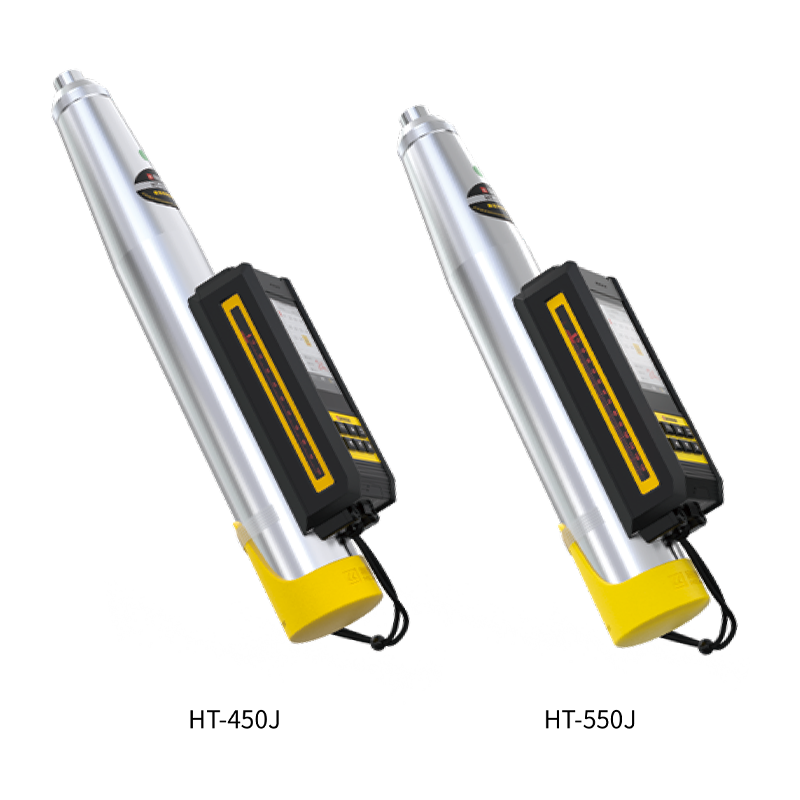
The HT-450J / 450K/KC / 550J / 550K/KC Digital High Strength Rebound Tester Series, developed and manufactured by Zhejiang Yiyu Instrument Equipment Co., Ltd., is specifically designed for testing the compressive strength of high-rise building components, bridges, and various concrete components (such as floor slabs, beams, columns, and cable trays). It combines traditional mechanical rebound testing with modern laser detection and intelligent data management technology, making it a precise tool for evaluating the quality of high-strength concrete.
Core Design and Technical Highlights
Advanced Detection Technology:
- Laser Detection Module: Utilizes non-contact, frictionless laser detection technology, eliminating mechanical wear, significantly improving measurement accuracy, and extending equipment lifespan.
Intelligent Interaction and Display:
- Equipped with a 2.8-inch touchscreen color LCD (400×240 pixels), supporting Chinese and English input.
- Diverse Operation: Combining touch and physical buttons, the user interface is simple and easy to use.
Powerful Cloud and Connectivity Functions:
- Real-time Upload: Built-in Bluetooth chip allows connection to a mobile app for real-time upload of feedback data; an optional Bluetooth printer is available for on-site recording and printing.
- Cloud Backup (KC Model Only): Built-in GPRS module supports direct data upload to the cloud.
- Resume Transmission (KC Model Only): After testing in a no-signal environment, the device will automatically resume data transmission when it enters a signal coverage area.
Long Battery Life and Large Storage Capacity:
- Built-in 3200mAh high-capacity imported lithium battery, supporting long-cycle operation.
- The system can store data from up to 1000 components, with each component supporting up to 100 test areas.
Model Classification and Application Scope
Based on testing requirements, this series is divided into two main sub-series:
HT-450 Series (450J/K/KC): Nominal kinetic energy of 4.5J, suitable for testing the compressive strength of concrete with strength grades of C50~C100, with a measurement range of 50~100MPa.
- HT-550 Series (550J/K/KC): Nominal kinetic energy of 5.5J, specifically optimized for concrete structures or components with strengths of 50-90MPa.
Software Support and Maintenance
- Professional Analysis Software: The accompanying PC software can automatically perform data calculations, result evaluations, and generate test reports according to specifications.
- Remote Upgrade: Supports remote online upgrades, ensuring test curves remain synchronized with the latest industry standards, and can be customized according to user needs.
Frequently Asked Questions (FAQ)
Q1: What is the difference between this rebound hammer and a regular rebound hammer?
A: This device is specifically designed for high-strength concrete. Regular rebound hammers typically cannot accurately measure concrete strengths above C50, while this series (4.5J or 5.5J kinetic energy) can stably measure strength grades up to 100MPa.
Q2: What are the advantages of the laser detection module?
A: Laser detection enables non-contact sampling, avoiding the accuracy degradation and wear caused by mechanical friction during long-term use of traditional sensors, ensuring long-term data consistency and reliability.
Q3: How is data transmitted if I work in a basement or tunnel where there is no signal?
A: If you are using the KC model, it supports automatic data transmission. After completing the test in an area without signal, simply return to a location with signal and power on the device, and it will automatically upload the data to the cloud.
Q4: How long does the battery last on a single charge?
A: The device has a built-in high-capacity imported lithium battery of 3200mAh and features a settable automatic shutdown function (up to 120 minutes), providing very long-lasting battery life for field operations.
Q5: Does its measurement result meet national standards?
A: Yes. The system automatically processes data and estimates intensity according to relevant industry and local regulations. The consistency error between its mechanical and digital readings is controlled within ±1, making it highly reliable.


 简体中文
简体中文
 English
 русский