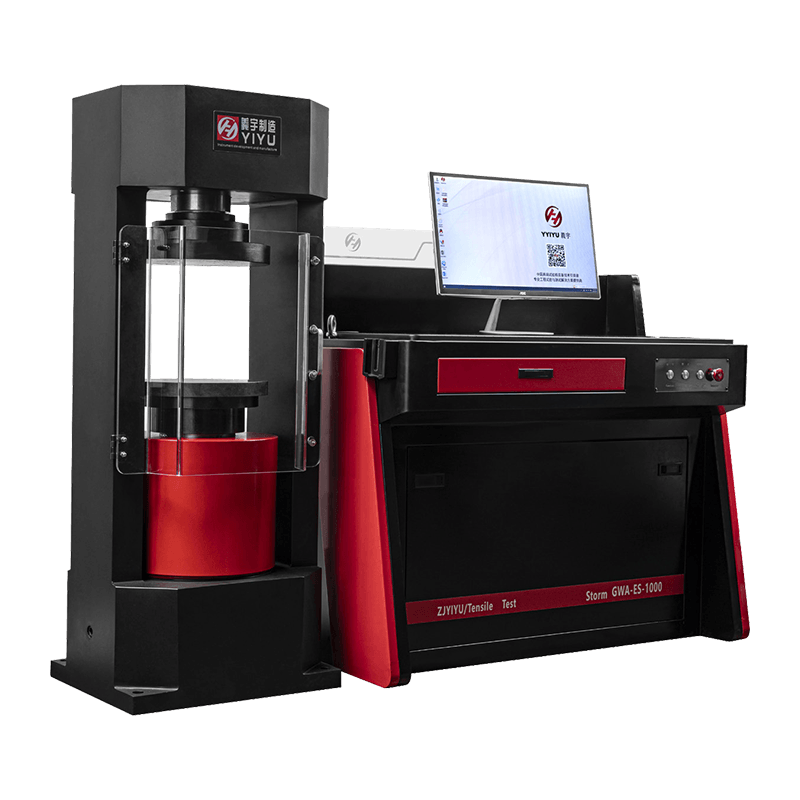
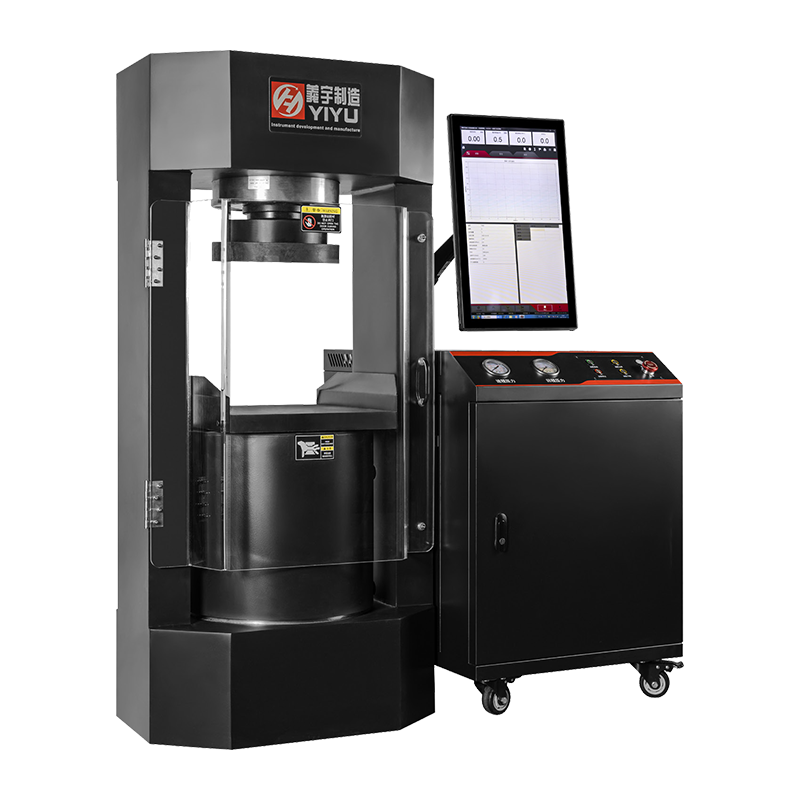
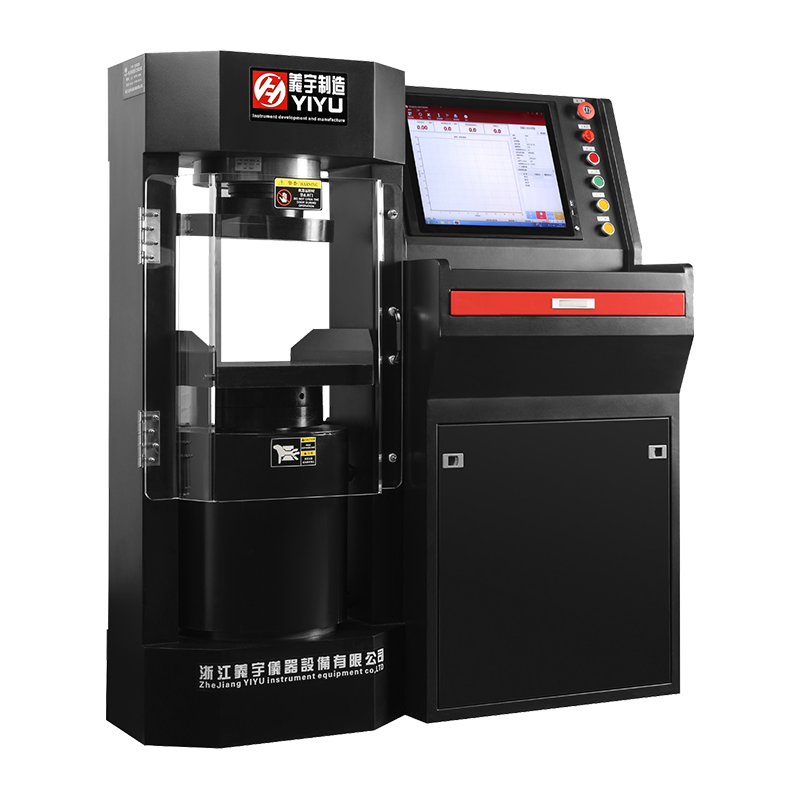
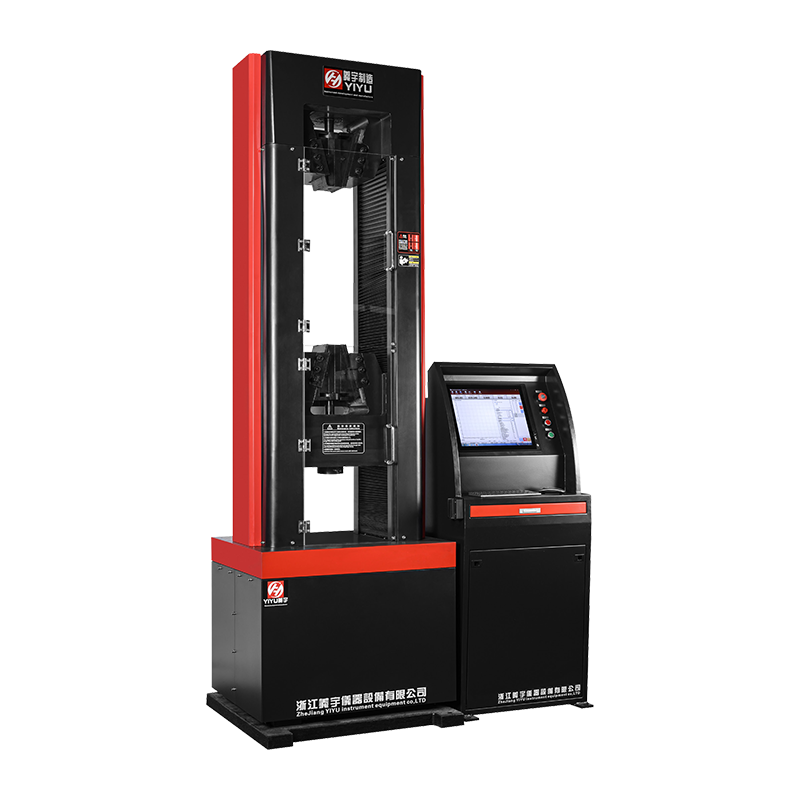
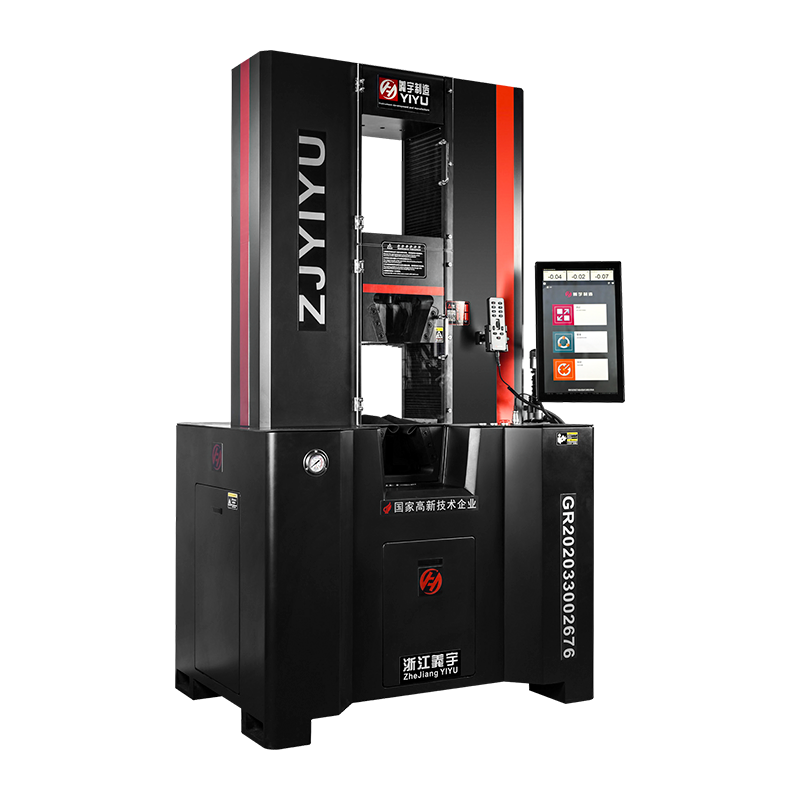
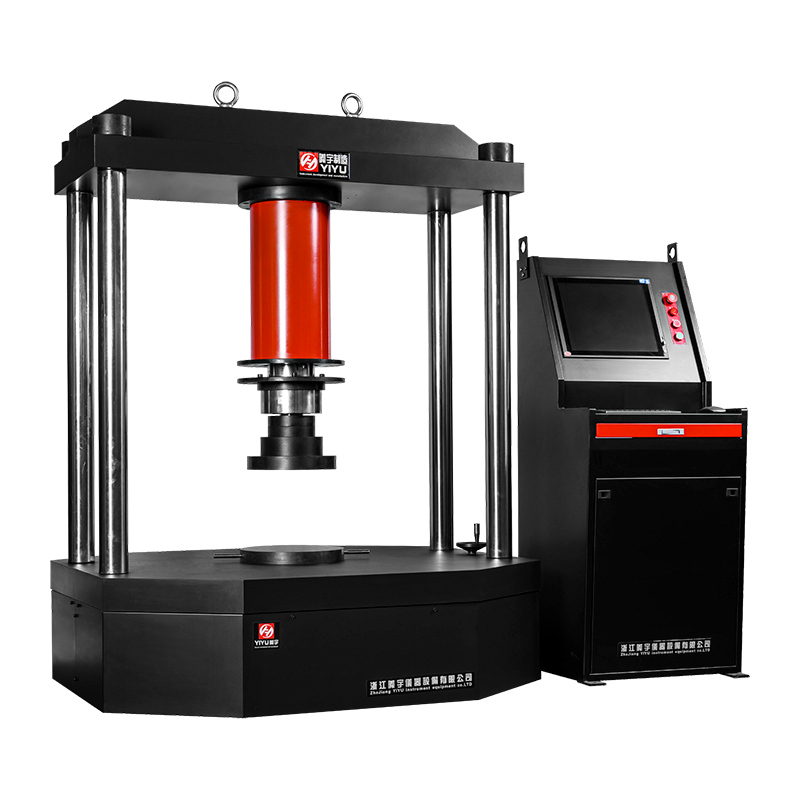
The YAW-D series testing machine adopts microcomputer-controlled electro-hydraulic servo technology, featuring closed-loop force control, constant stress control, and load holding functions. This equipment boasts a robust structure and stable performance, making it particularly suitable for compressive strength testing of cement, concrete, and rock. With appropriate fixtures and measuring devices, it can also perform splitting tensile strength, flexural strength, and static compressive modulus of elasticity tests on concrete.
Core Technological Advantages
- High-Efficiency Dual-Pump Technology: The unique dual-pump system (including a large-displacement auxiliary gear pump) significantly improves testing speed and efficiency, making it suitable for long-term continuous operation.
- High-Precision Measurement: Equipped with a 0.5-grade high-precision load sensor, ensuring extremely high testing accuracy, excellent repeatability, and long-term stability.
- Quiet Operation and Energy Saving: The hydraulic system uses a servo motor-driven radial piston pump, resulting in extremely low operating noise and effectively reducing oil temperature rise. The equipment uses 220V AC mains power, making it energy-efficient and environmentally friendly.
- Intelligent Operating Interface: Equipped with a 17-inch touchscreen industrial computer and a unique SmartTest operating interface, providing users with a smooth user experience.
Design and Safety Features
- Integrated Structure: The machine uses precision-machined high-strength integral castings, ensuring extremely high frame rigidity and stability.
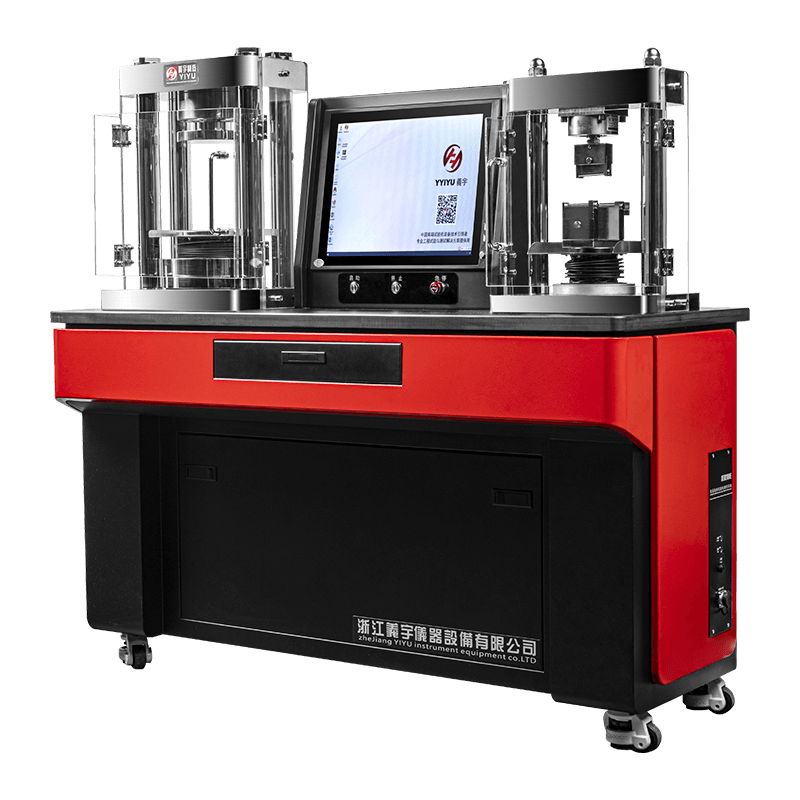
- Safety Protection: The test area is equipped with a transparent explosion-proof safety net, ensuring clear visibility of the testing process while protecting the safety of operators.
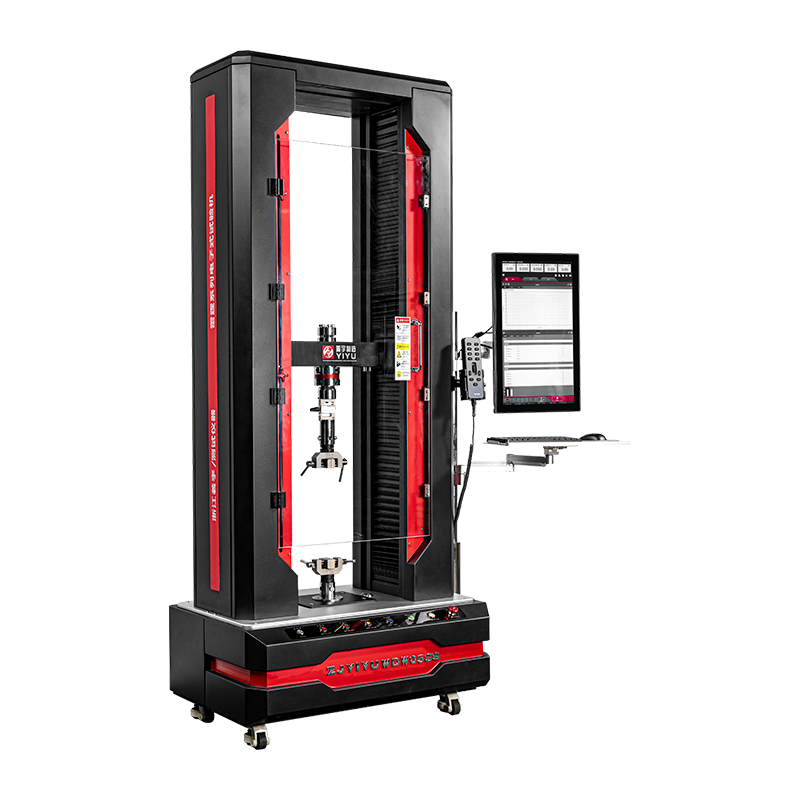
- Flexible Layout: Horizontal or vertical cabinet configurations are available to meet laboratory needs (the figure shows a horizontal cabinet style).
Typical Application Areas
This equipment is widely used in:
- Engineering quality testing
- Experimental teaching in research institutes and universities
- Material testing in the metallurgical industry
FAQ
Q1: What materials are this series of testing machines mainly suitable for testing?
A: The YAW-D series is designed for high-strength materials and is mainly used for compressive strength testing of cement, concrete, and rock. In addition, by adding specific fixtures and measuring devices, it can also perform various tests on concrete, such as splitting crack, flexural strength, and static compressive modulus of elasticity.
Q2: Does the equipment have special requirements for the laboratory's power supply environment?
A: No complex industrial power is required. The equipment adopts an energy-saving and environmentally friendly design, and can operate directly using 220V household power, greatly improving the convenience of installation.
Q3: How is the stability of the equipment guaranteed during high-load continuous operation?
A: The equipment adopts a unique dual-pump technology (including a large-displacement auxiliary gear pump), designed specifically for long-term continuous operation, significantly improving testing efficiency. At the same time, the servo-driven hydraulic system effectively suppresses oil temperature rise, ensuring long-term operational stability.
Q4: Is the noise level high during testing? Will it interfere with the laboratory environment?
A: This model operates very quietly. It is equipped with a servo motor-driven radial piston pump, capable of operating at "ultra-low decibels," providing your laboratory with an efficient and quiet working environment.
Q5: Is the user interface user-friendly for beginners?
A: Very user-friendly. The equipment is equipped with a 17-inch touchscreen industrial computer and comes pre-installed with the proprietary SmartTest intelligent operating interface. The process is intuitive and responsive, significantly reducing the learning curve for operators.
Q6: How is personnel safety ensured during the testing process?
A: The test area is equipped with a transparent explosion-proof safety net. This design ensures that operators can clearly observe the compression and deformation process of the specimen, while also providing reliable physical protection in the event of specimen breakage and debris.


 简体中文
简体中文
 English
 русский